Rolling coverage of the latest economic and financial news
2m agoUK engineering group Rotork agrees to £4.1bn takeover
14m agoEuropean stock markets fall at the open
52m agoAll eyes on Burnham as UK economic growth 'fragile'
1h agoUK economy grew by 0.1% in May despite impact of Iran war
1h agoIntroduction: British Steel taken into public ownership
Good morning, and welcome to our rolling coverage of business, the financial markets and the world economy.
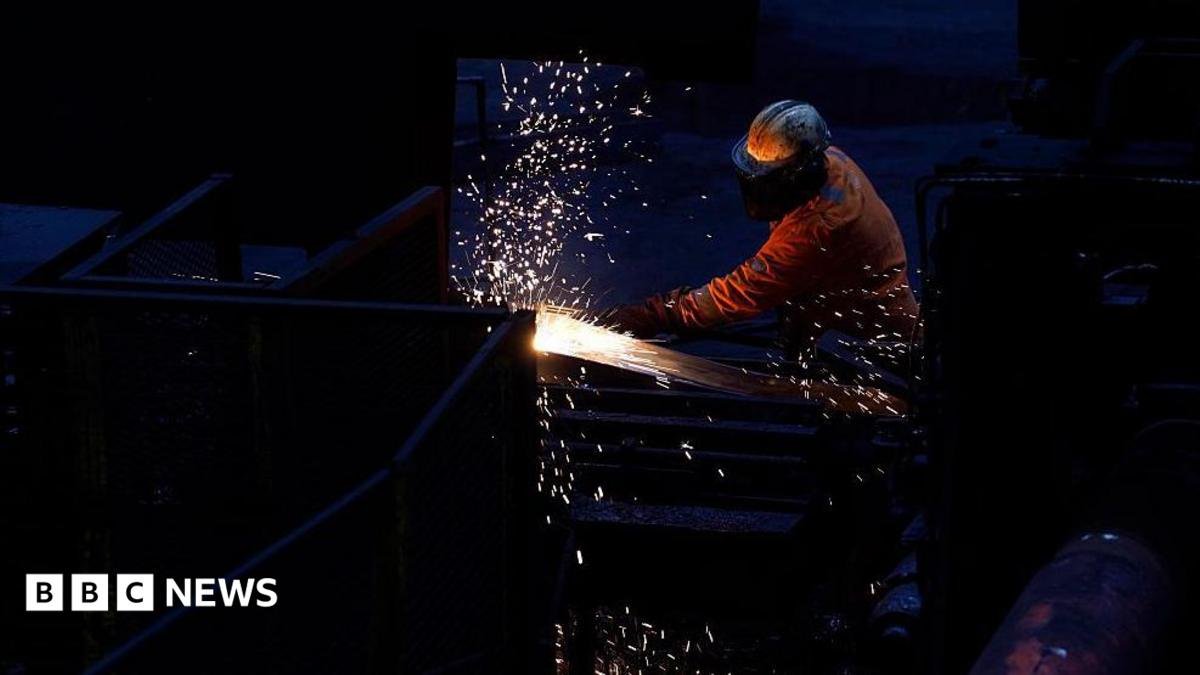
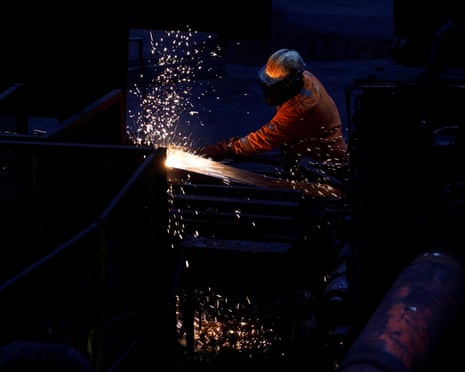
British Steel has been brought under public ownership to “protect the future of steel production in the UK”, the government has said.
The steelworks, which employs about 2,700 people in Scunthorpe, was taken under operational control by the government in April last year after it emerged that its Chinese owner Jingye Group was preparing close its two blast furnaces.
British Steel is part of the fabric of our nation and a cornerstone of Britain’s industrial strength. Today’s decision secures the future of steelmaking in the UK, protects skilled jobs and safeguards a vital national capability. This government will always act in the national interest to support British industry, strengthen our economy and ensure the industries we rely on can thrive long into the future.”
British Steel is part of the fabric of our nation and a cornerstone of Britain’s industrial strength.
Today’s decision secures the future of steelmaking in the UK, protects skilled jobs and safeguards a vital national capability.
This government will always act in the national interest to support British industry, strengthen our economy and ensure the industries we rely on can thrive long into the future.”
Parliament passed legislation on Wednesday which allowed the government to bring the steel industry into public ownership if it met a public interest test.
Its nationalisation is expected to “protect thousands of jobs, support industry that relies on UK made steel and helps to safeguard supply chains, major infrastructure projects and national security”, the government said.
Jingye had already warned it would seek compensation for nationalisation, after it said in June last year that it planned to try to recover as much as £711m in debts owed by British Steel. The government has said it will appoint an “independent valuer… to assess whether any compensation is payable. The compensation scheme will be set up through regulations expected in autumn.”
In March, the National Audit Office found that operating the Scunthorpe steelworks cost the government about £1.3m a day.
Business secretary Peter Kyle said:
British Steel now belongs to the British people, and our focus is on the future: stabilising the business, backing the communities that rely on it and building a sustainable, competitive and decarbonised steel sector for the years ahead.
British Steel’s interim chief executive, Allan Bell, has said it is an “historic day for Britain and UK manufacturing”:
This is a momentous day for British Steel, and everyone connected with our business – our dedicated employees, our valued customers and suppliers, and the tens of thousands of people in our supply chains and local communities. Much more than that, it is an historic day for Britain and UK manufacturing – one which safeguards our future and strengthens national security and infrastructure. We are grateful to the UK government for the decisive action it has taken, and the support it has given our business – and our people – during such a challenging period. Together, we look to the future with great optimism and will work together to make the world-class steel Britain needs now and for decades to come.
This is a momentous day for British Steel, and everyone connected with our business – our dedicated employees, our valued customers and suppliers, and the tens of thousands of people in our supply chains and local communities. Much more than that, it is an historic day for Britain and UK manufacturing – one which safeguards our future and strengthens national security and infrastructure.
We are grateful to the UK government for the decisive action it has taken, and the support it has given our business – and our people – during such a challenging period. Together, we look to the future with great optimism and will work together to make the world-class steel Britain needs now and for decades to come.
The agenda
7am BST: ONS GDP figures for May
7am BST: Crest Nicholson reports half-year results, postponed from April. Ocado interim results
12.30pm BST: US initial jobless claims
UK parliament summer recess begins
And yet another takeover deal this morning – the FTSE 250 engineering group Rotork has agreed to a £4.1bn takeover by its bigger Swiss rival ABB.
ABB has agreed to pay 506p a share in cash for Rotork, which manufacturers safety devices that open and close valves in pipelines. The shares traded at around 290p yesterday.
ABB’s chief executive Morten Wierod said:
ABB has followed Rotork over many years , and we admire the execution excellence, engineering quality, and customer trust that Rotork’s teams deliver each day. We are convinced of the compelling strategic fit of the transaction.”
It marks the latest in a string of UK-listed companies that have left the London Stock Exchange after agreeing to takeover deals.
Elsewhere this morning, the FTSE 100 energy group DCC said it received an improved offer from US buyout firm KKR and Energy Capital Partners. The terms of its earlier £5.7bn bid (£65.25 a share in cash plus £1.47 in dividends) are the same, but the consortium said it would add up to 125p in cash for each DCC share, using cash proceeds from the sale of DCC’s technology business, Nexora.
The consortium must confirm a firm offer for DCC or withdraw by 27 July.
It’s a downbeat open for European stock markets this morning – the UK’s blue chip FTSE 100 index has slipped 0.6%. The Stoxx Europe 600, which tracks the biggest companies on the continent, is down 0.1%.
The German Dax is down by about 0.1% and the French Cac 40 is down 0.2%.
Turning back to British Steel – business secretary Peter Kyle has said this morning that the government has nationalised the UK’s “one virgin steel producer here in Scunthorpe” because “if this were to disappear, we would become at the mercy of international markets and the supply from other countries for the kind of production that goes into our railways and our construction”.
When asked whether the plant’s blast furnaces would continue to produce virgin steel in the long term, he told Times Radio:
In the future, that will be a decision for this business and the government to decide going forward. But it is the intention of the steel strategy that we move towards green steel. That is where the primary demand is into the long term, and I want to make sure that this plant is a modern plant that is producing the kind of steel that those companies and organisations purchasing steel require.”
In the future, that will be a decision for this business and the government to decide going forward.
But it is the intention of the steel strategy that we move towards green steel. That is where the primary demand is into the long term, and I want to make sure that this plant is a modern plant that is producing the kind of steel that those companies and organisations purchasing steel require.”
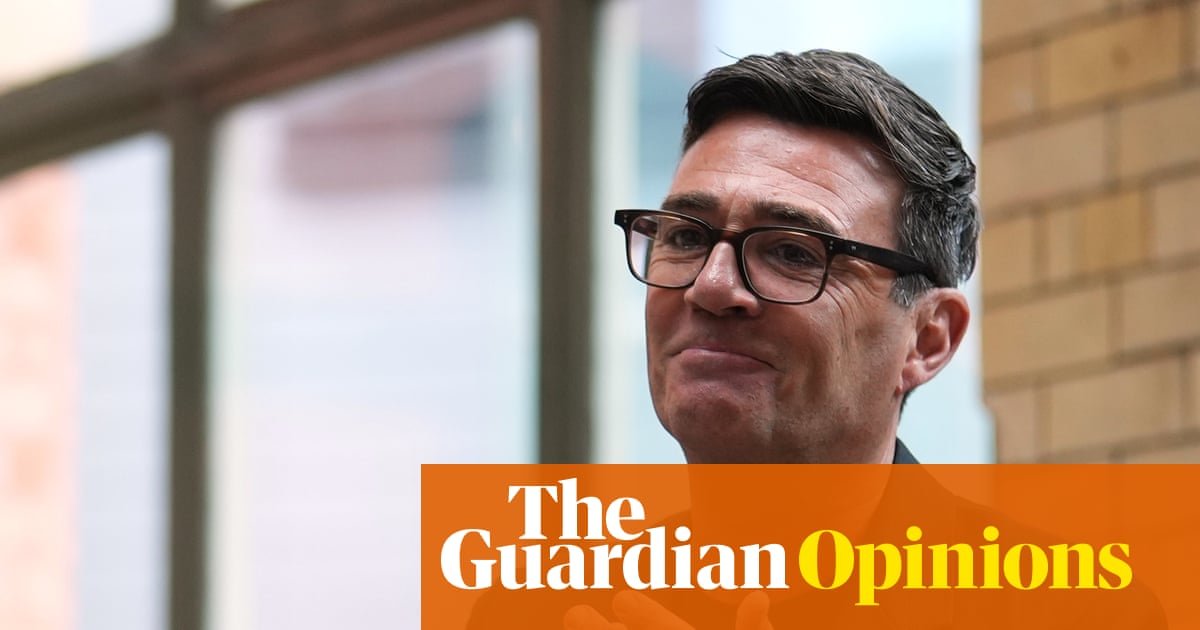
Warnings for Andy Burnham are coming in thick and fast as he prepares to take up the Labour leadership on Friday.
The chief executive of the CBI, Rain Newton-Smith, has said that there cannot be another “summer of speculation”, after Labour’s last two summers were dogged by leaks and speculation about what might come in Rachel Reeves’s autumn budgets.
Here’s Heather Stewart’s full interview with Newton-Smith:
All eyes are now on Andy Burnham, economists are saying this morning, as he stands to inherit a fragile economy from Keir Starmer.
TUC general secretary Paul Nowak said:
Better growth in our economy is good news and essential for boosting jobs and incomes. But despite welcome improvements, the outlook remains uncertain - and up and down the country too many working people are still struggling to get by. Donald Trump’s illegal war has sent energy prices through the roof – and comes after years of bills increasing sharply. That’s why the new prime minister must urgently show working people that this government is on their side by making living standards his number one priority. That means cutting energy bills for most households - paid for by taxing banks’ eyewatering excessive profits. This common-sense step would put more money back in people’s pockets, give families the confidence to spend on the high street and support the economy.”
Better growth in our economy is good news and essential for boosting jobs and incomes. But despite welcome improvements, the outlook remains uncertain - and up and down the country too many working people are still struggling to get by.
Donald Trump’s illegal war has sent energy prices through the roof – and comes after years of bills increasing sharply.
That’s why the new prime minister must urgently show working people that this government is on their side by making living standards his number one priority.
That means cutting energy bills for most households - paid for by taxing banks’ eyewatering excessive profits. This common-sense step would put more money back in people’s pockets, give families the confidence to spend on the high street and support the economy.”
Ben Jones, senior lead economist at the CBI, says businesses are still cautious about the outlook for the rest of the year.
Uncertainty over the policy outlook and the Autumn Budget, given the looming change in government, is likely to weigh on confidence and investment decisions. The renewed military strikes in the Middle East highlight the risk of further volatility in global energy and financial markets. Our own business surveys weakened in May and softened further in June, with private sector activity expected to remain subdued over the coming months. With a new Prime Minister coming into office, the government must restore competitiveness by tackling the growing cost pressures that businesses are facing in every corner of the country. This must include taking direct action to lower the UK’s industrial electricity costs, which are currently 45% more expensive than the G7 median. Lowering industrial electricity costs will give businesses the confidence to invest and unlock stronger economic growth across the UK.”
Uncertainty over the policy outlook and the Autumn Budget, given the looming change in government, is likely to weigh on confidence and investment decisions. The renewed military strikes in the Middle East highlight the risk of further volatility in global energy and financial markets. Our own business surveys weakened in May and softened further in June, with private sector activity expected to remain subdued over the coming months.
With a new Prime Minister coming into office, the government must restore competitiveness by tackling the growing cost pressures that businesses are facing in every corner of the country. This must include taking direct action to lower the UK’s industrial electricity costs, which are currently 45% more expensive than the G7 median. Lowering industrial electricity costs will give businesses the confidence to invest and unlock stronger economic growth across the UK.”
ONS director of economic statistics Liz McKeown notes that there was “robust” growth in the three months to May.
The economy recorded robust growth in the three months to May, though the pace eased slightly as the latest two months showed a weaker picture. Services drove growth across the three months with computer programming and advertising again leading the way, while the often-volatile pharmaceutical industry also performed well. This was only partially offset by another weak period for power generation, while architectural and engineering firms also contracted. While all three main sectors grew over the three months, the slight growth in GDP in May was driven by services alone, with production and construction both falling back.”
The economy recorded robust growth in the three months to May, though the pace eased slightly as the latest two months showed a weaker picture.
Services drove growth across the three months with computer programming and advertising again leading the way, while the often-volatile pharmaceutical industry also performed well.
This was only partially offset by another weak period for power generation, while architectural and engineering firms also contracted.
While all three main sectors grew over the three months, the slight growth in GDP in May was driven by services alone, with production and construction both falling back.”
And a spokesperson for the Treasury has said in a statement:
We have the right economic plan which has put the UK in a much stronger position than two years ago with the fastest growth in the G7 in the first quarter and the OECD agreeing that we have restored stability. We’re forecast to be the fastest growing European G7 economy this year and next, inflation is steady, and for the first time since 2004, we are forecast to borrow less this year than the G7 average.”
We have the right economic plan which has put the UK in a much stronger position than two years ago with the fastest growth in the G7 in the first quarter and the OECD agreeing that we have restored stability.
We’re forecast to be the fastest growing European G7 economy this year and next, inflation is steady, and for the first time since 2004, we are forecast to borrow less this year than the G7 average.”
The UK economy grew by 0.1% in May, despite the impact of the Iran war on energy costs, official figures show.
The Office for National Statistics said GDP rose, following a 0.1% decline in April. The figures were in line with a 0.1% rise in May that economists had forecast.
Despite April’s dip, the economy appears to have been more resilient in the face of the Middle East conflict than some analysts had feared.
The International Monetary Fund recently upgraded its forecast for UK GDP growth for the year as a whole, to 1%, up 0.2 percentage points from its April forecast.
However, the UK economic outlook remains highly uncertain and oil prices have risen sharply again since hostilities resumed in the Middle East this week, underlining the economic challenges facing Andy Burnham as he takes over as Labour leader.