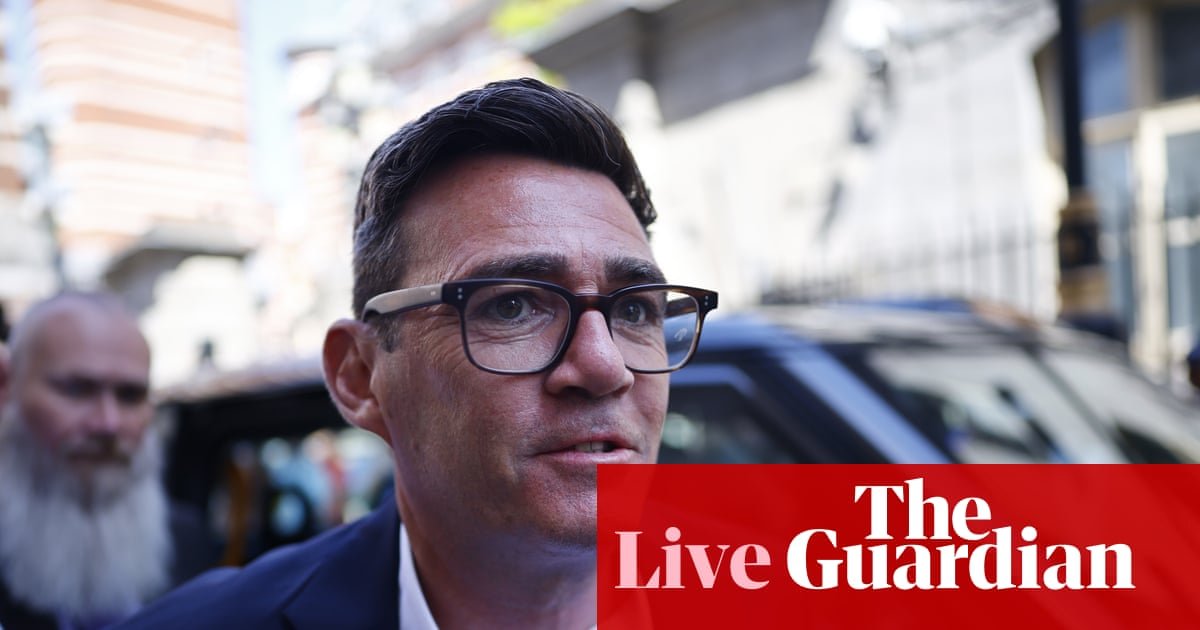
It’s expected that the MP for Makerfield will give his first speech since the by-election campaign during Tuesday’s debate
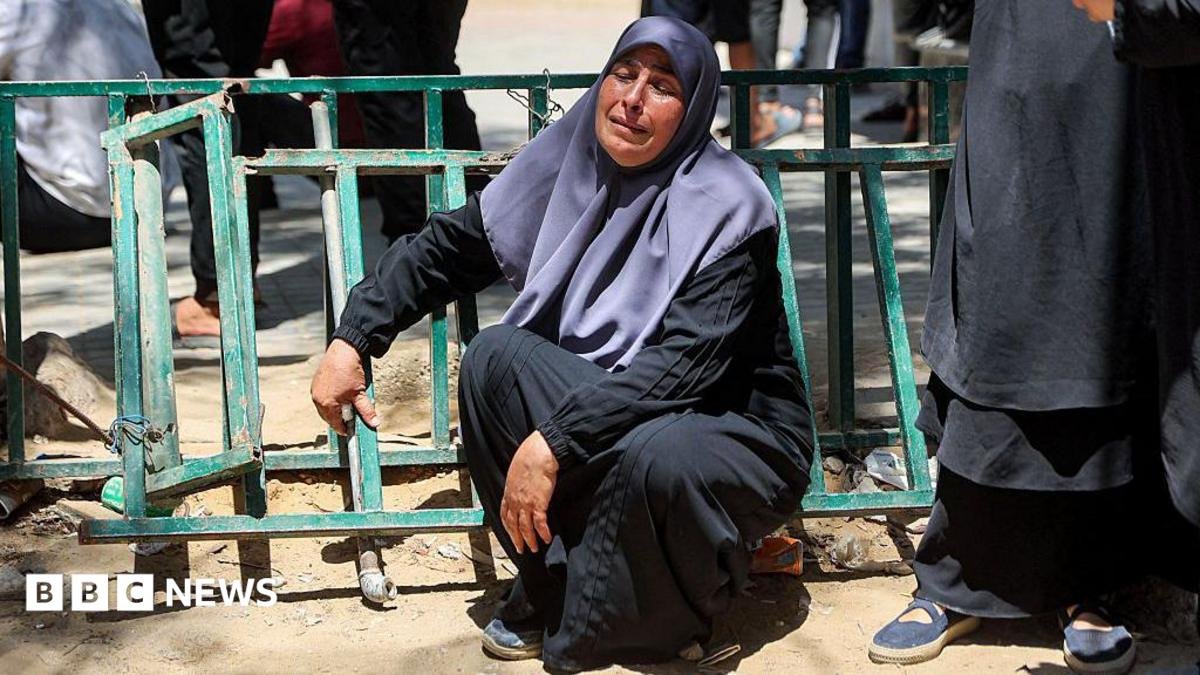
20m agoCooper says she would like to see 'stronger action' against Israel in relation to abuses in Gaza
48m agoWhat happens next to representation of people bill?
1h agoTories deny purge as Lord Barwell hits back after losing party whip
1h agoCharity Commission committed contempt of parliament by trying to block critical report, inquiry finds
2h agoJohnson government wasted £10bn on PPE, Covid inquiry finds
3h agoCampbell denies misleading MPs when he claimed he did not know Tories planning vote on delaying recess
3h agoCommons leader Alan Campbell accuses Tories of preferring 'weird political game' to debating crisis in Middle East
3h agoTories accuse Burnham of 'running scared of scrutiny', claiming he blocked vote on delaying recess until he has become PM
4h agoGreen candidate for Greater Manchester mayor criticises Burnham for voting for immigration bill
5h agoBurnham says Hillsborough law being debated today can change UK by shifting power and dismantling unaccountability culture
5h agoMPs set to pass Hillsborough law bill today after government drops opt-out for spies
5h agoReeves to say UK has 'beaten the odds' during last 2 years, in probable last big speech as chancellor
5h agoEd Davey urges Burnham to 'be bold, be brave' and introduce PR now
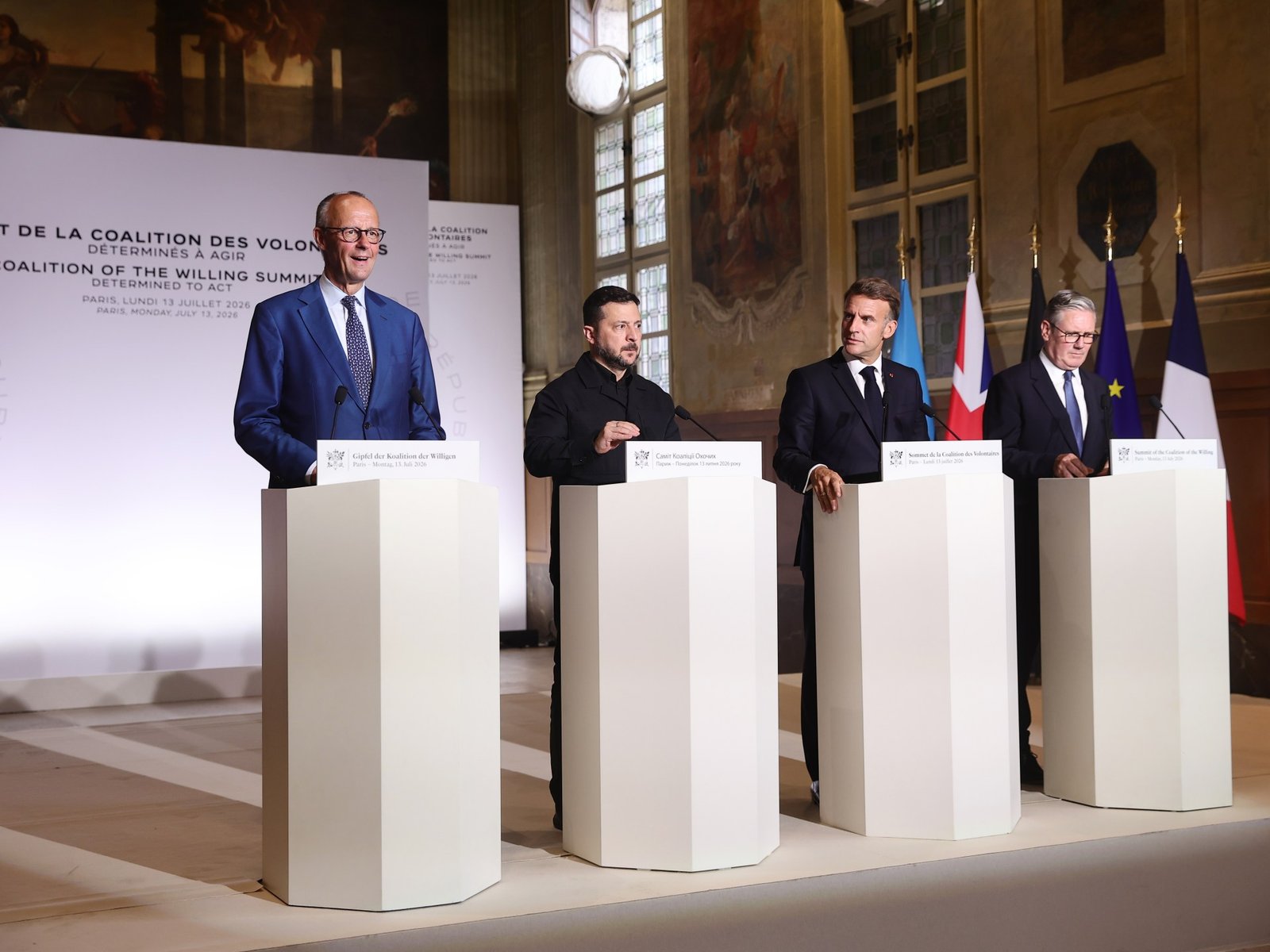
6h agoStarmer attends Bastille Day parade in Paris, after coalition of willing allies pay lavish tribute to him
6h agoRobert Jenrick accuses Labour of 'playing politics' with safety of Reform UK politicians like Nigel Farage
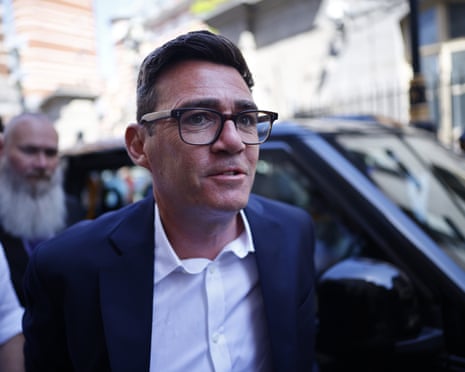
Andy Burnham describes the Hillsborough tragedy, the police cover-up and smear campaign against fans that happened afterwards, and the long campaign by survivors, relatives and Liverpudlians for justice that has been running ever since as the story that has done most to shape his political outlook. As a young culture secretary, he gave a speech at the Hillsborough 20th anniversary memorial in 2009 which was instrumental in persuading him that the government had to redouble its efforts to ensure the full truth came out.
Today he is expected to give his first speech in the Commons since his election as MP for Makerfield in the debate on the Hillsborough law bill.
In an article for the Liverpool Echo, he says the Hillsborough law is about more than just a single football disaster; it is about changing the way power is distributed in Britain, and dismantling its unaccountability culture.
The truth on its own is not enough. Without accountability, there can be no justice. That is why I introduced the first Hillsborough Law almost ten years ago, supported by Keir Starmer, as one of my final acts in parliament. Its return this week is another major step towards ensuring no family has to endure what the Hillsborough families have endured. Yet this is about more than Hillsborough alone. The infected blood scandal. The nuclear test veterans. Grenfell. The Post Office scandal. Different tragedies, but too often the same pattern: institutions protecting themselves instead of the people they exist to serve. Bishop James Jones described it perfectly as “the patronising disposition of unaccountable power”. Those words have stayed with me ever since. The Hillsborough Law is our chance to begin dismantling that culture once and for all. The lesson of Hillsborough goes beyond introducing a duty of candour. It asks us what kind of country we want to be. One where power is concentrated in distant institutions, or one where it is shared more fairly with the people and places those institutions are meant to serve. If an entire city could be ignored for two decades while telling the truth about the deaths of its own people, what other communities have gone unheard? Which voices have been overlooked simply because they lacked power? For me, this has always been about changing that. It is why I believe we must continue to redistribute power, strengthen our towns and cities, and build a Britain where every community is treated with equal respect and where, in the face of injustice, nobody walks alone.
The truth on its own is not enough. Without accountability, there can be no justice. That is why I introduced the first Hillsborough Law almost ten years ago, supported by Keir Starmer, as one of my final acts in parliament. Its return this week is another major step towards ensuring no family has to endure what the Hillsborough families have endured.
Yet this is about more than Hillsborough alone.
The infected blood scandal. The nuclear test veterans. Grenfell. The Post Office scandal. Different tragedies, but too often the same pattern: institutions protecting themselves instead of the people they exist to serve.
Bishop James Jones described it perfectly as “the patronising disposition of unaccountable power”.
Those words have stayed with me ever since. The Hillsborough Law is our chance to begin dismantling that culture once and for all.
The lesson of Hillsborough goes beyond introducing a duty of candour. It asks us what kind of country we want to be. One where power is concentrated in distant institutions, or one where it is shared more fairly with the people and places those institutions are meant to serve. If an entire city could be ignored for two decades while telling the truth about the deaths of its own people, what other communities have gone unheard? Which voices have been overlooked simply because they lacked power?
For me, this has always been about changing that. It is why I believe we must continue to redistribute power, strengthen our towns and cities, and build a Britain where every community is treated with equal respect and where, in the face of injustice, nobody walks alone.
In the article, Burnham also recalls the impact of his speech at the 20th anniversary memorial.
On 15 April 2009, I stood on the Kop before the memorial service. One word echoed around Anfield: “Justice.” That moment changed me. It forced me to confront uncomfortable questions about how power operates in our country, and why an entire city could spend twenty years telling the truth only to be ignored. How could Liverpool be right all along, yet dismissed for so long? How could so many voices be raised, and so few people in authority be prepared to listen?
On 15 April 2009, I stood on the Kop before the memorial service. One word echoed around Anfield: “Justice.”
That moment changed me. It forced me to confront uncomfortable questions about how power operates in our country, and why an entire city could spend twenty years telling the truth only to be ignored.
How could Liverpool be right all along, yet dismissed for so long? How could so many voices be raised, and so few people in authority be prepared to listen?
Yvette Cooper, the foreign secretary, has backed Andy Burnham’s criticism of Labour’s initial response to Israel’s actions in Gaza.
Giving evidence to the foreign affairs committee, where she was asked if she agreed with what Burnham said on this last week, she replied: “Yes, I do agree with that.”
She said his comments that “we should have been faster to call for a ceasefire, and also been clearer from the start about the importance of international humanitarian law” referred to the Labour Party’s position before entering office.
“I also think we need to have stronger action going forward,” Cooper said, pointing to trade with the illegal settlements and an expansion of the sanctions regime as areas that are being looked into.
The broader point about international humanitarian law, I think, is important because we’ve seen a series of breaches of international humanitarian law, not just in terms of what’s happening in Gaza and in the West Bank, but in other parts of the world as well. Our sanctions regime currently can’t effectively be used on breaches just of international humanitarian law. That’s what I believe we need to change, and that’s what we are looking at how to change, to expand the sanctions regime. That would then allow us to use sanctions in those cases where we have egregious breaches of international humanitarian law.
The broader point about international humanitarian law, I think, is important because we’ve seen a series of breaches of international humanitarian law, not just in terms of what’s happening in Gaza and in the West Bank, but in other parts of the world as well.
Our sanctions regime currently can’t effectively be used on breaches just of international humanitarian law. That’s what I believe we need to change, and that’s what we are looking at how to change, to expand the sanctions regime. That would then allow us to use sanctions in those cases where we have egregious breaches of international humanitarian law.
Asked if she had made that point to Burnham, Cooper replied: “We have had some of those discussions, and I’m sure those discussions will continue.”
You mentioned in the blog yesterday that the Representation of the People bill has been delayed until after the summer recess. Do you think the bill will come back in September? And might it be strengthened further given some of Andy Burnham’s previous statements on PR, devolution etc …
The representation of the people bill, the elections legislation that will lower the voting age in UK parliamentary elections to 16, among other measures, definitely will come back in the autumn.
There is a briefing paper on the bill here.
Although the bill is already quite significant, campaigners want to make it much more radical.
As Kiran Stacey reported in a Guardian story last week, Labour MPs are proposing amendments including ones that would impose a maximum £100,000 cap on individual donations, permanently ban cryptocurrency donations, cut the spending limits for election campaigns and limit the amount of money a party can have when it is set up (because these funds are not covered by donation laws).
There are also amendments that would make voting compulsory.
Although journalists have been told that the debate on the bill originally planned for today was postponed to make time for the Hillsborough law debate, the delay will allow Andy Burnham to think carefully about whether he wants to beef up the bill, either by adopting some of these amendments, or in other ways. Some electoral reform campaigners scent an opportunity.
Charles White from the Campaign for Compulsory Voting, told the Guardian:
The delay in bringing forward the next stage in the representation of the people bill should not be seen as a disappointment. Instead, more time to reflect and plan raises the hope that the government will explore bolder electoral reform. We know Andy Burnham wants to change politics and what better way to do that than ensuring every voice is heard at the ballot box with compulsory voting?
The delay in bringing forward the next stage in the representation of the people bill should not be seen as a disappointment.
Instead, more time to reflect and plan raises the hope that the government will explore bolder electoral reform. We know Andy Burnham wants to change politics and what better way to do that than ensuring every voice is heard at the ballot box with compulsory voting?
Burnham will be unusual as a prime minister in that most of his recent predecessors have taken no interest in constitutional matters of this kind. He is different, and he explained why in Head North, the book he co-wrote with Steve Rotheram, mayor of Liverpool city region. Burnham and Rotheram said:
Another change the left needs to make is to challenge the received wisdom of political analysts who say constitutional issues don’t matter to voters. If people feel alienated from politics, surely changing the way politics works, if done in the right way, might capture their notice and approval?
The Conservatives have denied they are purging prominent centrists after Gavin Barwell lost the whip in the wake of warnings from Kemi Badenoch that supporters of policies such as targets for net zero were no longer welcome in the party, Peter Walker reports.
The Charity Commission should apologise to MPs for trying to block a report into its handling of abuse claims, a committee has said. The Press Association reports:
The body committed a “contempt of parliament” when it sought a judicial review in an attempt to stop the parliamentary commissioner for administration from laying a special report on safeguarding issues within charities before the Commons. The privileges committee in a report said the watchdog’s chief executive should apologise to the house for claiming its legal action was not intended to quash the report “when that was precisely its purpose”. The committee described the commission’s move as “wholly unacceptable”, and set out its “surprise the action was ever considered or taken”. It comes after an abuse victim said the watchdog is not fit for purpose and is letting vulnerable people down. Lara Hall complained to the body after a charity boss was not struck off after she claimed he sexually exploited her. The Charity Commission is responsible for regulating charities in England and Wales. Senior figures were scolded by a parliamentary committee for how it had treated her and other victims last month. Chair of the public administration and constitutional affairs committee Simon Hoare expressed his astonishment at how Wilson Chowdhry, who had been head of the British Pakistani Christian Association, had not been disqualified as a charity director when he was found to have asked Hall for explicit photos of her twin sister when she was a minor. The Charity Commission investigated her case and told Hall the charity would be wound up. However, this did not happen. The charity has since been rebranded as Help for Persecuted Christians. Hall complained to the parliamentary and health service ombudsman (PHSO) watchdog about the Charity Commission response. The watchdog later took legal action in an attempt to stop the report being laid before parliament. This was overruled by MPs. “The CEO of the Charity Commission should apologise to the House for repeatedly saying that the commission’s legal action was not intended to quash the laying of the reports when that was precisely its purpose,” the privileges committee said. “The Charity Commission clearly committed a contempt of parliament in seeking through legal action to prevent the parliamentary commissioner for administration from laying special reports before the house.”
The body committed a “contempt of parliament” when it sought a judicial review in an attempt to stop the parliamentary commissioner for administration from laying a special report on safeguarding issues within charities before the Commons.
The privileges committee in a report said the watchdog’s chief executive should apologise to the house for claiming its legal action was not intended to quash the report “when that was precisely its purpose”.
The committee described the commission’s move as “wholly unacceptable”, and set out its “surprise the action was ever considered or taken”.
It comes after an abuse victim said the watchdog is not fit for purpose and is letting vulnerable people down.
Lara Hall complained to the body after a charity boss was not struck off after she claimed he sexually exploited her.
The Charity Commission is responsible for regulating charities in England and Wales.
Senior figures were scolded by a parliamentary committee for how it had treated her and other victims last month.
Chair of the public administration and constitutional affairs committee Simon Hoare expressed his astonishment at how Wilson Chowdhry, who had been head of the British Pakistani Christian Association, had not been disqualified as a charity director when he was found to have asked Hall for explicit photos of her twin sister when she was a minor.
The Charity Commission investigated her case and told Hall the charity would be wound up. However, this did not happen. The charity has since been rebranded as Help for Persecuted Christians.
Hall complained to the parliamentary and health service ombudsman (PHSO) watchdog about the Charity Commission response. The watchdog later took legal action in an attempt to stop the report being laid before parliament. This was overruled by MPs.
“The CEO of the Charity Commission should apologise to the House for repeatedly saying that the commission’s legal action was not intended to quash the laying of the reports when that was precisely its purpose,” the privileges committee said.
“The Charity Commission clearly committed a contempt of parliament in seeking through legal action to prevent the parliamentary commissioner for administration from laying special reports before the house.”
Boris Johnson’s government wasted £10bn of public money because of the flawed way it went about buying personal protective equipment during the coronavirus pandemic, the Covid inquiry has concluded. David Conn has the story.
In the Commons Catherine Atkinson, the justice minister, is now opening the report stage debate on the public office (accountability) bill – aka the Hillsborough law.
The government has tabled more than 100 amendments. They are available here.
Keir Starmer and Andy Burnham are both planning to speak later in the debate, when the report stage is over and MPs give the bill its third readings. Their speeches will come at around 6pm.
Here is a picture of Keir Starmer with other European leaders at the Bastille Day parade in Paris.
Here is the line-up in the front row, left to right: Finland’s president Alexander Stubb, his wife Suzanne Innes-Stubb, Netherlands’ PM Rob Jetten, Romanian president Nicusor Dan, his partner Mirabela Gradinaru, Italian president Sergio Mattarella, European Commission president Ursula Von der Leyen, German chancellor’s wife Charlotte Merz, president of the French Senate Gerard Larcher, Ukrainian first lady Olena Zelenska, Ukrainian president Volodymyr Zelenskyy, French president’s wife Brigitte Macron, French president Emmanuel Macron, Britain’s PM Keir Starmer, French PM Sebastien Lecornu, president of the French National assembly Yael Braun-Pivet, Cyprus president Nikos Christodoulides and Maltese PM Robert Abela, Estonia’s PM Kristen Michal and European Council president Antonio Costa.

Jakub Krupa has more coverage of the parade on his Europe live blog.
We have now got comments open below the line. I am afraid they will only be open until 3pm but we thought an hour or so would be better than nothing. Reminder: please don’t comment on the Ann Widdecombe murder investigation, because criminal proceedings are active, any comments on the topic will be removed, and if that rule is abused, comments will have to be turned off.
After the business statement by Alan Campbell was over, Paul Holmes (Con) used a point of order to say that Campbell should correct the record because Tory whips had told government whips what topic they wanted the Wednesday opposition day debate to cover.
Holmes also said that the opposition does not have to table the motion for an opposition day debate until close of business the day before.
In response, Campbell said Holmes was confirming the point he made. It was “not clear” what motion the Tories would choose, he claimed. That was why the government decided to hold an Iran debate instead.
Neil Shastri-Hurst (Con) told Campbell he was undermining his new argument. If the situation in the Middle East was really as serious as Campbell claimed, that was all the more reason why it would be wrong to go into the summer with a PM who had not faced parliament.
In response, Campbell said that, if the situation in the Middle East deteriorated during the summer, parliament could be recalled.
John Cooper (Con) said that, if Manchester is really as fantastic as Andy Burnham says it is, he should come to the Commons next week and explain why.
Campbell said that on Monday next week, when the Tories want Burnham to address parliament, Burnham will be appointing ministers and forming a government.
Katie Lam (Con) said the Tories only wanted to delay the Commons recess by one day. She said Campbell should consider what voters would think of Andy Burnham avoiding parliamentary scrutiny having become PM.
In response, Campbell accused the Tories of playing games. He said:
People listening to this … will do so with a degree of incredulity that [the Conservative party] was preferring to go down a route of playing some weird political game while the Middle East is on the brink of conflagration.
Politics live with Andrew Sparrow