
Exclusive: Staff expect ‘brutal’ cutbacks as broadcaster seeks to reduce costs amid advertising slowdown
Channel 4 is poised to cut about 300 jobs – about a quarter of its workforce – in the biggest round of layoffs in its 43-year history, as the broadcaster seeks to dramatically cut costs.
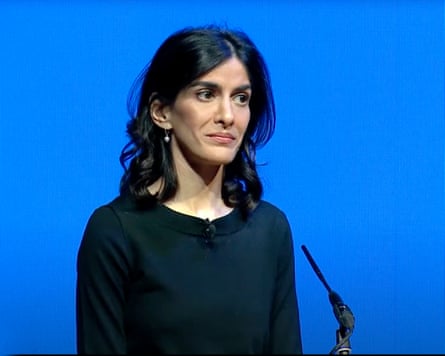
Priya Dogra, who took over from Alex Mahon as chief executive in March, is to address an all-staff meeting on Wednesday on a wide-ranging review of Channel 4’s strategy and structure.
The broadcaster’s head count had risen to 1,276 by 2025, according to its latest annual report, after undergoing an expansion across the UK.
Channel 4 is still working on final numbers for job losses but multiple sources said the level of savings being sought, which will also come from efficiencies in other parts of the business, equates to about 300 to 325 staff roles.
Two years ago, Mahon announced 200 job cuts, then the biggest round of layoffs in more than 15 years, as staff numbers swelled to a record 1,350 amid the worst TV advertising downturn since 2008.
At the time of Mahon’s cost-cutting programme, Channel 4’s wage bill had hit £108m. It has grown significantly in the past two years to £122m.
When the TV advertising market slumped during the 2008 financial crisis, Channel 4 sought to balance its finances by cutting 200 jobs, almost a quarter of its then 875 permanent employees.
Staff are expecting the cuts to be “brutal”, a source said, and London is likely to be a significant focus, given it was only last year when Channel 4 delivered on a promise to increase employee numbers in the nations and regions to 600.
According to the annual report, Channel 4 employs 255 full-time equivalent staff in the commercial department, 423 in creative roles, 542 in operations and 56 at its 4Talent arm.
Dogra is also expected to make changes to the content and commissioning operation, which last year operated with a £640m programming budget, of which £480m was spent on British original content.
It is understood that Dogra wants Channel 4 to cut back on the number of shows it commissions with a focus on finding fewer but more well-funded hits, and increase marketing firepower to promote programmes, a model she operated with while an executive at Sky and Warner Bros Discovery. However, the overall aim of the restructure and strategy is to limit the extent of cuts to the content budget.
A spokesperson for the broadcaster said: “As we have shared publicly, under the leadership of our new chief executive, we have been assessing Channel 4’s strategic direction, including a comprehensive review of the structure, shape and size of our organisation.
“We have committed to keeping Channel 4 staff updated in a timely and transparent way, so any organisational change will be shared with them first and we won’t be commenting on speculation.”
The announcement comes as candidates for the new director of programmes, a role created after chief content officer Ian Katz announced his departure, are understood to be facing first-round interviews with Dogra this week.
Channel 4 reported a pre-tax loss of £10m last year, a third annual deficit in a row after £12m in 2024 and a record £52m in 2023.
Its total revenues fell by 1% to £1.03bn last year, with total advertising revenues falling by 2%, outperforming the wider market.
The broadcaster is dependent on advertising for 90% of total revenues, making it particularly vulnerable as digital platforms such as YouTube continue to hoover up ad budgets.
Enders Analysis published a report in May on Channel 4 titled Time for Reset, which said that a £69m drop in the broadcaster’s cash reserves to £49m at the end of last year marked their lowest level in more than 20 years.
In July, Channel 4 secured an agreement with the government to tap the remaining half of its £150m revolving credit facility. The broadcaster, which is state-owned but commercially funded, is able to access £75m of its credit facility immediately, but needs state approval to access the remaining half.
In its most recent annual report, Channel 4 said it intended to tap the remaining facility to “protect liquidity headroom and manage risks arising from the current geopolitical and economic environment and our on-going business transformation”.