Thames Water says it has £515m cash in the bank as its debts swell to £18.5bn
13m agoBarratt to return £400m to investors as home completions hit top end of range
44m agoEuropean stocks fall as Brent crude climbs 1.5%
51m agoASML raises forecasts as AI boom drives chipmaking demand
2h agoIntroduction: China grows at one of lowest rates on record; Thames Water has funds to survive to year end
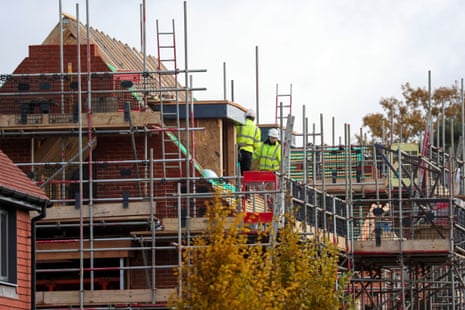
Britain’s largest homebuilder Barratt Redrow hopes to keep shareholders sweet by setting out plans to return £400m to them, as it delivered home completions at the top end of its range.
The company said it completed 17,667 homes in the year to 28 June, slightly ahead of market expectations. This includes 3,774 affordable homes. In the next 12 months, it hopes to deliver 17,700 to 18,200 properties.
To attract customers, Barratt has been offering higher incentives since last autumn and part-exchange, which it said has been a “powerful sales tool”.
The average selling price was £352,000, versus £344,200 the previous year.
Barratt expects “minimal” house price inflation, alongside build cost inflation of 3% to 4% this year, reflecting rising energy prices due to the Iran war and a slowdown in activity across the wider industry.
Its forward sales dipped slightly to 9,728 homes from 9,835 a year earlier.
However, the firm said it would return £400m to investors, mainly through a share buyback but also including a £14m dividend. The news boosted the company’s share price, up nearly 2% and one of the biggest gainers on the FTSE 100 index this morning.
David Thomas, the outgoing chief executive, said:
Barratt Redrow has delivered a solid performance in a challenging market, completing 17,667 homes and generating adjusted profit before tax in line with market expectations. Despite continued improvements in mortgage availability this year, consumer sentiment remained cautious particularly after the start of the conflict in the Middle East, with heightened macro uncertainty, and the corresponding risks around inflation, driving mortgage rates higher, continuing to pressure affordability.
Barratt Redrow has delivered a solid performance in a challenging market, completing 17,667 homes and generating adjusted profit before tax in line with market expectations.
Despite continued improvements in mortgage availability this year, consumer sentiment remained cautious particularly after the start of the conflict in the Middle East, with heightened macro uncertainty, and the corresponding risks around inflation, driving mortgage rates higher, continuing to pressure affordability.
He said Redrow has been successfully integrated and £73m of the targeted £100m cost savings have been achieved. Management is looking to make further cost savings. Barratt acquired its smaller rival two years ago in a £2.5bn deal.
Thomas will hand over to the new CEO, Dean Banks, on 21 September. He has been running the infrastructure company Ventia Pty since 2021, and also worked at the infrastructure group Balfour Beatty and the banknote printing firm De La Rue.
Barratt is among seven major UK housebuilders who face a £4.5bn class action lawsuit over claims that they colluded to inflate house prices.
European stock markets are a sea of red.
The FTSE 100 index in London has fallen 82 points, or 0.78%, to 10,446. Germany’s Dax has tumbled 1% while France’s CAC lost 0.3%, Italy’s MiB slid 0.7% and Spain’s Ibex lost almost 1%.
Brent crude is pushing higher again, up 1.5% to $86 a barrel, as the situation in the Middle East worsens. The US has struck Iran for a fourth consecutive day while Iran responded with attacks on US bases in the Gulf.
Its deputy foreign minister said Donald Trump’s decision to renew the US blockade on Iranian shipping “has, in a way, dismantled the Islamabad memorandum”.
The pound has edged higher against the US dollar this morning, up 0.1% at $1.3406.
The dollar has been on the backfoot since the lower-than-expected US inflation number of 3.5% for June was released on Tuesday, which prompted traders to dial back their rate hike expectations.
Chris Turner, head of global markets at ING, said:
The market was building a conviction that the Fed was going to hike in September and it’s certainly injectetd a bit of doubt into that now.
The Dutch tech giant ASML, which manufactures chip-making machines to power the tech industry, has raised its sales forecasts for the second time this year after strong demand for AI systems, and reported higher second-quarter profits.
The company’s share price jumped 5.7% on the news.
ASML is a critical cog in the global economy and a key bellwether for the tech sector, as everything from smartphones to missiles rely on the semiconductors crafted with its tools.
Investors were watching the results closely after several share sell-offs in the global tech sector over fears the AI bubble could be about to burst.
But the firm’s chief executive Christophe Fouquet said AI is still driving his business.
Ongoing AI-related investments and continued progress in AI technologies are driving demand for advanced logic and memory chips, further strengthening the semiconductor industry’s growth outlook. Our order intake remained extremely strong in the first half of the year.
Ongoing AI-related investments and continued progress in AI technologies are driving demand for advanced logic and memory chips, further strengthening the semiconductor industry’s growth outlook.
Our order intake remained extremely strong in the first half of the year.
The company, Europe’s biggest by market capitalisation, now expects to make between €43bn and €45bn in net sales this year, up from the previous range of €36bn to €40bn.
Sales climbed to €9.3bn in the second quarter from €7.7bn a year earlier. Net profits were also better than expected, rising to €2.9bn from €2.3bn a year earlier.
Matt Britzman, senior equity analyst at Hargreaves Lansdown, has looked at the results.
ASML has delivered another statement quarter, with sales and profitability both ahead of guidance and the full-year outlook lifted by much more than the market expected. The biggest surprise came from customers upgrading and servicing equipment already on factory floors, a sign that chipmakers are pushing existing capacity while preparing for the next wave of investment. But this is more than a short-term scramble. AI demand is pulling investment forward across both advanced computing and memory chips, giving ASML clearer sight of customer demand well beyond this year. The story has now shifted from whether demand will arrive to whether ASML can expand production fast enough to meet it. Management is responding with ambitious capacity plans, directly addressing one of the main concerns that has been rumbling in the background. That supports our view that ASML remains one of the clearest ways to gain exposure to the AI infrastructure build-out, thanks to technology that the world’s leading chipmakers simply cannot replace. ASML now needs to convert a powerful order pipeline into system deliveries, revenue and profit - scaling production without losing control of costs.
ASML has delivered another statement quarter, with sales and profitability both ahead of guidance and the full-year outlook lifted by much more than the market expected. The biggest surprise came from customers upgrading and servicing equipment already on factory floors, a sign that chipmakers are pushing existing capacity while preparing for the next wave of investment. But this is more than a short-term scramble. AI demand is pulling investment forward across both advanced computing and memory chips, giving ASML clearer sight of customer demand well beyond this year.
The story has now shifted from whether demand will arrive to whether ASML can expand production fast enough to meet it. Management is responding with ambitious capacity plans, directly addressing one of the main concerns that has been rumbling in the background.
That supports our view that ASML remains one of the clearest ways to gain exposure to the AI infrastructure build-out, thanks to technology that the world’s leading chipmakers simply cannot replace. ASML now needs to convert a powerful order pipeline into system deliveries, revenue and profit - scaling production without losing control of costs.
Good morning, and welcome to our rolling coverage of business, the financial markets and the world economy.
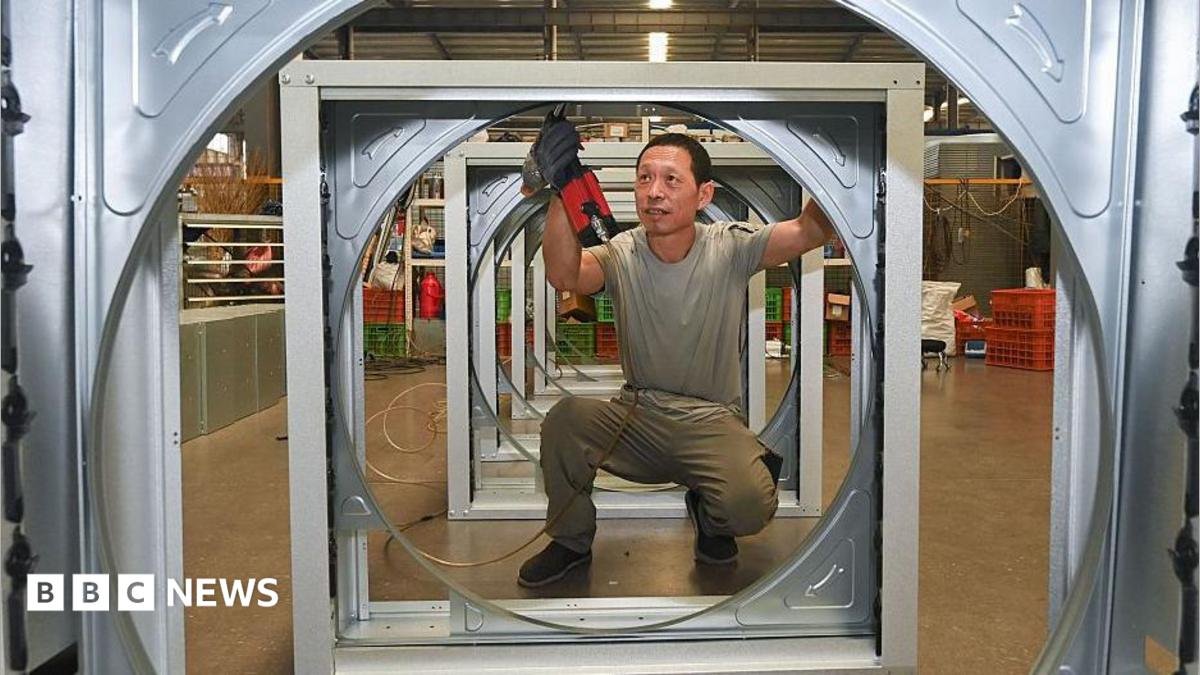
China grew 4.3% in the quarter to 30 June, one of the slowest rates on record, as sluggish domestic demand outweighed a surge in exports.
Growth slowed from the first quarter rate of 5%, and was the lowest in three and a half years. It was less than economists had forecast, and below Beijing’s 4.5% to 5% target range.
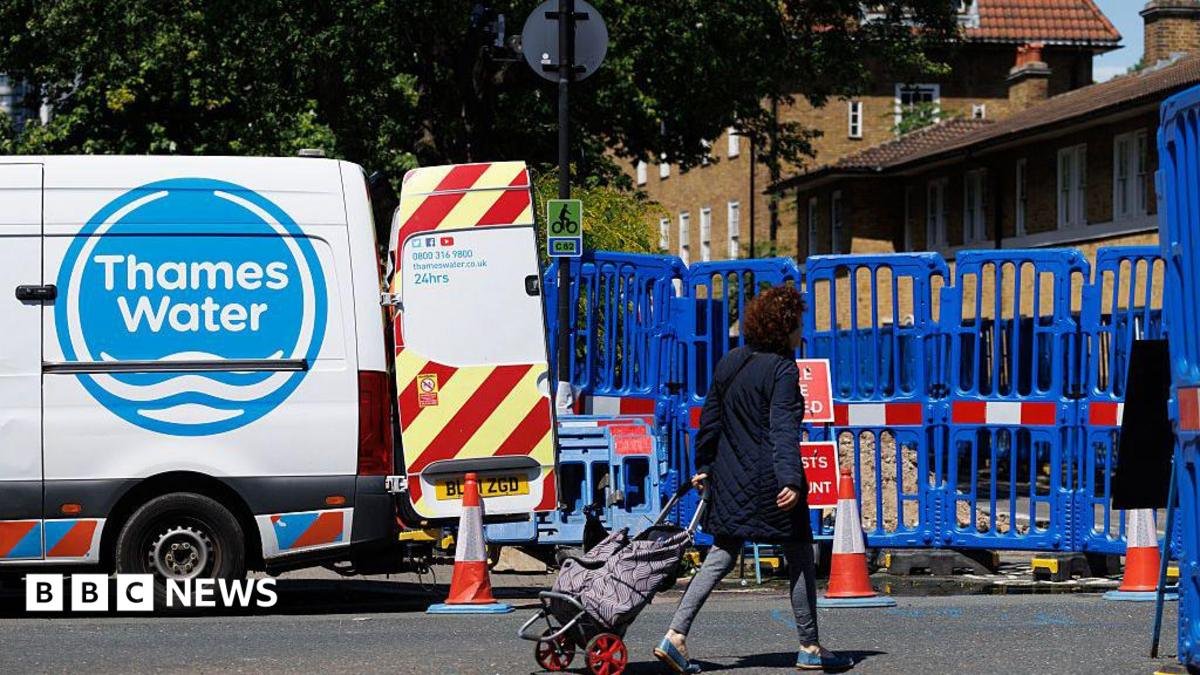
Thames Water said this morning that it has enough funding to survive until the end of this year. It is scrambling to put together a rescue recapitalisation plan with creditors, regulators and the government, to stave off temporary nationalisation.
Britain’s biggest water company has £515m of cash in the bank, according to its annual report.
The company, which serves 16 million customers in London and southern England, has become a symbol of failure in Britain’s privatised water sector, polluting rivers and the sea with sewage due to ageing infrastructure, and struggling under a massive debt pile. It said its debts grew by £1.7m from last year, to £18.5bn.
In recent weeks, the environment secretary, Emma Reynolds, objected to a £10bn rescue proposal for the company put foward by 100 institutional investors to the industry regulator Ofwat, saying it would place an “undue burden” on consumers.
Andy Burnham, who is expected to become the UK’s new prime minister on Monday, has said he believes public ownership is the best option for Thames Water. The government was already looking at taking Thames Water into its Special Administration Regime, a form of temporary public ownership.
However, Thames said its performance is improving. Sewage pollution fell 18% in the 12 months to the end of March, and its underlying profit after tax jumped to £203.9m, from £12.6m last year.
Chief executive Chris Weston said:
While operationally the business is improving, we are also working with our creditors, regulators and government to complete our recapitalisation.
In financial markets, oil prices have increased modestly, after the US ditched a plan to charge a 20% fee on cargo transiting through the strait of Hormuz. But Donald Trump ratcheted up the rhetoric, threatening to expand US strikes on Iran next week to target power plants and bridges if Tehran does not agree to a deal.
Brent crude rose 0.7% to $85.3 a barrel, after climbing above $86 a barrel on Tuesday amid escalating tensions in the Middle East.
Asian stock markets mostly rose and government bonds steadied, after a bigger-than-expected cooling in US inflation on Tuesday prompted markets to scale back expectations for interest rate hikes.
Japan’s Nikkei rose 1.5% and Hong Kong’s Hang Seng climbed 1.4%, while South Korea’s Kospi, which took a hammering earlier in the week, bounced back 6.2%.
Bond yields and the dollar fell amid relief over the inflation reading. The pound rose 0.45% against the dollar and the euro was above $1.14 while two-year Treasury bonds (which are particularly sensitive to rate expectations) fell 9 basis points to 4.2% from Tuesday’s 17-month high of nearly 4.3%.
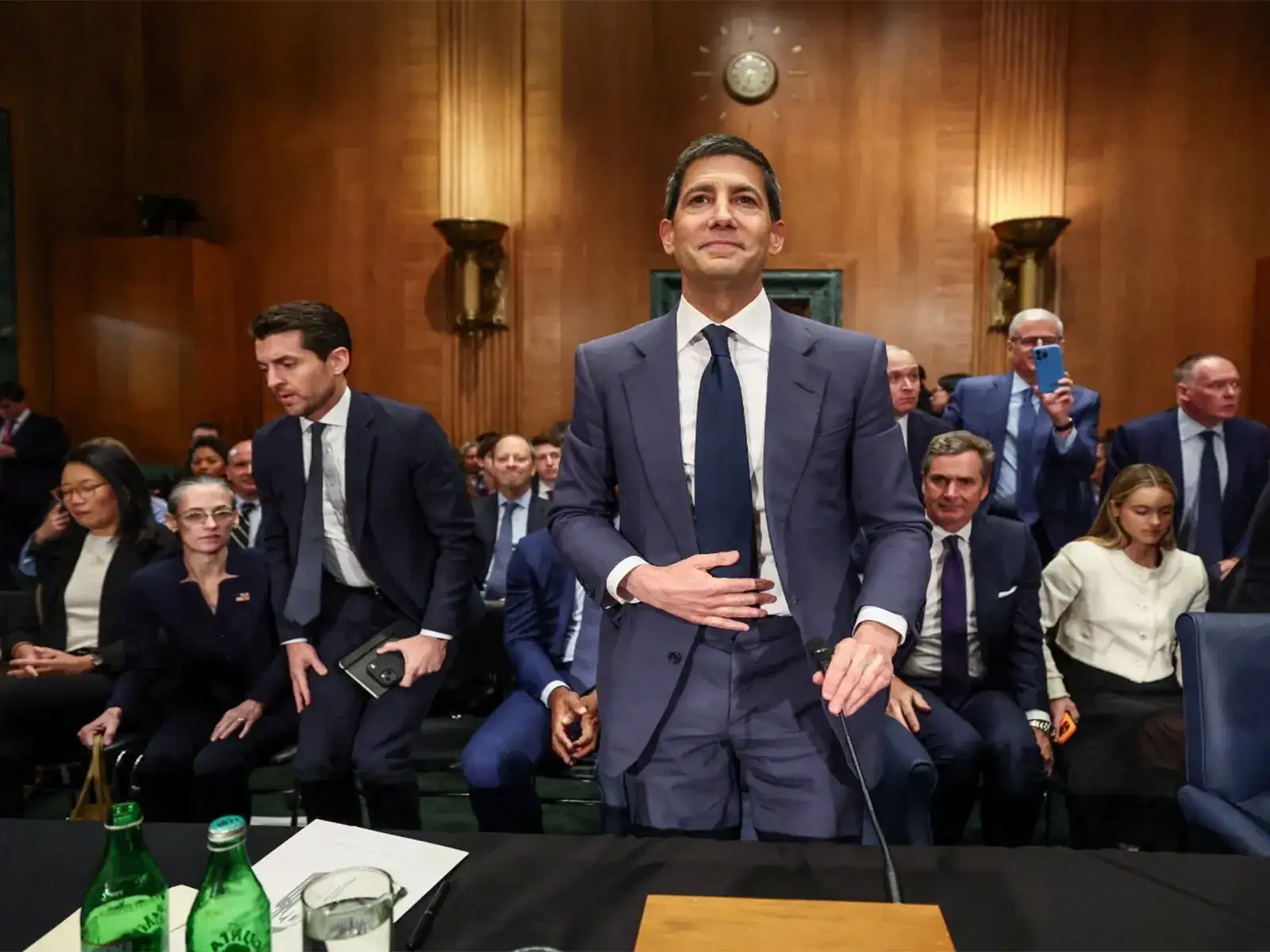
However, US Federal Reserve chair Kevin Warsh told Congress on Tuesday that one data point was not enough to declare victory over inflation.
Also contributing to optimism, Netherlands-based ASML, Europe’s most valuable company and the world’s biggest supplier of chip-making equipment, has beaten revenue forecasts.
10am BST: Eurozone industrial production for May
1.30pm BST: US producer prices for June
2.45pm BST: Bank of Canada interest rate decision
3pm BST: US Federal Reserve chair Kevin Warsh Congress testimony
UK Treasury annual report and accounts TBC