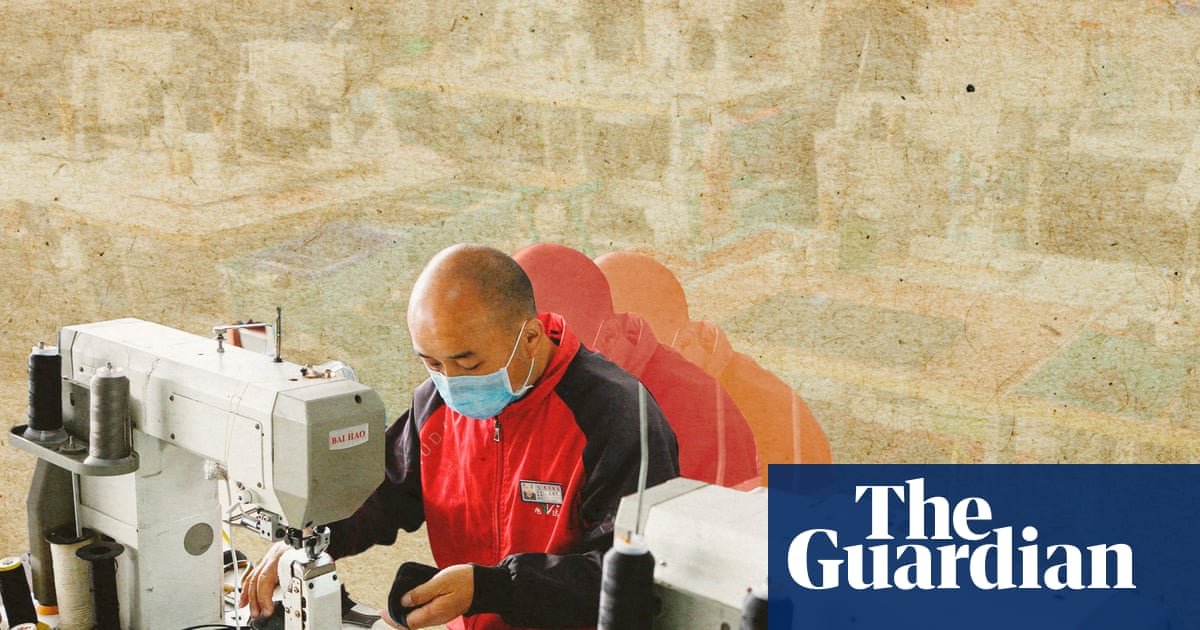
Family run private businesses helped power China’s economic miracle, but the next generation is finding it difficult to carry on the work of their parents
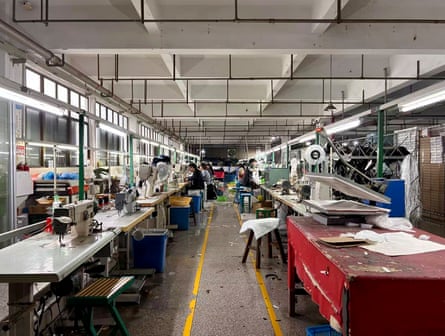
Growing up, Ayu would watch his parents put together hand made leather shoes on the ground floor of their three storey home in the Chinese city of Wenzhou. Their relatives in Europe would send photographs of designer products from Italy for the workers to base their designs on, and in the decades that followed, the tiny family-run workshop transformed into a 700 person factory.
“The factory and the home were the same place. I watched them make shoes by hand, piece by piece, using small machines,” Ayu recalls of watching his parents work in the 1980’s.
By the mid eighties, Chinese economists had a name for this type of bottom up economic growth story: the Wenzhou model. It was a system that saw small companies secure finances through family connections and operate underground factories to produce cheap goods that would end up on the busy streets of China and beyond.
But now many of the family-run manufacturing businesses that helped to fuel China’s economic success are facing a succession crisis, with the children of factory owners unable or unwilling to take them over.
Ayu – who today runs an online e-commerce platform – says it’s not that his generation doesn’t want to take them over, but that the market is much more competitive than when their parents started, and the crucial institutional knowledge and commercial relationships that powered their success will be impossible to pass on.
Personal relationships, experience and instincts are difficult to hand over to the next generation, says Hanqing Fang, an associate professor at Missouri University of Science and Technology.
“Shares can be passed to a son or daughter overnight,” Fang says. “But the heir is being asked to take over something that looks like a company on paper but, in practice, is closer to the founder’s personal belongings.”
“The network is very difficult to inherit,” Ayu says. “You have to build it yourself. In the end, some people inherit an empty shell. On paper they’re the boss, but the people underneath them have already begun to leave.
“We inherited the wealth, but we couldn’t inherit the industry.”
‘I’m not ready yet, because it’s not easy’
According to HSBC Life research, two-thirds of wealthy Chinese people have no legacy plan. In a study led by the University of Ningbo, just 10 out of 114 private companies surveyed said they were being managed by the families’ second generation.
Many of China’s second generation business owners speak of a profound anxiety about taking over the family firm.
“I really don’t want to take over because there are so many interpersonal relationships and financial connections that I’d have to handle and learn about,” says Wu, a graduate who works in marketing in Hong Kong.
His family own a snack processing factory in the Chinese city of Shanwei, as well as dozens of stores in Shenzhen and Hong Kong. But he is reluctant to join the family business.
“Most young people dream of getting rich overnight, but I know there’s no such thing. When inheriting a fortune, you also have to consider all the complicated paperwork and whether you really have the ability to handle those responsibilities,” Wu says.
According to official estimates, China’s private sector accounts for more than half of the country’s tax revenue and 60% of its GDP. Economists say unsuccessful handovers can lead to firms losing value or even closing.
Because family-run companies represent such a large percentage of China’s private sector, if they fail in their thousands it could threaten the country’s future growth.
“The risk is not that these family firms simply disappear. It is that the capabilities embedded in the founder – including the knowhow, the supplier networks and the relationships – are lost in the handover,” Fang says.
For Wu, the idea of one day taking control of the family business is not completely out of the question, but he concedes he still has a lot to learn.
“I’d say that one day my parents’ company will be mine. But I’m not ready yet, because it’s not easy,” Wu says.
“If I could just have the money without any responsibilities, I’d take it without hesitation. But the thing is, it’s not that simple.”
Additional reporting by Yu-chen Li in Taipei
*Given names only have been used