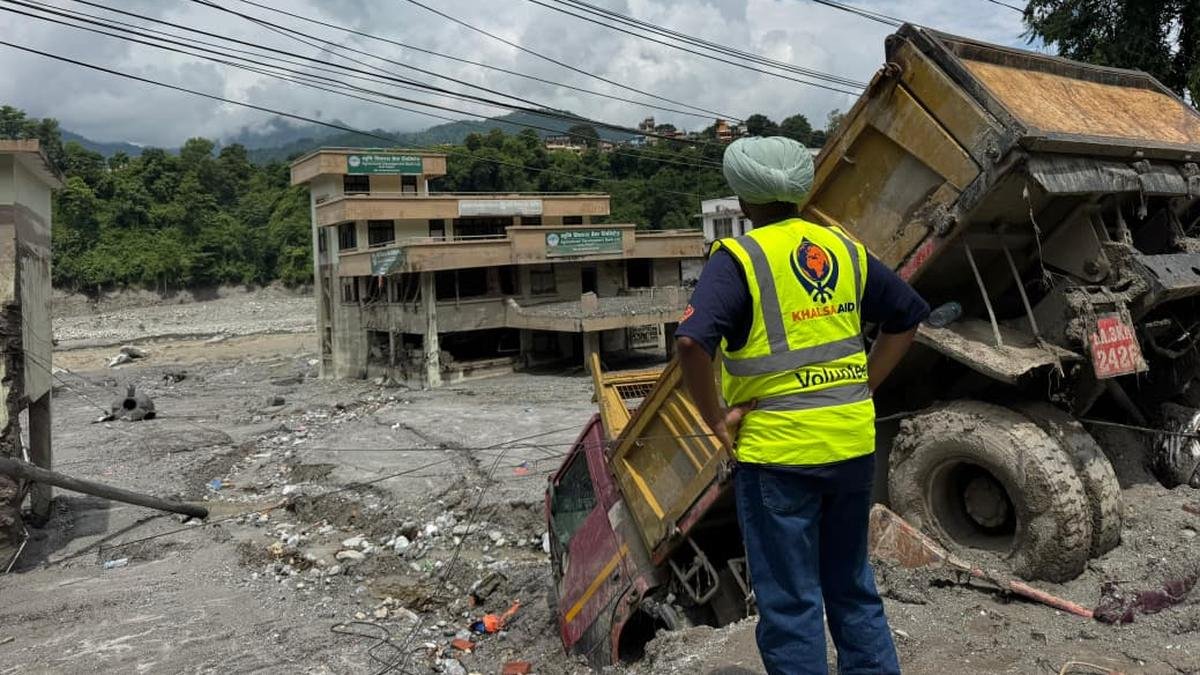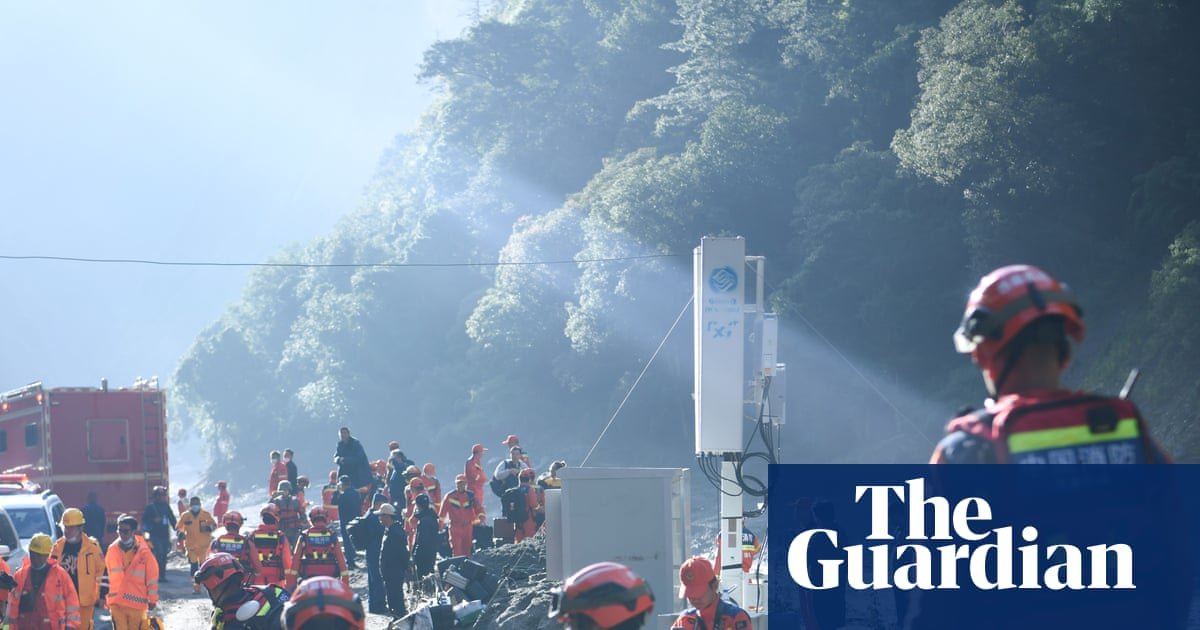
Nepal and China continue arduous search and rescue operations in flood-hit Himalayas
Visual guide: how the deadly flooding unfolded
Nepal-Tibet flash flood – latest updates
The number of people killed in the floods in Nepal has risen to at least 675, the country’s disaster authority has said.
Seven have also been confirmed dead in Tibet by Chinese state media, taking the total killed when a glacial collapse unleashed a deadly torrent through river systems in the Himalayan mountains to 682.
Seven bodies have also been recovered in India from rivers flowing from Nepal and are believed to be flood victims.
The number of people missing in Nepal and Tibet was revised up to nearly 3,000 on Saturday.
The missing list includes 517 foreigners and 933 workers on hydropower projects on the river where the torrent smashed down, Nepal’s National Disaster Risk Reduction and Management Authority said.
A number of rescue workers are also missing, including 45 Nepali army soldiers and 40 police officers.
When a Chinese rescue team reached the all-but-obliterated Gyirong border crossing complex for the first time on Friday, they found “nothing but ruins”.
Surveillance camera footage from the complex showed huge torrents of water and debris on Wednesday engulfing buildings and people trying to flee. Only on Friday were rescuers able to reach the area.
Amid the deepening crisis, Nepal has now said it needs foreign help in specialised and technical areas in which it does not have expertise, but not in search and rescue.
On Friday, Nepal’s foreign ministry had said that Kathmandu could manage the rescue efforts on its own for now and declined foreign involvement.
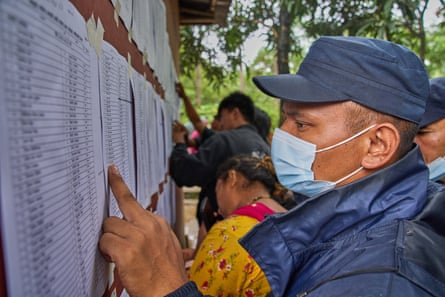
The areas in which Nepal is seeking help include opening transport and communication services in places where bridges have been destroyed, identification of dead bodies, DNA testing, rescuing people stuck in tunnels, and storing bodies for longer durations, the foreign minister, Shisir Khanal, said late on Friday.
Khanal said there was no need for assistance in general search and rescue which was being done by Nepali rescuers. “We think there is no need for repetition in this,” he said.
Nepal has requested that its neighbours, India and China, provide bailey bridges to reopen transport and communication in an area where about two dozen bridges have been destroyed.
So far, India has sent three flights carrying about 60 tons of relief material to Nepal, including blankets, medicines, food and water purification tablets, and a specialised tunnel rescue team.
China has also dispatched five tunnel experts from Tibet to Nepal for flood-related rescue work, Chinese state media reported, as the country called for emergency aid to be sent to disaster-hit areas and for international rescue cooperation.
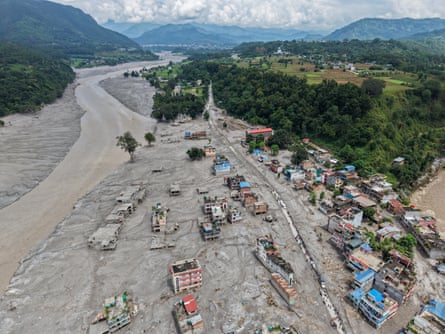
Rescuers – including army personnel and police – have been clawing through mud and using drilling equipment to reach more than 100 people trapped inside a hydropower tunnel in Rasuwa. More than 350 people have already been evacuated from the site under “extremely risky” conditions and the office of Nepal’s prime minister said the rescue effort had become “extremely challenging” due to adverse weather.
Search and rescue operations were temporarily halted because of rain and fog but resumed on Saturday afternoon after the weather improved.
Rescue worker Kawan Koirala, from the Nepal Scout Disaster Response Team, said they had been struggling in thick, leg-sucking mud.
“People want their family member’s body back, either dead or alive, but we cannot find them … you can see the mud,” he told Agence France-Presse, exhausted after an 18-hour shift.
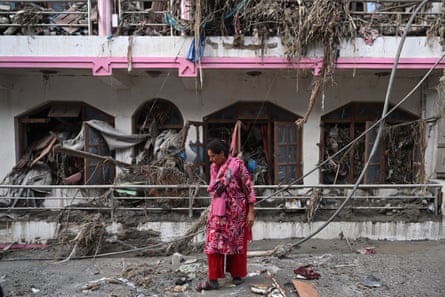
Nepal is continuing to monitor two barrier lakes upstream of the flood zone, with an official warning that flood risks will persist until both lakes fully drain.
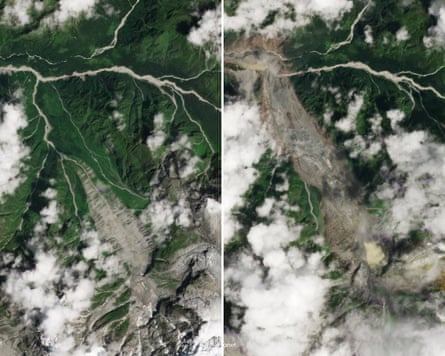
Satellite imagery showed the second lake growing larger with no visible outlet, raising concerns that water pressure could still be building.
China’s state-run Xinhua news agency said that the first barrier lake was reducing in size, citing analysis by the water resources ministry. A Chinese government geohazards expert warned, however, that the lake may be unstable and that more than 100 glacial lakes scattered throughout the area could pose a threat.
In Beijing, a politburo meeting chaired by President Xi Jinping called for stronger monitoring of glacier lakes and landslide risks, and for closer international disaster cooperation, Xinhua reported.
China’s Premier Li Qiang, the country’s No 2 official, arrived in the area of Gyirong on Thursday afternoon, Xinhua said. The visit suggested Beijing was treating the disaster as a matter of the highest national priority.
In China, strict controls on the flow of information from one of its most sensitive regions are hampering the public’s understanding of events.

The BBC and New York Times have reported that videos of the catastrophic floods, widely shared globally, have not appeared on Chinese social media sites.
Tibet, brought under Chinese control in the 1950s, is the most sensitive and tightly controlled region in the country.
The Gyirong border port plays a key role in China’s belt and road network linking the country to south Asia, with logistics zones and vehicle parks built there in the past decade.
Nepal’s finance minister, Swarnim Waglé, estimated the country will need $4-$5bn (£3-£3.7bn) for rebuilding. “This is just an estimate. Loss and damage is being assessed,” he said.
More than 90,000 people have been affected by the disaster, the Red Cross estimated.
Some of the bodies being recovered had decomposed beyond recognition and will need to be identified using DNA samples, Nepali officials have said.