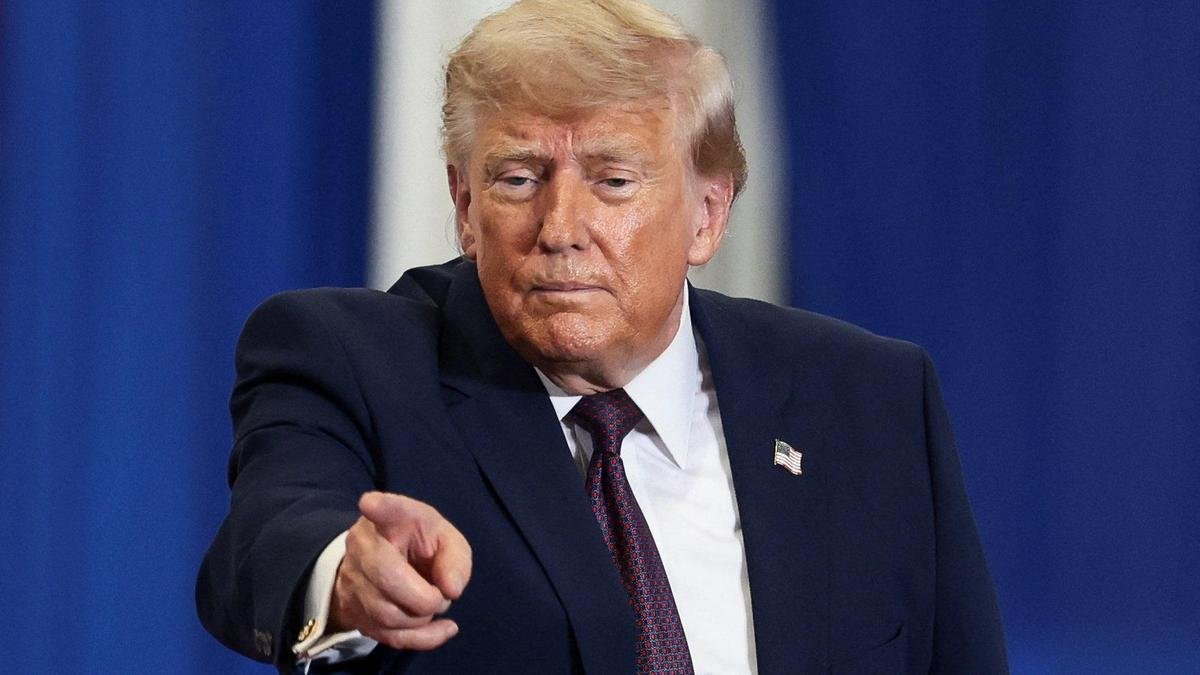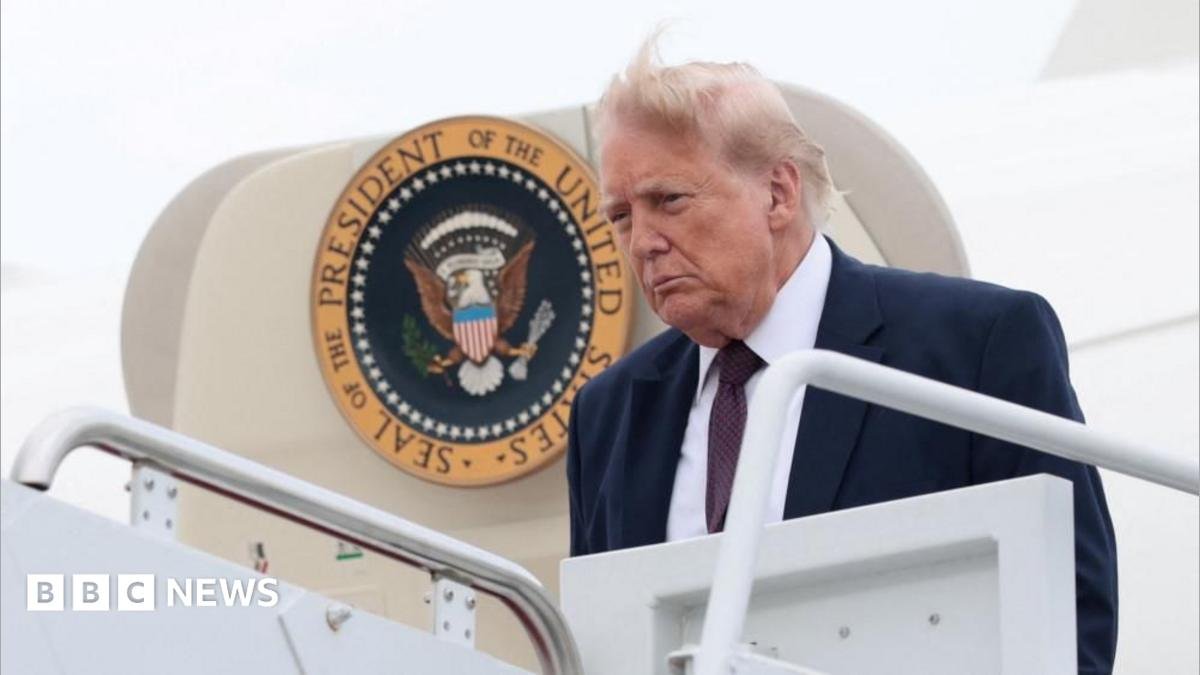
Image source, AFP via Getty Images BySareen Habeshian & Bernd Debusmann Jr, White House reporter Published 23 June 2026 Updated 4 hours ago The Republican-controlled US Senate has approved a measure demanding that President Donald Trump halt the war in Iran or seek congressional approval before continuing military action.
But while the resolution is largely symbolic, it could have political ramifications and represents a rare rebuke of Trump by lawmakers who have largely fallen behind the president since his return to office.
A handful of Republicans joined Democrats in Tuesday's 50-48 vote.
The same measure was passed by the US House of Representatives earlier this month.
It came as Republicans in Congress have expressed scepticism about a peace plan Trump agreed with Iran, and the unpopular conflict approaches its fifth month.
Trump criticised the resolution on Tuesday night, calling it "poorly timed and meaningless".
"So, I have Iran on the 'ropes,' ready to go down for the fall... and the U.S.
Senate decides to have a poorly timed and meaningless War Powers Act Vote," Trump wrote on his Truth Social platform.
"These Senators have just made my job more difficult, but I will get it done, one way or the other, because I always get it done!" UN says it will evacuate sailors stranded in Strait of Hormuz, as Rubio warns against tolls Published 22 hours ago The vote marks the first time that both chambers of Congress have approved a concurrent resolution instructing a president to end a military action since the War Powers Resolution of 1973 was enacted.
A concurrent resolution expresses the sentiment or will of Congress, as opposed to other forms of legislation that go to the president to be signed into law.
In 2019, Trump vetoed a joint resolution that called for the removal of armed forces from hostilities in the Yemeni civil war.
Middle East analyst Laura Blumenfeld called it "more of a slap on a wrist than a handcuff, because it has no legal binding".
But she told the BBC she thought what "it does reflect is the American people's sentiments".
In practice, the vote is unlikely to have little impact on the currently frozen conflict with Iran.
Experts believe he is likely to ignore it - as has every US president since it was enacted - and any legal challenges would likely produce no result.
"As a practical matter, it probably doesn't make much difference," said Michael Glennon, a professional law professor at Tufts University in Massachusetts.
"It's far more significant politically." "You have both houses of Congress, which are under the control of the Republican Party, standing up to the president and saying no," Glennon added.
"That's almost unprecedented." Trump, Glennon noted, has been "very effective" in exacting retribution against dissident Republicans who oppose him.
"This is a watershed event, politically, for that reason," he said.
Whether the vote represents a harbinger of more opposition to the president remains unclear, however.
"I wouldn't overreact to the significance of this vote," said Jonathan Entin, a constitutional law professor at Case Western Reserve University in Ohio.
"It's important... but I'm not sure that we should view it as a sign of consistent conflict, or additional conflict, with the president." According to Entin, the upcoming November midterm elections in the US mean that while a handful of Republicans may wish to signal independence from Trump to bring in independent voters, many others will be hoping to avoid drawing his ire.
"There are constraints," he said.
"The president has overwhelming support among Republicans.
A candidate who pushes back too much might risk alienating strong Republican voters who think they aren't committed enough." The same measure was passed earlier this month by the US House of Representatives, where four Republicans joined every Democrat to approve it in a 215-208 vote.
But a White House official told the BBC that with the ceasefire agreed on 7 April, there are no hostilities from which to withdraw American forces.
The official also said the measure only passed because two Republican senators were absent: Mitch McConnell and Dave McCormick.
Four Republican senators voted with Democrats in support of the resolution: Rand Paul, Lisa Murkowski, Susan Collins and Bill Cassidy.
Democratic Senator John Fetterman was the only member of his party to vote against it.
It was the latest sign of division among Trump's fellow Republicans ahead of the midterm elections in November, which will determine whether the party can hold on to its slender majorities in both chambers of Congress.
Some Republicans have resisted the president recently, including by rejecting his plans to create a $1.8 bn (£1.3bn) "anti-weaponisation" fund and approving Ukraine aid.
Tuesday's vote was the 10th time that Senate Democrats have forced a war powers vote since the start of the war.
It came the same day as the Pentagon asked Congress for some $80bn, most of which is to pay for the war with Iran.
Federal law requires congressional approval to continue military actions for more than 60 days.
The US-Israel strikes on Iran began on 28 February, although the Trump administration has argued April's ceasefire reset the clock.
The White House can also extend the deadline for another 30 days, citing national security.
Currently, the US and Iran have agreed to continue a ceasefire and are working towards an end of hostilities under a memorandum of understanding that was signed by the presidents of both countries last week.
Under that memo, Washington and Tehran have 60 days to negotiate a broader agreement on ending Iran's nuclear programme.
Dozens of ships head through Strait of Hormuz after US-Iran deal Published 1 day ago Iran says no new commitments on nuclear sites after Vance says inspectors to be invited back Published 1 day ago US House delivers rebuke to Trump as it votes to halt Iran war Published 4 June Follow the twists and turns of Trump's second term with North America correspondent Anthony Zurcher's weekly US Politics Unspun newsletter.
Readers in the UK can sign up here.
Those outside the UK can sign up here.