A challenge against the decision to grant planning permission was dismissed
42m agoChinese super embassy planning permission decision upheld at High Court
2h agoBP puts North Sea oil and gas business up for sale
2h agoHarriet Harman suggests men should be banned from running for the next Labour leader
3h agoDiane Abbott and Joani Reid readmitted as Labour MPs
3h agoTax rebates 'not possible at the moment' under devolution reforms, minister says
3h agoAndy Burnham to set out devolution plan amid criticism it won't benefit regions equally
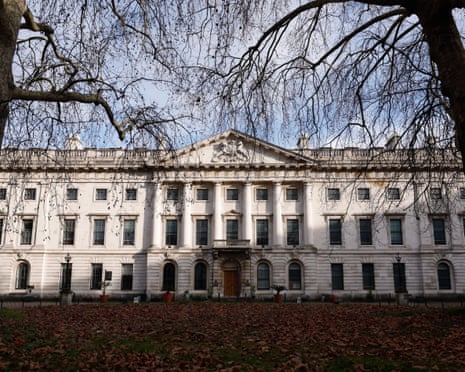
The construction of a new Chinese “super-embassy” in London, which is set to be built near the Tower of London, can go ahead after a high court challenge against the decision to grant planning permission was dismissed, PA Media is reporting.
The Royal Mint Court Residents’ Association (RMCRA) brought legal action against the Ministry of Housing, Communities and Local Government and the London Borough of Tower Hamlets.
It said the presence of the embassy could lead to terrorist attacks or the repression of protests, while being used to enforce “draconian” Chinese laws in the UK and to target dissidents.

The association, which represents families and businesses in about 100 properties, also said diplomatic immunity could make it hard for UK authorities to enforce fire safety rules if the Chinese government ignored them.
The government and the council defended the claim, saying they “conscientiously and carefully had regard” to the residents’ concerns. Following a hearing at the high court earlier this month, two judges dismissed RMCRA’s challenge.
As we reported in an earlier post, the long-serving Labour MP Diane Abbott has been let back into the party after she was suspended last July after repeating comments about racism for which she had previously apologised.
In a statement posted to X late last night, the MP for Hackney North & Stoke Newington said: “Today, following a process conducted in line with party rules and approved by the independent review process I have been readmitted to the Labour party.
“I have been issued with a formal warning for a tweet I previously posted. By inadvertently referring to the Israeli Defence Force as the ‘Jewish Defence Force’, I used wording that conflates the actions of the state of Israel with the Jewish community. I am deeply sorry for any hurt caused by that conflation and apologise for any hurt caused by it.”
Abbott was first stripped of the Labour whip in April 2023 after writing a letter to the Observer in which she argued that Jewish, Irish and Traveller people experienced prejudice rather than racism. As my colleague notes in this story, she apologised and withdrew the remarks, saying an earlier draft had mistakenly been submitted for publication.
She was readmitted to Labour before the 2024 general election but in a BBC interview last year she defended her original remarks. Seperately, in July 2025, Abbott, 72, referred to the Israel Defense Forces as the “Jewish Defence Force” in a social media post she published. She was given her second suspension last summer, which meant she was forced to sit as an independent MP instead of a Labour one.
The Board of Deputies of British Jews, the largest body representing British Jews, reacted to Abbott’s readmission to Labour in a statement posted on social media.
“This is an early test of resolve for the Burnham administration,” the group’s president, Phil Rosenberg, said. “It is hard to conceive of the whip being restored unless there is clear and sustained evidence of genuine remorse”, he said, adding that an “unequivocal recognition that antisemitism is racism” is also needed.
The SNP has called for “decisive action” from Andy Burnham after BP announced it was selling its North Sea operations.
Reacting to the news, SNP Westminster leader Dave Doogan said:
Workers don’t want thoughts or warm words from the prime minister, we need decisive action to safeguard jobs, energy security and confidence in the North Sea. What we have here is an historic business that has employed thousands of Scottish workers and a major part of the Scottish economy opting to leave the North Sea. The destruction of one of Scotland’s foremost industries is happening right before our very eyes. There is no moral high ground to be found in ruining oil and gas jobs in Scotland to sponsor those very same jobs halfway around the world at a higher carbon cost, with our energy security put at risk and renewables investment lost.
Workers don’t want thoughts or warm words from the prime minister, we need decisive action to safeguard jobs, energy security and confidence in the North Sea. What we have here is an historic business that has employed thousands of Scottish workers and a major part of the Scottish economy opting to leave the North Sea.
The destruction of one of Scotland’s foremost industries is happening right before our very eyes. There is no moral high ground to be found in ruining oil and gas jobs in Scotland to sponsor those very same jobs halfway around the world at a higher carbon cost, with our energy security put at risk and renewables investment lost.
Burnham has come under considerable pressure from trade unions and some of his backbenchers to support increased drilling in the North Sea. The pressure to issue new licences has intensified since the start of the US-Israel war on war in February, with the resultant closure of the strategic strait of Hormuz causing energy costs to spiral.
The prime minister is expected to stick to Labour’s 2024 manifesto promise that no new oil and gas licences would be issued, but reportedly could approve drilling at the Rosebank and Jackdaw fields, which were given approval under the Conservatives but put on hold by legal action.
BP has put its North Sea oil and gas business up for sale as it looks to end six decades of production from the region.
The firm announced on Friday morning that it had launched a formal process to market its North Sea business for a potential sale. The move comes as BP’s new chief executive, Meg O’Neill, tries to simplify the company and cut its debt levels.
O’Neill said in a statement: “The North Sea remains integral to the UK’s energy system. However, as we focus our portfolio and direct capital to our highest-value opportunities, we believe our North Sea business will be better positioned as part of another company.”
She said the UK would “continue to play an important role” in BP’s future. “We’re proud of the jobs we create, the contribution we make to the UK economy, and the work we do to keep energy flowing every day,” she said.
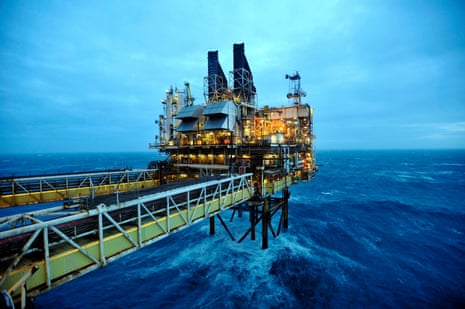
BP’s involvement in the North Sea dates back to 1964, when it was granted its first UK North Sea licence. The company discovered the West Sole gasfield in the winter of 1965, followed by its largest discovery in the area, the giant Forties field, in 1970.