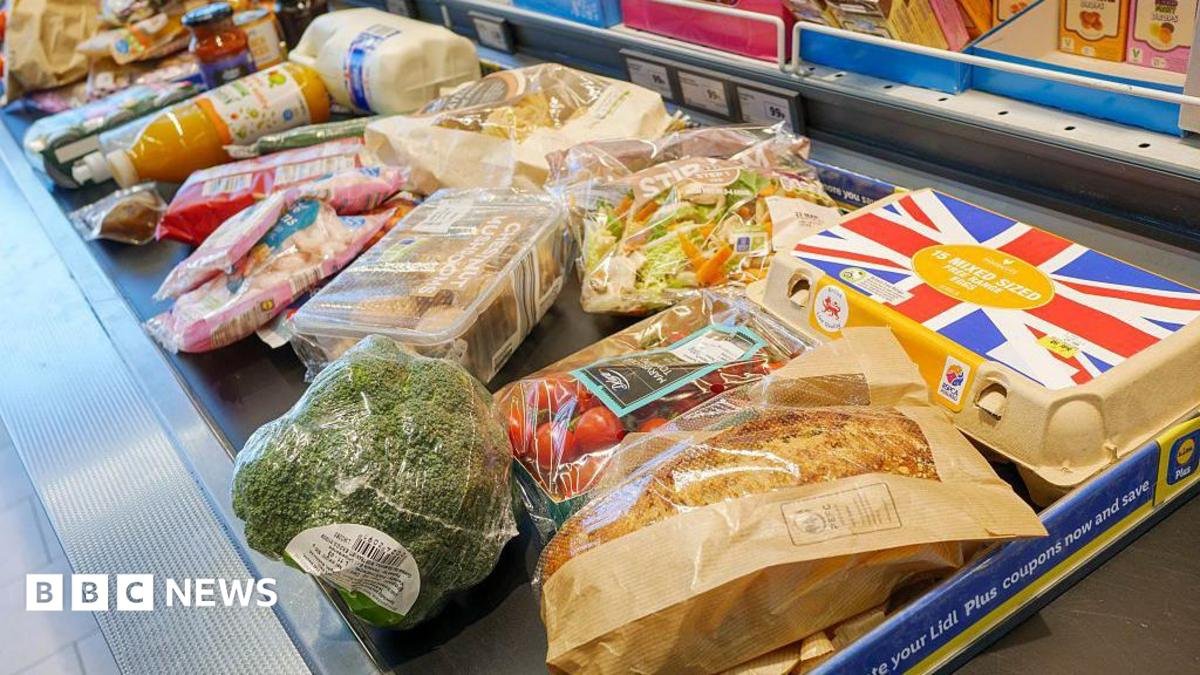
While this summer's hot and dry weather might be enjoyed by sunbathers, it is less than ideal for farmers. Could it also have an effect on the prices we pay for food at the shops?
A chilled supermarket aisle might just be the most comfortable place to be as heatwaves continue to warm up the UK.
Fridges are working in overdrive to keep produce cool, shutters are being pulled down to keep the hot air at bay, and some goods are being taken off the shelves on the hottest days.
More than half of England has entered drought conditions, according to a declaration by the Environment Agency last week.
But as temperatures continue to soar, the chillers are not the only thing that retailers might be adjusting.
Extreme weather creates a knock-on effect on all parts of the supply chain, and the British Retail Consortium is warning that could force prices up.
What is a supply chain?
A supply chain involves a small number of stages, from a product being made until it gets to the shops for people to buy.
If you take a loaf of bread as an example, first the grain is grown, harvested, milled and stored until it is ready to be taken to a factory.
Those ingredients are used to bake and package the bread, which is taken to warehouses before eventually ending up on supermarket shelves.
Each stage of that process will incur expenses such as transport and storage, and rising costs at any step could end up in the product you buy being more expensive.
Last week, farmers and flour producers said they were adapting to the challenges of dealing with the earliest harvest for 50 years.
And the National Farmers' Union has warned there could be a shortage of certain food products if current drought conditions continue.
'Dad didn't want to stay in hospital – I'm so glad he's being treated at home'
'I want my daughters to see the great side of farming'
Watch: Roof above Iceland supermarket collapses