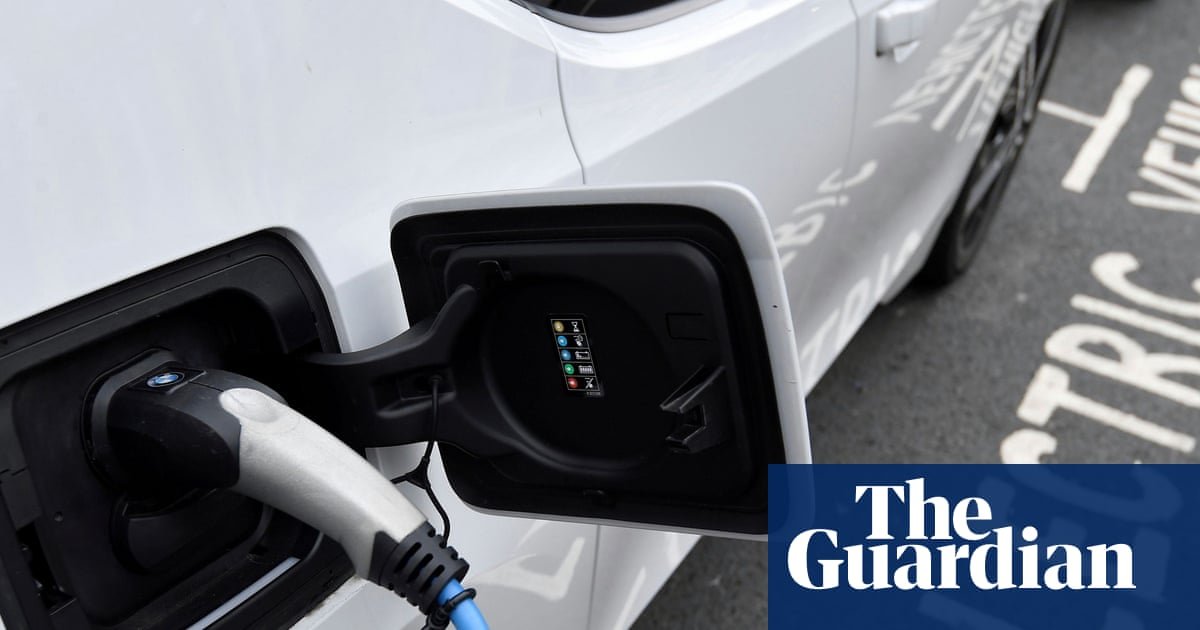
Demand for secondhand electric cars has been helped by steep increases in petrol prices since the US and Israel launched their attacks on Iran in February.
Numbers using finance rises 170% in a year as leasing firms boom alongside leapin secondhand vehicle supply and surging fuel prices The number of people leasing used electric cars in the UK has more than doubled in the last year as drivers look for cheaper ways to avoid soaring petrol prices during Donald Trump’s war on Iran.
Used electric car leasing has risen by 170% in the last year across members of the British Vehicle Rental and Leasing Association (BVRLA), a lobby group whose members buy about half the UK’s new vehicles to lease them out to businesses and consumers every year.
The supply of secondhand electric cars is rising rapidly, as cars bought new by early adopters feed through into the used market.
The number of electric cars on British roads surpassed 2m earlier this year.
Most new vehicles in the UK – about 85% – are bought with finance, with British drivers favouring a monthly cost rather than an upfront payment.
However, the number of firms offering leasing for secondhand electric cars had been relatively small until recently, with providers waiting until there were more cars on offer, as well as better data on how long they would survive.
Demand for secondhand electric cars has been helped by big increases in petrol prices since the US and Israel launched their attacks on Iran in February.
Higher fuel prices have made owning an electric car cheaper relative to petrol for many people.
The number of EVs coming on to the secondhand market is rising as early adopters upgrade their vehicles.
“Used leasing is giving consumers real choice: access to a well-maintained electric car with the latest technology, at a range of price points, without taking on the financial risk.
Used [car] salary sacrifice, in particular, is opening electric driving to households that previously thought it was beyond their reach,” he said.
Salary sacrifice in effect subsidises electric vehicle purchases by allowing people to deduct the cost of cars before tax is calculated.
The number of secondhand EVs leased this way has risen fivefold in the last year, the BVRLA said.
Personal contract hire for used cars has increased almost six times over.
Under such contracts, people in effect rent a car for a monthly fee.
That minimises the risk of losing money on depreciation, although it also means the user does not own the car after the leasing period ends.
Early growth in electric car sales came through businesses because of generous tax breaks on benefits in kind for employees.
The BVRLA said business contract hire for used EVs rose 50% in the last year.
The Electric Car Scheme, a salary sacrifice company, said its used EV leasing had more than tripled since its introduction in 2024.
Thom Groot, its chief executive, said: “Affordability is driving that shift, as used vehicles bring EVs within reach of people who couldn’t justify a new one, and supply catching up with demand means we’re expecting growth of 80% to 120% over the next year.” skip past newsletter promotion after newsletter promotion Groot said one thing holding back secondhand leasing was that benefit in kind tax breaks were calculated on a car’s value as new, even when someone was buying secondhand.
Octopus Electric Vehicles, the car arm of the UK’s largest retail energy provider, said it had recorded 122% year-on-year growth to June in secondhand leasing.
Gurjeet Grewal, Octopus EV’s chief executive, said: “Used EVs are one of the best-value ways to go electric.
Drivers are catching on fast – they’re selling quicker than the rest of the used-car market because the savings are simply too good to ignore.
“You get the same cutting-edge tech, the same low-cost electric driving, but for around £60-70 less on average a month than leasing a new EV – with some models offering savings of up to £200.
It’s no surprise demand is accelerating.” Explore more on these topicsMotor finance Automotive industry Electric, hybrid and low-emission cars Motoring news Share Reuse this content