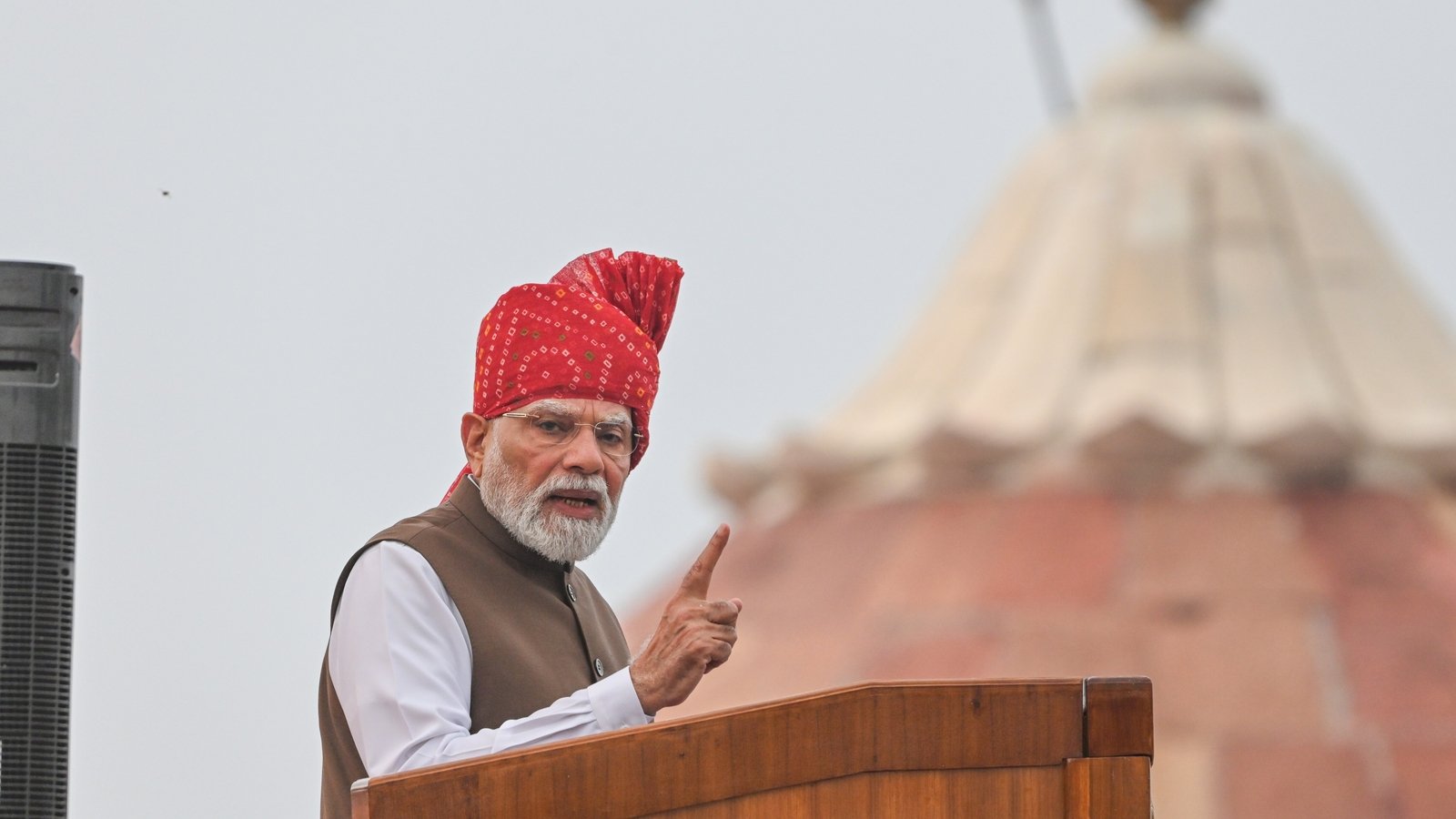
Updated on: Aug 17, 2026, 18:00:57 IST By HT News Desk Prefer HTon Google Share via Copy link This was Prime Minister Narendra Modi's 13th address from the ramparts of the Red Fort.
The previous twelve were built largely for a domestic audience.
This one was not.
It was a global speech — and that distinction matters.
HT's Shishir Gupta decodes PM Modi's Independence Day address.
Self-Reliance, Redefined Three words anchored the address: self-esteem, self-confidence, self-reliance.
Around them, the Prime Minister built a case for three assets — semiconductors, critical minerals and energy.
On semiconductors, he spoke of scaling from three plants to eight.
On minerals, of joint ventures to secure supply chains India doesn't control today.
On energy, he split the pitch into nuclear power and exploration — moving India from ‘no-go’ to ‘all-go’ zones, unlocking roughly a million square kilometres in the Bay of Bengal of offshore area that had been stuck for years on defence and environmental clearances.
The framing was also civilizational: at a time Pakistan is staking claim to the Indus Valley legacy, PM Modi invoked the ‘Sapt Sindhu’ — a deliberate, pointed counter.
That is the deficit Modi is trying to close.
His message was blunt: India is no longer only the market; it intends to be the supplier.
But that shift needs reform on the ground — cutting not just the ease of doing business, but its cost, where bureaucrats answerable once every 35 years often move more slowly than politicians who face voters every 5 years.
Foreign Policy: Answering The Critics The opposition used the Monsoon Session to target Modi's foreign policy — the optics of hugging world leaders, and strained ties with neighbours like Bangladesh.
The record tells a different story.
India's revival of Gulf ties, with the UAE now among its closest partners, marks a sharp turn from the era when an Indian ambassador was denied entry to receive the hijacked IC-814 Middle East.
India today is the first responder in disasters from Nepal to Turkey to the Maldives, and sits at the global table rather than the side one.
None of this is separate from politics: BJP's West Bengal win rattled the opposition, and with Uttar Pradesh, Punjab, Himachal and Goa — nearly 150 Lok Sabha seats worth of states — heading to the polls, manufacturing grievance is a strategy, not a critique.
Energy investment, including nuclear and solar, is partly aimed at powering this AI-driven economy.
This is not a social-media narrative; it is visible on the ground.
Consensus Over Numbers On Women's Bill Modi's renewed appeal to the opposition on the Women's Reservation Bill mirrors his approach to the FCRA amendment — he has the numbers to push legislation through, but wants opposition buy-in.
Delimitation, too, will happen; the ask is for the opposition to be part of that picture rather than outside it.
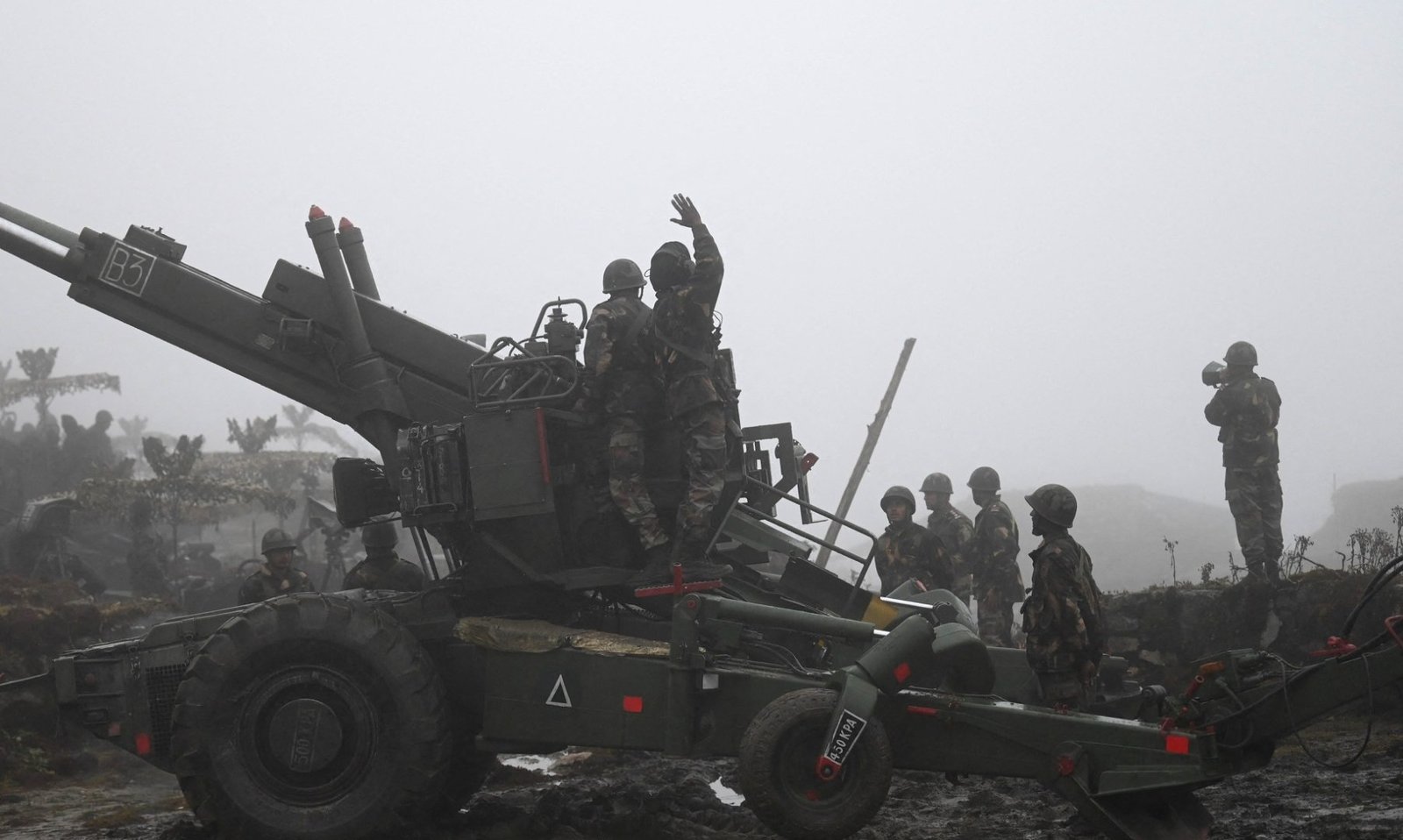
The M1 interceptor, covering 100–400 km, was tested on July 23, 2026; a validation test of its kill vehicle is expected within two to three months.
Once cleared, extending range via added boosters should deliver the M2 and M3 tiers within a year, under Project Kusha, integrating with S-400 and next-generation Barak systems, alongside an 800-km-range BrahMos upgrade.
Parallel, largely classified activity in the Andaman and Nicobar Islands is aimed at building leverage in the Bay of Bengal.
The Sovereign Engine Question Reliance's tie-up with Rolls-Royce and GTRE's with France's Safran, both pending Cabinet Committee on Security clearance, highlight a real dependency risk: Rolls-Royce's deep US component ties mean Washington retains leverage.
France, by contrast, kept supplying navigation systems for India's Prithvi missiles even after the 1998 nuclear tests made India a pariah.
A private-sector engine is welcome, but India still needs a sovereign one — which is where the Safran partnership, and the indigenous Kaveri programme, matter.
He was not labelling the opposition; he was targeting a specific strain of Maoist-Leninist ideology embedded across media, academia and government — people who find something to oppose in India regardless of the facts.
The politics around it will continue.
But until the opposition offers a competing vision rather than commentary, that criticism will struggle to land beyond social media.
Operating round the clock, the desk brings together experienced editors, reporters and correspondents to deliver fast, accurate and contextual reporting across subjects that influence public policy, governance, business, society and international affairs.
The HT News Desk covers politics, elections, government policies, the economy, business and markets, science and technology, the environment, law and order, infrastructure, education, climate issues and geopolitics, while closely tracking developments across states, institutions and global capitals.
The team also leads coverage of major breaking news events, policy announcements, court proceedings, natural disasters, public emergencies and significant international developments.
Reports published by the newsdesk are based on information gathered from reporters on the ground, official statements, government agencies, court records, regulatory filings, recognised institutions and other authoritative sources.
Stories undergo editorial scrutiny and verification processes to ensure accuracy, fairness and relevance, and are updated as events evolve and additional information becomes available.