New laws coming into force this week aim to streamline age checks although old-style plastic IDs will still be allowed
Younger drinkers in England and Wales will be able to prove their age with a digital ID starting this week as new laws give pubs, off-licences, nightclubs and restaurants the right to use biometric scanning technology to check customers are over 18.
Customers will be able to download software that scans their faces into their own phone to generate a QR code proving their age based on a stored proof of age. Other tech under consideration as part of the government push to digitise age verification for alcohol sales include a device which scans the veins in a drinker’s finger to verify their age. That system has not yet been approved for use.
The use of digital ID for alcohol comes despite Andy Burnham axing plans for a national digital ID this summer amid a wave of concern about the implications for civil liberties.
In this case, the digital ID will be provided by private companies and will not be mandatory. Plastic driving licences and passports will still work, meaning it may not spell the end for fake IDs. It could later be extended to purchases of vapes and tobacco.
Stephanie Peacock, the digital government minister, said: “This groundbreaking change in the law will mean you do not need to carry a physical ID, nor hand over sensitive personal information such as your name or address just to prove your age – allowing everyone to feel safer on a night out.”
The government believes the new system will reduce the effectiveness of fraudulent ID and the risk of sensitive data being exposed when customers are required to show bar staff passports or driving licences which display names and home addresses.
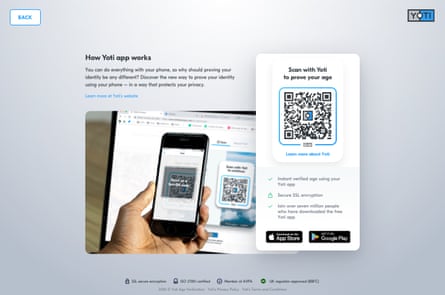
Different companies are supplying the apps – including Yoti and Luciditi. The customer will typically only have about 30 seconds between scanning their face on their phone and validating the credential with the retailer to avoid underage drinkers borrowing older friends’ phones.
In some cases the systems can cost retailers money to operate and Allen Simpson, chief executive of UK Hospitality, said it would work “to ensure the rollout of the scheme, with multiple supplier options available, is cost-efficient and not burdensome for the hospitality sector”.
Yoti estimates about a quarter of 18- to 25-year-olds in the UK have already downloaded its digital ID app or one called EasyID it provides with the Post Office, with about 8.5 million people in the UK using them overall.
With different alcohol vendors likely to accept different apps, a patchy start to the system is expected, similar to the rollout of contactless payment, which took nearly 20 years to reach ubiquity after its introduction in 2007.