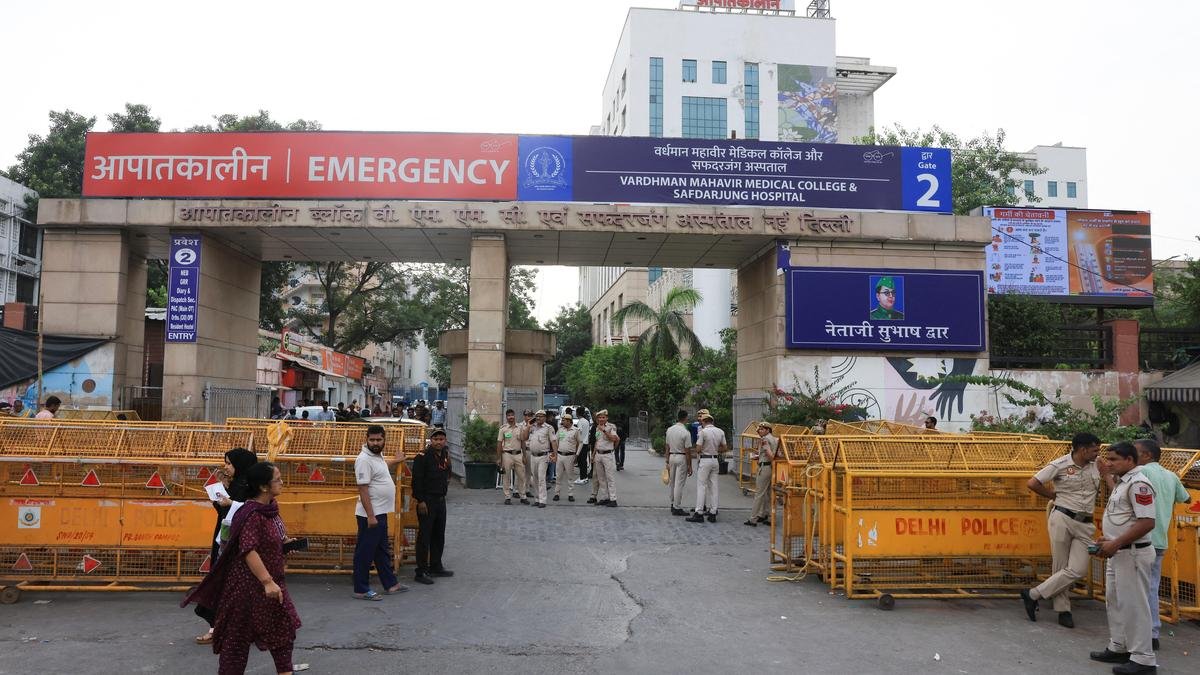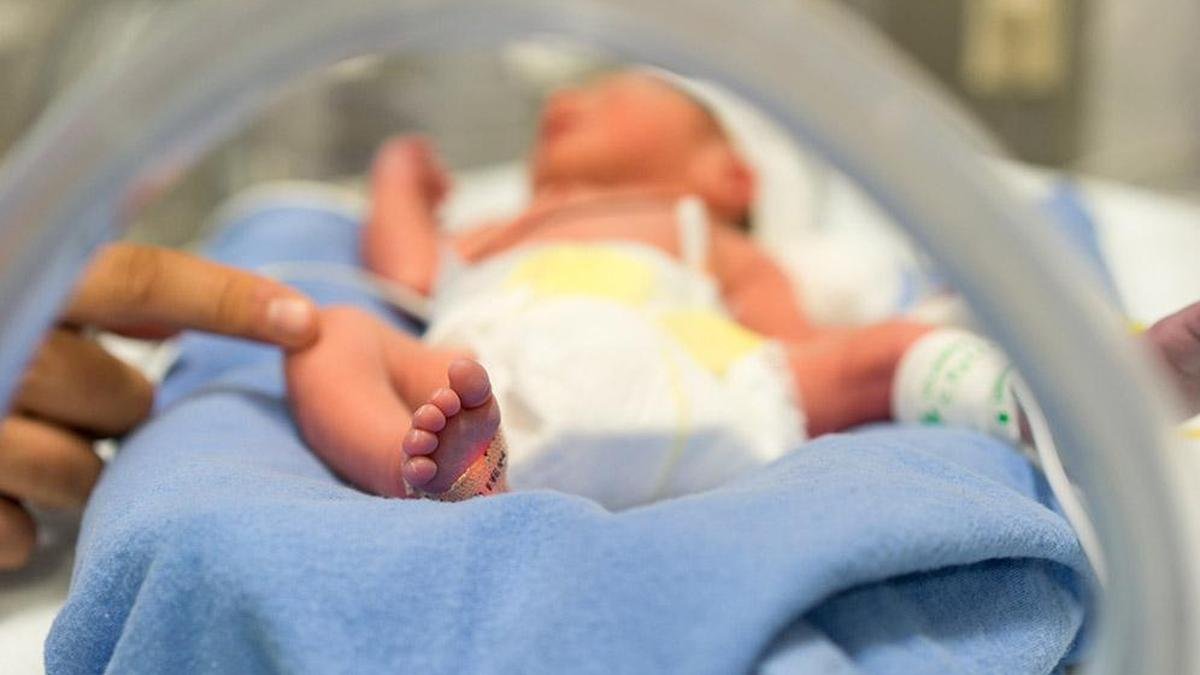
On July 6, in Dombivli, Maharashtra, a Shiv Sena corporator named Ramesh Mhatre walked into a municipal hospital with a group of supporters over a dispute about a NICU bed.
CCTV caught him striking a female doctor.
A male resident at the same hospital was beaten badly enough that he and four staff members resigned rather than keep working without, in his words, any assurance of security or respect.
Before his arrest, Mhatre said he didn’t care about anything except that he’d saved a mother and child, and accused the doctor of being arrogant.
Somewhere in that sentence is the whole disease.
This is not just a one-off incident.
It is the norm.
The Indian Medical Association has tracked this issue for years, and the numbers have hardly changed.
About three out of every four doctors in India say they have faced violence at work during their careers, mostly in obstetrics, emergency medicine, and surgery.
These are the departments where results are hardest to control and emotions run high.
The pattern is sadly familiar: when a patient’s condition does not improve, the family’s fear turns into anger, and the nearest doctor becomes the target.
Many people think this is a problem unique to India, caused by crowded government hospitals and an overburdened public health system.
But it is not.
In India, violence is often physical and happens right away, sometimes by a group in a hospital hallway.
In America, it often comes later in the form of a lawsuit, though sometimes it is also immediate.
In 2015, Michael Davidson, a cardiac surgeon at Brigham and Women’s Hospital in Boston, was shot and killed by the son of a patient who had died months earlier.
Davidson had done nothing wrong; the son just wanted someone to blame and used a gun to make sure someone paid.
I have a colleague who was attacked with a pistol by a patient’s family member.
He survived, but he has never been the same, and I doubt he ever will be.
Reconnect public health with people’s needs Understanding the costs By the time a doctor sees their first solo patient, they have already spent a decade or more in training — college, medical school, residency, often fellowship on top of that — while friends outside medicine were building careers, buying houses, starting families.
Those are not just long hours.
Those are the years you don’t get back, traded deliberately for the ability to recognise the 15-minute window where a heart attack is still reversible, or the two-week window where a NICU bed actually matters.
Most of us who choose to do this because we want to be good at something that helps people, not because we were chasing status or money.
And then we walk into a system — underfunded in India, over-litigated in the West — that we did not design, cannot fully control, but are nonetheless held personally responsible for when it fails.
Because the truth about medical error is inconvenient and rarely said out loud: the overwhelming majority of bad outcomes is not the result of one doctor’s incompetence or carelessness.
It is the product of systems — short-staffing, bed shortages, broken handoffs, delayed diagnostics, patients arriving too late, insurance denials, and understocked ICUs.
Doctors are simply the last visible node in a long chain of decisions we didn’t make.
When that chain breaks, we are the face of it, and we absorb the blow meant for the whole system.
Consider Kafeel Khan.
In August 2017, dozens of children died at a Gorakhpur hospital when the liquid oxygen supply was cut off because the State government hadn’t paid the vendor’s bill.
Dr.
Khan was the junior-most doctor on that ward — nowhere near the procurement chain — yet he was arrested and spent nine months in jail on charges of negligence and corruption.
He was the one who spent his own money buying cylinders and arranged a truck to bring more in that night.
He was fully acquitted two years later, once an inquiry confirmed what should have been obvious from the start: the failure was administrative, not medical.
He still paid for it with his freedom and his career.
I want to be fair here.
My own experience in the U.S. has, for the most part, been with a legal system that works reasonably well — patients and families who are realistic about what medicine can and can’t do, and a malpractice process that, while slow and stressful, is generally rigorous and even-handed when it finally resolves.
That has not been everyone’s experience, and it is not the experience of doctors in India facing a mob instead of a courtroom.
But even a fair system exacts a price.
One of my partners can no longer bring himself to attend patients’ funerals after a widow screamed at him at the service.
Another physician I know simply quit medicine after losing a patient and being screamed at by the family in the aftermath.
These aren’t rare stories among us.
They’re common enough that we’ve stopped being surprised by them.
35% doctors in India feel unsafe while at work, study shows Losing a patient When I lose a patient, I lose something else too, for a while — the ability to be around people, to make small talk, to feel like celebrating anything.
I replay the case.
What could I have done differently?
What did I miss?
Most people outside medicine assume doctors move on quickly because we’ve “seen it before.” We don’t move on quickly.
We just learn to hide it well enough to walk into the next room and do it again.
Violence against doctors is a symptom.
What is the disease?
Where I land We have to become a more patient society — not because doctors are beyond criticism, but because intimidation and violence have never once made a system safer, faster, or more competent.
They only make good people leave, and they make the ones who stay more guarded, more defensive, more likely to order the extra test or make the referral instead of trusting their judgment, because trusting their judgment got the last person a beating or a lawsuit.
We don’t have all the answers.
We never did.
Medicine is an exercise in probability performed under time pressure with incomplete information, and sometimes, despite everyone doing everything right, the outcome is still a loss.
We are all going to die of something, eventually.
No corporator’s fists and no courtroom will change that fact.
What we can change is whether the people who spend their lives trying to delay that outcome for others are met with a little more patience and a little more forgiveness — instead of becoming, again and again, the nearest acceptable target in an already overheated room.
The beating will continue until morale improves.
At some point, we have to stop and ask exactly what we think it is going to fix. (Dr.
Dinesh Arab is Director, Interventional and Structural Cardiology, AdventHealth Daytona Beach and Clinical Assistant Professor of Medicine, Florida State University dinarab@yahoo.com)