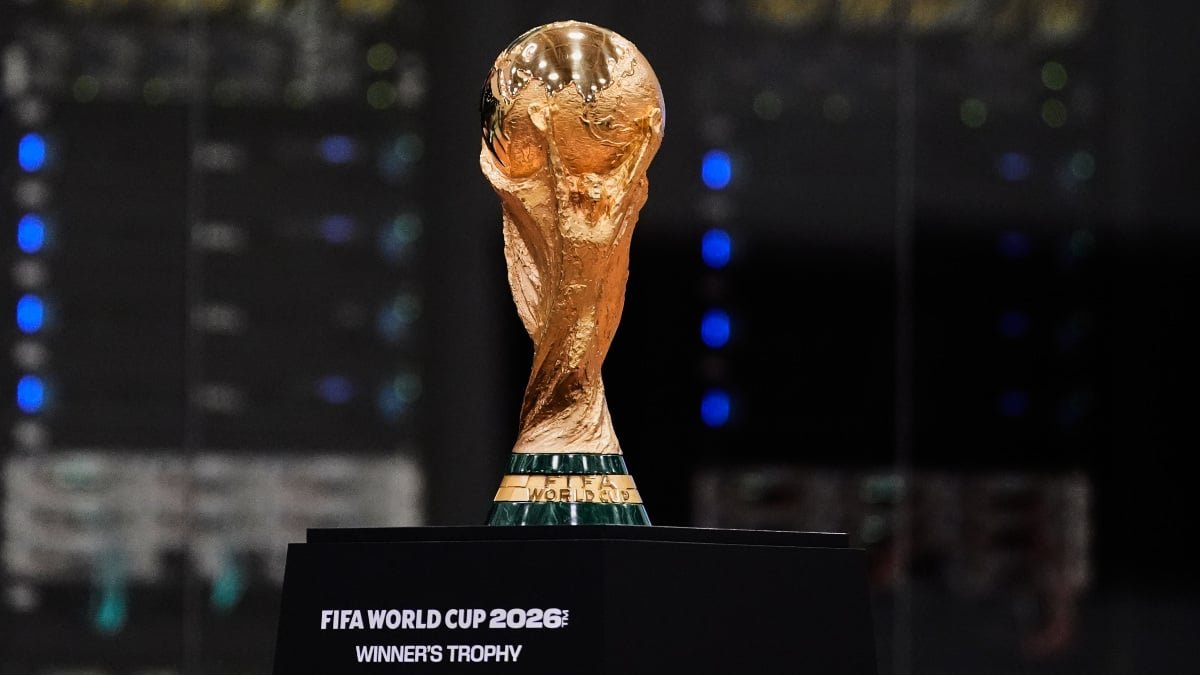
The group stage of the 2026 FIFA World Cup has delivered, and how. And we have plenty of entertainment to come still. With this being a 48-team tournament, and with there being an extra knockout round, 32 teams will go through, as opposed to 16. The lesser fancied sides will, thus, have a proper bite at the knockout cherry.
But before we get into that, it might be wise to look at how teams will get paired against each other.
Who qualifies automatically?
The group winners and the runners-up of each group. That makes it 24 teams. Some of the group winners play the runners-up from another group. Some will play against teams that have finished third in their respective groups. Fair or not, it is what it is.
Which third-placed teams will qualify?
Once every group stage match is done, 12 teams, across the 12 different groups, will finish third. Apologies for stating the obvious.
The intra-group tiebreaker is head-to-head results, which is why Turkey had been eliminated long before their final group game, given they had lost to the only two teams (Australia and Paraguay) they could have finished level with.
Once the identity of these 12 third-placed teams is clear, they will be pitted in a consolidated table against each other. And in this table, goal difference (GD) will take precedence because, well, there is no head-to-head possible.
In case the GD of two teams is tied, the next tiebreaker is goals scored. If that is also the same, something known as the highest team conduct score will come into play, which comprises of six different (and maybe dubious) aspects, including but not restricted to the number of yellow and red cards accrued.
If that score also comes out to be the same, FIFA rankings will be called upon (with a pre-determined cut-off date, of course). Although for everyone’s sake, hopefully it does not get to that.
Quick Reads
No Fifa World Cup 2026 for Indian football fans? The broadcasting controversy, explained
That’s the complicated part done. Right? Right?
Well, not quite. That complicated process, if anything, is only a prelude to what is to come.Four group toppers will play four group runners-up. These are the group toppers from Group C, F, H and J, and they will play the runners-up from Group F, C, J and H, respectively.
Argentina, now that they have confirmed top spot in Group J, will play one of Cabo Verde, Spain, Saudi Arabia or Uruguay. Whoever among Japan, Netherlands and Sweden finishes top of Group F, will play Morocco. Many other combinations may be possible, depending on where teams finish. But these are examples of how it could unfold.
This, though, was the easy part. The remaining eight group toppers will face a third-placed side. USA, as an example, are assured top spot in Group D, meaning they will face one of the third-placed teams from Group B, E, F, I or J. Bosnia and Herzegovina, who are all but assured to qualify from Group B as one of the eight best third-placed teams, will likely face USA.
Why, you may ask?
Because FIFA has been understanding enough to publish ALL possible permutations. 495 of those exist, and out of those, there are 330 possibilities that have a third-placed team from Group B qualifying. Of those, there is only one permutation – if third-placed teams from Group A, C, D and F are eliminated – where this Group B team DOES NOT face the Group D topper, making the USA-Bosnia and Herzegovina RO32 tie a near certainty.
The winner of this game will play the winner of the RO32 game between the Group G topper and potentially South Korea, who could qualify as a third-placed team from Group A.
Germany, by a similar logic, are more likely to face a third-placed side from Group D – either Australia or Paraguay. Other possibilities exist – in theory, Germany could face any third-placed team from Group A, B, C, D or F. But the permutations mean the chances of this (Germany facing Australia or Paraguay) happening is greater.
The same goes for every other group topper drawn to play third-placed teams, although in each case, the teams that will be eligible to play them will change, based on which other third-placed teams also qualify.
These permutations are in place to ensure no two teams from the same group get paired together in a Round of 32 (RO32) tie. Or line up against each other in the Round of 16 (RO16).
Which favourites are on the same side of the draw?
The way things are shaping up, Germany and France could meet in the RO16 in Philadelphia on July 4. There is a chance, if the Netherlands finish second, that they face Brazil in the RO32 itself.
If Belgium, Germany, France, Netherlands, and Spain finish top of their respective groups, they will join co-hosts USA in the same half.
France, if they finish top, are likely to face a third-placed team from Group F (Sweden or Japan). Spain, if they qualify as group toppers, would face whoever finishes second in Group J (Algeria or Austria). If France and Spain win those games, and their respective RO16 and quarter final matches, then they will face each other in the semi-final in Dallas on July 14.
On the other side, you have Argentina, Brazil and Switzerland, plus England and Portugal, provided they finish top of their group. Co-hosts Mexico are also on that side. Portugal, if they finish top of their group, would open up a path to a blockbuster quarter-final clash against Argentina – contingent, of course, to both winning their RO32 and RO16 games.
A Brazil-England quarter-final could be on the cards, if England also finish top of their group. But for that, England might have to potentially navigate past Mexico at the Azteca in the RO16. England, if they finish top of Group L, will face a third-placed team from Group E, H, I, J or K in the RO32. At the moment, that could likely be one of DR Congo or Senegal.
Because of the new format, lots of loose ends need tying up. There may be a slight lack of clarity, at this point at least. And this might have been a bit of a heavy read too. But trust us, we will get there eventually.
And when that clarity arrives in a couple of days, the knockout stages will taste that much sweeter. Not just because of the myriad possibilities that currently exist, but also because we could have more than a few star-studded contests coming our way.