However, Kevin Warsh didn’t say if interest rates would change in coming months, as inflation remains stubborn
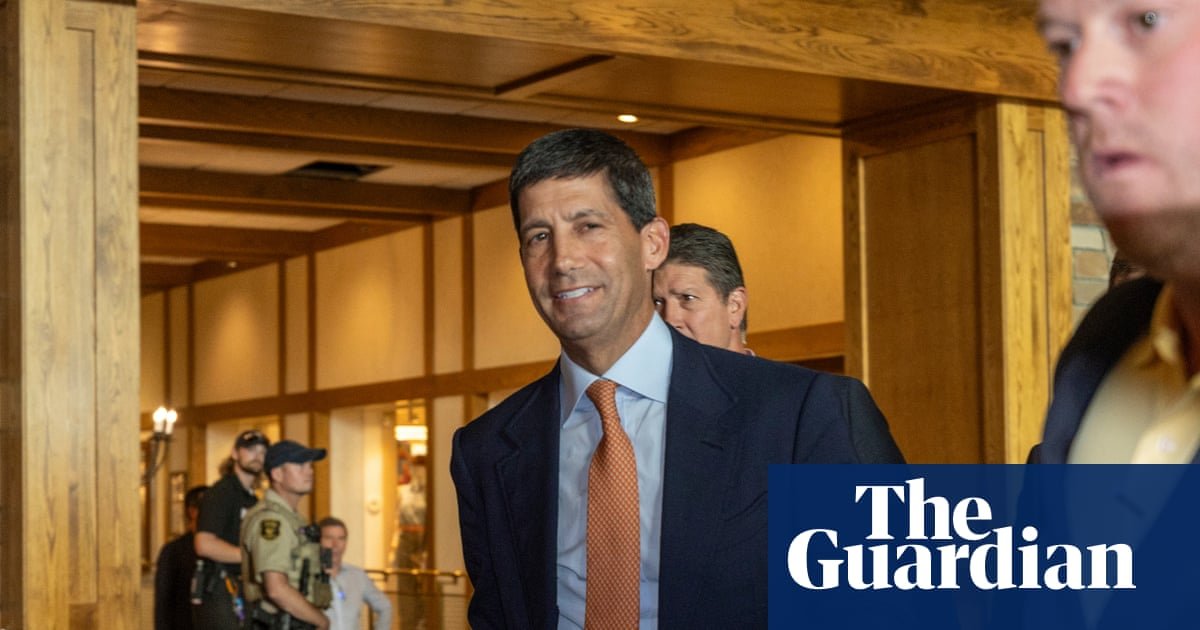
The US Federal Reserve is not done fighting high inflation, its chair, Kevin Warsh, said in his first major speech in the role on Friday, emphasizing that it was “the Fed’s job to deliver stable prices”.
Warsh did not indicate where the Fed will take interest rates in the coming months, despite US inflation remaining stubbornly above the central bank’s 2% target amid the war in Iran. But his speech was taken by markets as a signal that rates may rise in the coming months, a move that may put him at odds with Donald Trump, who has aggressively called for rates to be cut.
The Fed chair painted a rosy view of the economy that contrasts with recent data. He said the economy “appears to have strengthened” given how it has held up to shocks.
“On that score, both Main Street and Wall Street have been resilient,” Warsh said at the Fed’s annual symposium in Jackson Hole, Wyoming, on Friday.
The Jackson Hole symposium has typically served as a platform for Fed chairs to offer clarity on the central bank’s general direction. For example, former Fed chair Jerome Powell foreshadowed rate cuts at his keynote address last year.
But Warsh on Friday insisted the days of such “forward guidance” were over, saying that the practice was adopted by the Fed during the 2008 financial crisis. “As with other legacies of crises past, I believe that the practice has overstayed its welcome,” he said.
Markets are still expected to carefully gauge Warsh’s speech for signs of the Fed’s next move. At the central bank’s last board meeting in July, three out of 12 voting members wanted to raise rates by a quarter percentage point – the first time in a decade so many board members shared dissent over a policy position. But a majority of the members voted to hold rates, which currently sit at a range of 3.5% to 3.75%, steady.
Since he was appointed in May, Warsh has had to strike a delicate balance between managing an economy that has been shaken by higher oil prices brought on by the war in Iran without provoking the ire of the White House. Trump has continued to insist the Fed should lower interest rates, despite economists who warn that that would further exacerbate inflation. After hitting a three-year high of 4.2% in May, US inflation cooled to 3.4% in July – still 1% higher than figures seen last year.
Warsh said progress on inflation over the past several years has been “modest”, and though price readings from over the summer came in better than expected, they did not indicate that “underlying trends have meaningfully improved”.
The US bond market has been particularly sensitive to higher inflation, with the yield on 10-year notes hitting its highest level since 2007 in recent weeks. Yields briefly went down after the US treasury announced a big debt buy-back scheme, though the relief proved to be temporary. Rising rates in the US have driven yields higher abroad – bond rates in the UK, Germany, France and Japan have all hit their highest levels in decades. Meanwhile, the US gross national debt topped $40tn for the first time in history last week.
In reaction to Warsh’s opening remarks, the two-year and 10-year US treasury yields increased slightly, while the 30-year treasury remained largely the same. The S&P 500 remained leveled while the Dow Jones ticked down slightly.