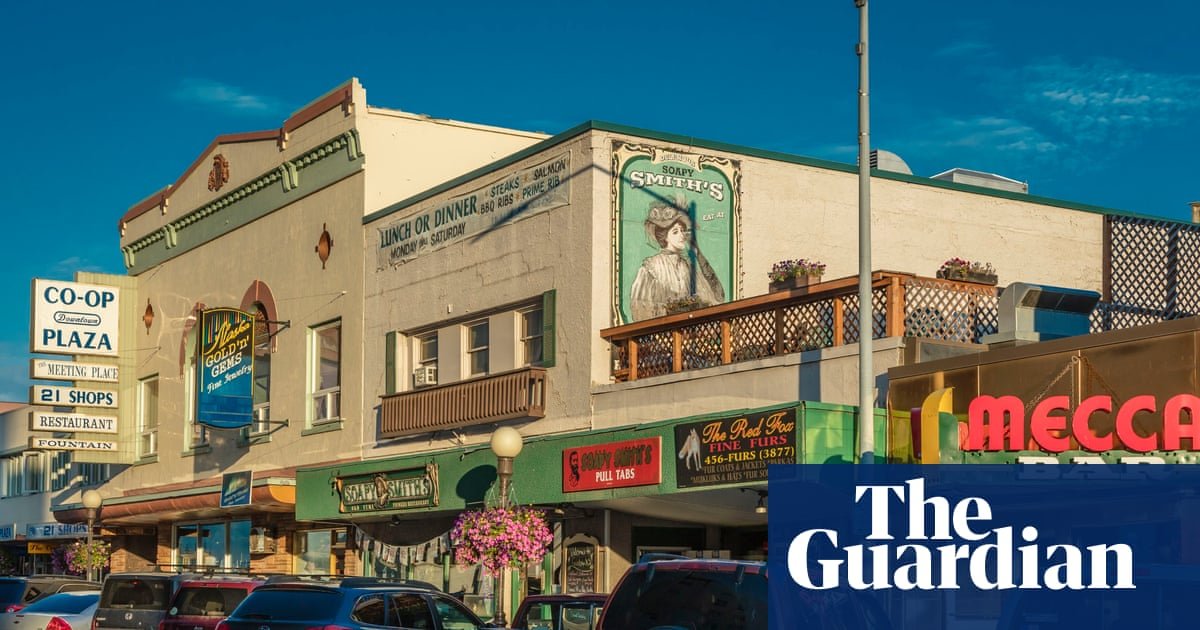
Downtown Fairbanks street scene Second Avenue, no people at sunset, Alaskan restaurants.
Photograph: Joe Sohm/Visions of America/Universal Images Group/Getty Images Downtown Fairbanks street scene Second Avenue, no people at sunset, Alaskan restaurants.
Photograph: Joe Sohm/Visions of America/Universal Images Group/Getty Images Foodie in Fairbanks: the unexpected culinary scene in the middle of Alaska Locals and visitors of the Golden Heart City have a plethora of food choices to choose from – Thai, Chinese, Korean and even Moldovan cuisine Charlie Boonprasert and Tutu Navachai arrived in Fairbanks in the 1980s, when their friend offered them jobs mining and cooking at a gold lease.
The pair, originally from northern Thailand, soon realized there was almost no south-east Asian food available in Alaska’s remote interior.
But they did find a small Thai population in Fairbanks yearning for a taste of home, and a chance to meet up and gossip.
So in 1989, they opened Thai House, initially as a hole-in-the-wall in the city’s downtown.
Today, Boonprasert’s wife, Laong, runs the restaurant, which has an extensive menu, including gai yang (grilled barbecue chicken), tom yum kung (hot and sour soup with shrimp), and of course, pad thai.
They mainly use recipes from their home region, but not quite as spicy.
Tutu Navachai of Lemongrass Photograph: Natt Navachai Home to just 31,000 people – not including the military personnel on the two nearby bases – Fairbanks is not an obvious culinary destination.
It’s six hours inland from Anchorage, and better known as a gateway to the Arctic and a hotspot for the northern lights.
But the city is an unexpected food mecca.
Visitors will find themselves spoiled for choices: crepes, empanadas, tacos, ramen, barbecue, Cuban, Korean, Japanese, Chinese and Filipino cuisine, and even one of the few Moldovan restaurants in the US.
Partly, it’s the geography.
Alaska has traditionally been difficult for brands from the lower 48 to dominate, in part because big corporations grumble at the cost of transporting goods across such a vast region.
Even to Fairbanks, a crossroads transport hub for the Arctic and the rest of the interior.
Instead, independently and family-owned restaurants have found lasting niches.
A diverse migration population played a role in this, as Alaska’s boom economies have attracted people from around the world for decades – and they wanted a taste of home.
There are 15 Thai restaurants in and around Fairbanks, and certainly locals and tourists might want something hot and spicy when temperatures plummet.
In January, it hit minus 50F in the coldest winter in Fairbanks history, according to the National Weather Service.
Navachai, who had worked as a server at the Thai House, opened another restaurant called Lemongrass Thai restaurant in 1996 on the other side of town.
He runs it along with his two sons, one of whom is now in Thailand running their restaurant there, also named Lemongrass.
Finding some of their ingredients in Alaska can be a challenge, but the family will always take the chance to stock up on their regular trips back to Thailand, which often take place during the worst of the winter months, when opening hours are often reduced.
“We take alternate trips,” says Tutu’s son Natt, “and bring back herbs, sometimes utensils and always a yellow curry powder that my father insists we get from a market in Chiang Mai.
US customs always stop me and want to know what it is.” Aerial view of downtown Fairbanks, Alaska, during a stormy summer sunset.
Photograph: Jacob Boomsma/Getty Images Natt explains that in the early days, they got basics from Carl’s Foodland, a large grocery in downtown Fairbanks that has evolved to become the Co-op Market Grocery & Deli, Alaska’s first retail food cooperative.
If supplies ran out or deliveries were held up, the restaurants used substitutes or adjusted recipes.
Lemongrass now uses locally-grown vegetables from a local organic farm called Ann’s Greenhouses.
In Fairbanks, the midnight sun season lasts from April to August, and for 70 days of that time, the sun never sets, creating good growing conditions for vegetables.
Lemongrass was also an early adopter of fusion with easily-available Alaskan seafood, and Natt recommends the chu chee scallops, which are sauteed in red curry and coconut milk with green beans, kaffir lime and bell peppers.
Sandy Jamieson painting for Lemongrass – in both restaurants.
Photograph: James Bartlett Drive-thru Thai huts are a more recent innovation and are located in a wider radius around Fairbanks.
Nearly all of them are the result of the “chain migration” effect: friends and relatives who followed others to Fairbanks, cut their teeth in the city’s restaurants and then set up on their own.
Alaska famously runs on coffee, and Fairbanks is also festooned with coffee huts, cute little drive-by booths that sling espressos and other javas all day, snow or shine.
Tea, on the other hand, was traditionally a less popular drink.
But Hong Kong-born Jenny Tse, the founder of Sipping Streams Tea Company, is working to change that.
Brought to Fairbanks with her family at a young age, she drank only black coffee for years due to undiagnosed lactose intolerance, but became interested in the benefits of tea.
“When people saw me drinking tea – even just Liptons – they often stopped, and told me how tea had been a part of their lives,” she says.
After a trip to China to learn the process from earth to cup, Tse opened the first Sipping Streams Tea store in 2009.
“It was like the universe was pushing me,” she says.
A coffee hut in Fairbanks.
Photograph: James Bartlett Today her blends are award-winning, and she and husband Brian have found a new audience: video gamers, cosplayers and anime fans who dislike the buzzing effects of energy drinks or too much coffee.
They also appreciate the tactility and quiet of the tea-making process.
Sipping Streams also works with a hydroponic greenhouse outside town.
After some early setbacks, the results of their small batch leaves have been excellent, and the teas they grow are sent to elder groups in villages across Alaska as part of a food sustainability scheme.
Perhaps the most surprising restaurant I came across was Soba, the only Moldovan restaurant in Alaska, opened by Alla and Stanislav Gutsul.
Stanislav had loved his time here as a summer student in 2007, and persuaded Alla to move here in 2009.
Soba classic dish mamaliga.
Photograph: Couple in the Kitchen “I remember that first winter was one of the coldest.
It hit minus 50, and you couldn’t take a deep breath outside,” says Alla of those early days.
But they stayed on and began a family.
In 2016, they decided to share their Moldovan recipes, traditions and culture, and opened the shutter on the Acasa food truck (translates as “home”).
“It was out of a nostalgia for home,” says Alla.
“That’s how Moldovans share their love to other people – with food.” A bricks-and-mortar restaurant followed in 2018, and Alla recalls that when the pandemic hit, their regulars would overpay for takeout and offer endless words of support.
“We had grown up right under their eyes, and the community wanted us to survive.” One of the few Moldovan restaurants in America, they bring back traditional clay pots and decorations for the restaurant during their biannual trips home, and get spices shipped from Europe via the lower 48 – a delivery issue that often means higher prices in Alaska, but that most feel is worth paying for living in such natural beauty.
When I got back to Los Angeles, I was craving mămăligă: corn polenta with stewed pork, scrambled eggs, sour cream, feta cheese and garlic sauce.
I looked up Moldovan restaurants, and found precisely none in this metropolis of 3.8 million people.
Score one for the Golden Heart City.
Explore more on these topicsAlaska Food Food and drink Thai food and drink features Share Reuse this content