In our second in a series on high-end UK manufacturing, we visit the artisans producing rich clients’ bespoke luxury cars
‘Our town is making jeans again’: meet the firm reviving jobs and skills in Wales
They are the plaything of kings, presidents and A-listers, with Rolls-Royce enthusiasts ranging from the Sultan of Brunei to Rowan Atkinson, from King Charles III to Kermit the frog.
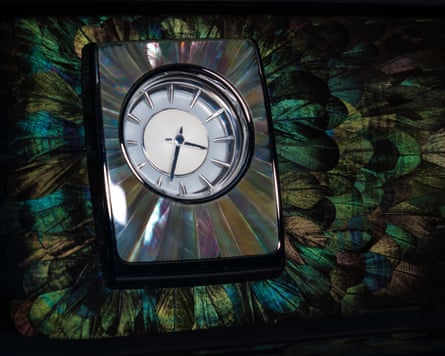
And at the carmaker’s factory in Goodwood, West Sussex, special requests from customers get more indulgent every year. An interior lined with 3,000 iridescent feathers, or a built-in champagne cooler, or a car built in homage to its owners’ dog, have all become part of the job.
Even with a fast-growing team of artisans and engineers, the company is stretched, and soon it will nearly double the size of its factory as part of a £300m investment by its owner, BMW, which it said at the time of the announcement was part of “securing our future here in the UK”.
Behind much of the demand is a new kind of client, who is younger than ever and with a fortune built in technology, says Julian Jenkins, Rolls-Royce’s director of sales and brand. The average buyer is now just 43 – down from 56 in 2010. “Never has there been so much wealth created so quickly at such a young age,” he says.
Bespoke, high-value customisation is becoming an increasingly valuable pillar of UK manufacturing, which still makes up about 9% of the UK economy despite the years of deindustrialisation that Andy Burnham has vowed to reverse. This week, the wider sector helped drive a surprise expansion of GDP in August, after growing 0.8% month on month.
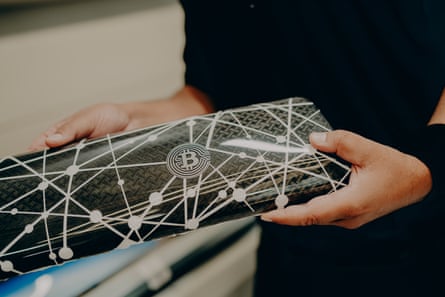
On a tour of the Goodwood factory, an inner door panel is emblazoned with a bitcoin symbol, hinting at changing tastes. “The industries – cryptocurrency, AI and tech – are where we see some of these young entrepreneurs finding their way very quickly to Rolls-Royce,” Jenkins says. “They are very specific about what they want.”
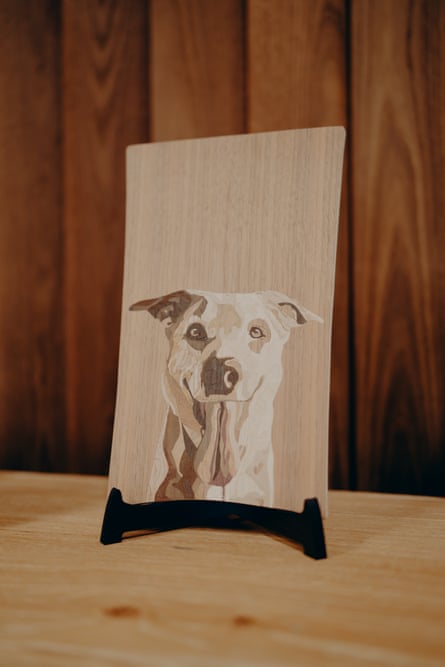
Another car, built for a wealthy American couple, was devoted to their Labrador, Bailey. The dog’s face was pieced together on a rear panel using more than 180 individual slivers of wood, which was a four-month project, with paw prints engraved in the doors for good measure. Clients nowadays, Jenkins says, “are creating something in their image”.
Four models make up the current Rolls-Royce range: the Phantom, starting at £441,000, the nearly three-tonne Cullinan SUV, from £345,000, the Spectre electric car, from £333,000, and the cheaper Ghost, from £290,000.
But the average Rolls-Royce sells for about £500,000, up from about £300,000 a decade ago, driven largely by customisation work. A heavily personalised car can cost 25% more than the standard price, and seven-figure sums are “not unusual”, a spokesperson says.
“The limits are set by the client,” Jenkins says. “We’ve seen some extremely complex and intricate commissions, and some of those can take multiple years. With that, there is value that comes as a consequence.”
It is a vision Rolls-Royce’s founders could scarcely have imagined for a company that staked its early reputation on reliability. The business dates back to 1904, when Charles Rolls, an aristocrat and racing driver, met Henry Royce, an engineer, at the Midland Hotel in Manchester, and agreed to sell every car the latter could build.
By 1907, Autocar magazine called the Silver Ghost, an early model, the “best car in the world” after completing the gruelling Scottish Reliability Trial without a single mechanical fault. Now, Rolls-Royce has its own entry in the Collins dictionary, as a byword for “anything considered to be the very best of its kind”. Its longest-running model, the Phantom, celebrated its centenary last year.
An expansion into aero engines during the world wars made it a manufacturing powerhouse, but later financial collapse forced the government of the time to nationalise the company in 1971. The car business was split off and sold to the engineering firm Vickers. Rolls-Royce, the FTSE 100 aerospace giant, still shares the same logo.
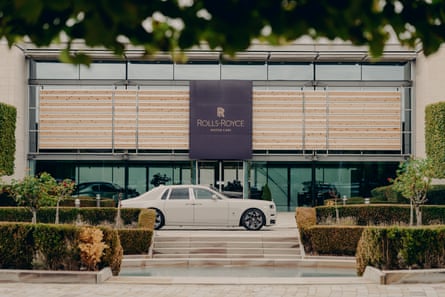
In 1998, BMW bought the right to put the Rolls-Royce name on cars, and in 2003 opened the Goodwood factory, promising to triple annual production from about 2,000 cars a year. Two decades later it succeeded, when output peaked at 6,032 cars, falling back to 5,664 last year.
Would the Rolls-Royce engineers whose Merlin engines powered the second world war Spitfire have guessed the company name would end up in German hands?
“Rolls-Royce motorcars is very much a British company at heart,” says Chris Brownridge, its chief executive. However, he admits it benefits from “synergies” with BMW, such as “battery technology research and development, access to wind-tunnels and other major facilities”.
The expansion at Goodwood comes as carmakers are under significant strain from Chinese competition, soaring industrial energy costs and US tariffs. Jaguar Land Rover recently said it would cut 4,000 jobs, while Volkswagen, which owns Rolls-Royce’s arch rival Bentley, is cutting 100,000 jobs by 2030.
Shrinking demand in China, a key export market for luxury goods, has “obviously been significant”, Jenkins admits, pointing to Rolls-Royce clients “who made their wealth through the [Chinese] property market … which has been adversely affected.”

Electrification has been part of that story, too. Rolls-Royce’s first electric vehicle, the Spectre, launched in 2022, alongside a pledge from the company to sell only EVs by the end of the decade. The model sold briskly at first but deliveries nearly halved in 2025, and earlier this year Rolls-Royce scrapped its 2030 target.
Jenkins says the company is “not immune to the shifts that have happened, and some of the resistance that we’ve seen [to EVs]”. A revamped version, the Spectre Series Two, recently launched with a longer range and more power.
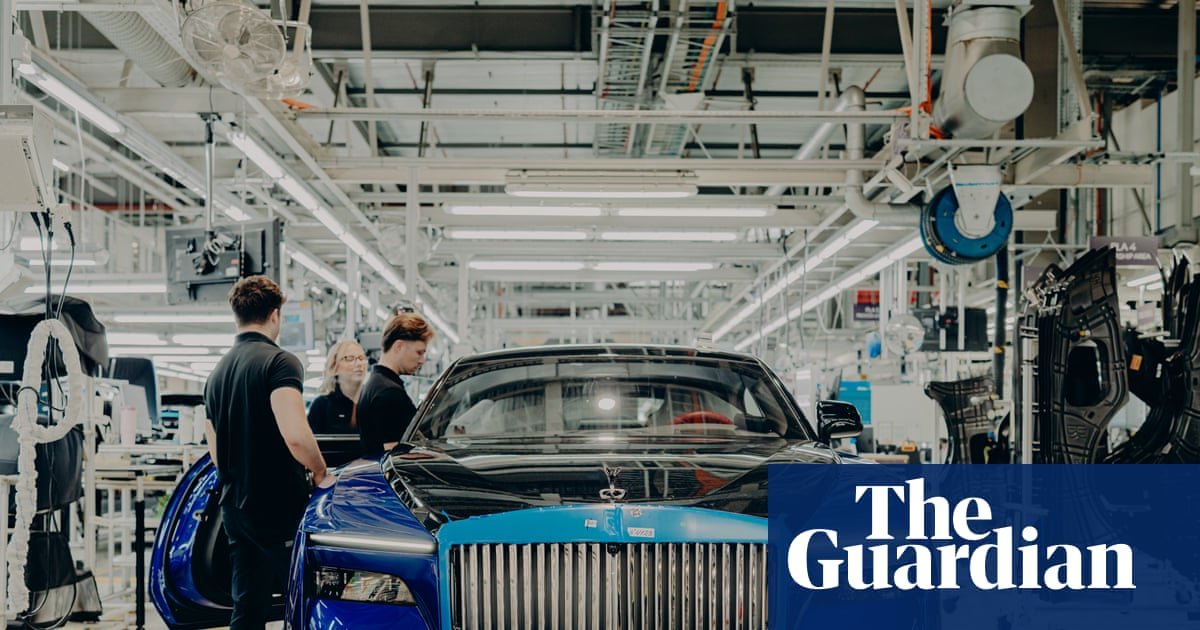
The latest factory upgrade, Jenkins says, is less about pumping out more cars, but rather about meeting the “ever more complex” demands of clients. Every car is made to order and assembled at Goodwood, where 2,500 people work across a production line with 45 stations. A single car can take up to 600 hours to build, passing through more than 100 pairs of hands.
Those include 14 artisans finishing personalised vehicles. Artists hand-paint designs on bodywork and inner panels, while embroiderers are on hand to make the ceilings of cars look like the night sky. A standard sky contains up to 1,600 fibre-optic stars and takes around nine hours to thread by hand, while the most elaborate commissions can take two full days.
A trio of innovation specialists work on novel techniques. One dragon design used a method borrowed from fine furniture called sand shading, in which each individual scale is burned at the edges in a hot pan to create a shadow effect across the creature’s body.
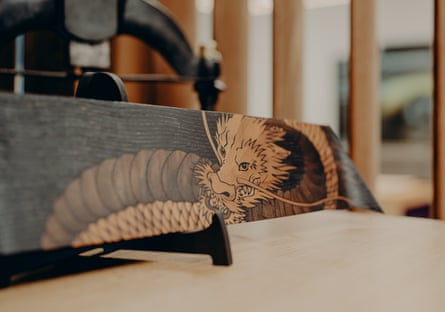
Andrew Hopkins, a lead craftsperson, studied furniture making before joining Goodwood when it opened in 2003. Does he ever think a request is a bit much? “Whether you like it personally, you don’t really take it into account,” he says. “You learn quite fast not to be the taste police.”
But who is paying for it? Well-documented owners include Tyson Fury, David Beckham and members of the Kardashian family. Kylie Jenner had her Rolls-Royce Cullinan finished with a pink interior and a plaque reading “Stormi’s Mom” in honour of her daughter.
Despite its slowdown, many of the youngest, tech-rich buyers are still coming from China. Jenkins was recently in Beijing, opening a new dealership and presenting a car to a 26-year-old woman who had “fallen in love” with a custom design.
“They are individuals that are very much on the way up in terms of their wealth creation,” he says, “but doing so at an incredible pace.”
Is the growing concentration of wealth among fewer and younger people a good thing for society? Whatever the answer, it has certainly helped Rolls-Royce. “It’s a fact, isn’t it?” says Jenkins.