You may be interested in

44% OFF
Google Fitbit Air - Screenless Activity Tracker with Fitness, Heart Rate, and Sleep Tracking - Personalized AI-Powered Coaching - Up to 7 Days’ Battery Life - Works with iOS and Android - Obsidian
Google Fitbit Air - Screenless Activity Tracker with Fitness

and Sleep Tracking - Personalized AI-Powered Coaching - Up to 7 Days’ Battery Life - Works with iOS and Android - Obsidian

11% OFF

Fitbit Inspire 3 Midnight Zen/Black, 3-month Google Health Premium membership, small and large bands, Sleep Tracking
Fitbit Inspire 3 Midnight Zen/Black
3-month Google Health Premium membership
13% OFF

Fitbit Charge 6, Band Obsidian/Black 3-month Google Health Premium membership, small and large bands, Sleep Tracking
Band Obsidian/Black 3-month Google Health Premium membership
43% OFF

Google Fitbit Air - Screenless Activity Tracker - Fog | Tracker with Fitness, Heart Rate, Sleep Tracking, Personalized AI-Powered Coaching, Compatible with iOS and Android, One Size
Google Fitbit Air - Screenless Activity Tracker - Fog | Tracker with Fitness
47% OFF

Google Fitbit Air - Screen-Free Fitness Tracker with Sports Activity Tracker, Heart Rate & Sleep Tracker, AI-Powered Personalized Coaching - Raspberry Red
Google Fitbit Air - Screen-Free Fitness Tracker with Sports Activity Tracker
AI-Powered Personalized Coaching - Raspberry Red
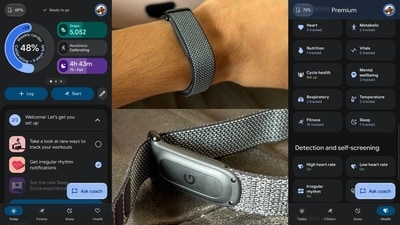
Google is expanding its health-tracking tools with updates to Fitbit wearables and the Google Health app. In a blog post published on 22 October, the company outlined changes to make workout tracking easier and help users track health trends over time. The updates include improved automatic activity detection, new health reports for eligible Fitbit users and further changes to the Google Health app.
Google improves automatic workout tracking on Fitbit
One of the main updates improves automatic activity detection. The feature can record workouts even when users forget to start tracking them manually. Google says the updated system will be available on Fitbit Air, Pixel Watch 3, Pixel Watch 4, and Pixel Watch 5 later this month.
The system can now recognise more than 100 activity types, up from 10. These include strength training, swimming, racket sports and team sports. This wider range could help people who regularly switch between different forms of exercise.
Google has also changed how the system identifies workouts. It can consider a user's exercise routines, previous activity records and manual corrections. With permission, it can use location information to help identify an activity.
According to Google, these changes make activity detection nearly twice as accurate and cut missed workouts by more than half. The company says these results are based on its own evaluations, which compared the updated system with the previous version using manually tracked workouts.
The feature does not automatically record every movement. Workouts must meet a minimum duration, set to 15 minutes by default, and include a sustained increase in heart rate. Once these conditions are met, the system logs the activity, and a summary usually reaches the user's phone app within 30 minutes.
The system can also learn from corrections. When users confirm or edit a detected activity, the system uses that information to recognise their exercise patterns and improve future predictions.
For users, the changes could reduce the need to interact with a watch or tracker during exercise. However, Google's accuracy figures come from its own testing, and actual results may vary depending on the activity and individual use.
Google introduces Health Guardian for Fitbit Air users
Google is also introducing Health Guardian, a collection of tools designed to track changes in health patterns over time. These features will begin rolling out to Fitbit Air users with a Google Health Premium subscription later this month.
Users can set up blood pressure and insulin-resistance trends in the Google Health app. Those who meet the required monthly wear time will receive a report at the beginning of each month. The aim is to help users notice changes in their patterns and consider whether they need to make lifestyle adjustments.
Google Health Premium's Coach can also use these trends to offer personalised wellness guidance and help users adjust their fitness plans. This could give users additional context about their activity and health patterns rather than relying on individual readings alone.
However, Google says Health Guardian is not a medical diagnostic tool. It is not intended to screen for diabetes or monitor glucose levels in real time. Users should not rely on it to manage diabetes or change their medication or insulin levels. Anyone with concerns about their metabolic health should consult a medical professional.
Google Health app receives further updates
Google says it has introduced more than 55 features and fixes to the Google Health app and Google Health Coach since their launch. These changes are based partly on user feedback.
The company has added more customisation options to the Today tab, expanded the health metrics users can focus on, and improved how the Coach remembers information. It has also made it easier to log meals with a photo or by talking to the Coach.
Google has also expanded the app's integration with Apple Health. This could help users bring health information from Apple's ecosystem into Google Health, although the announcement does not detail which additional data types are now supported.
The updates are a part of Google's wider effort to connect its wearables with health tools that help users understand their activity and wellness patterns over time.
For users, the practical value will depend on their device, subscription, and how consistently they wear their tracker. Automatic workout detection could make exercise records easier to maintain, while monthly health reports may help users notice changes. However, these features support general wellness tracking and should not replace professional medical advice.