Google parent company Alphabet on Wednesday (August 5, 2026) announced a leadership overhaul of its AI division, with AI chief Demis Hassabis leaving his main managerial role and several leaders of its Gemini model, including veteran engineer Jeff Dean, departing the company. The shakeup comes during a pivotal juncture for Google DeepMind: the flagship version of its latest Gemini model remains unreleased despite a planned June launch, sparking investor and industry concerns that Google is falling behind its rivals Anthropic and OpenAI, each of which scooped up a star Google AI staffer this summer.
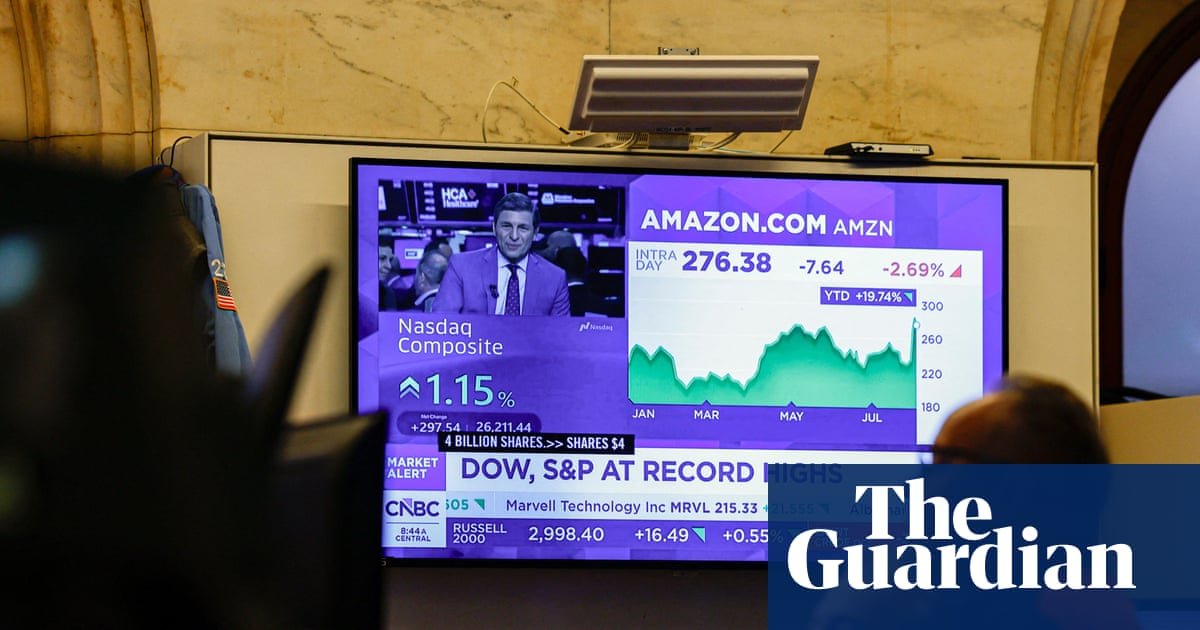
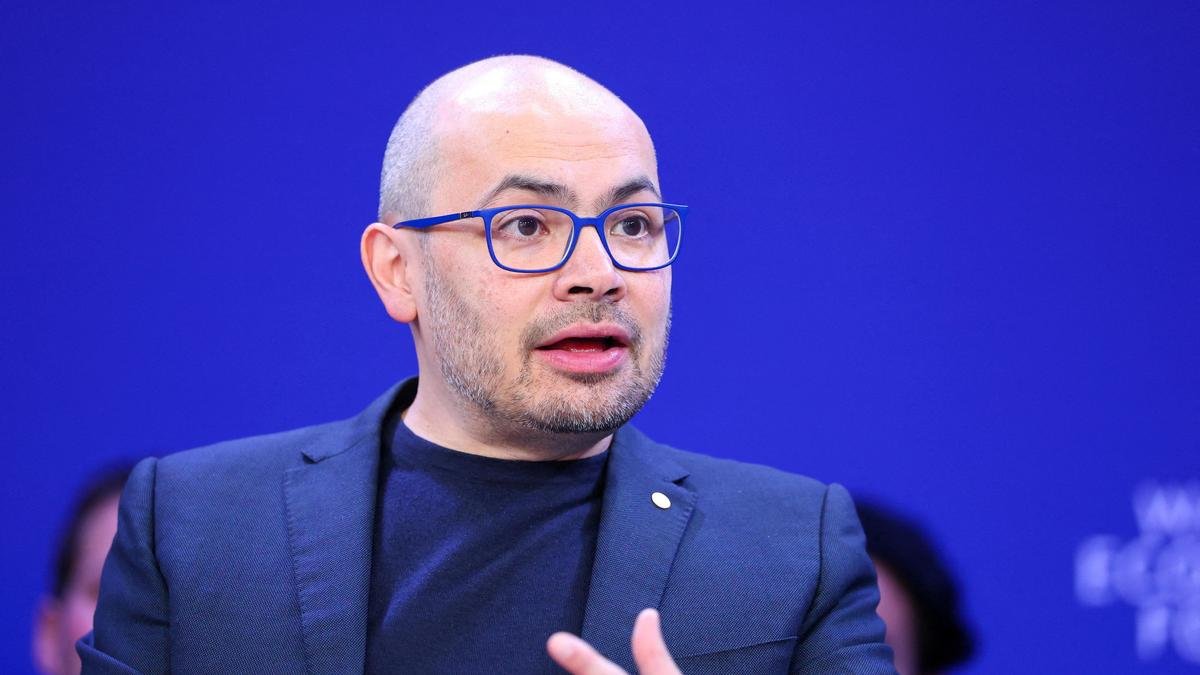
Shares of Alphabet fell 4% after the news. Mr. Hassabis, a Nobel Prize recipient, will take the newly-created title of Alphabet’s chief scientist and transition from being Google DeepMind CEO to being its chairman, he said in a memo to staff. He cited the closeness of artificial general intelligence (AGI), an advanced state of AI in which computers in essence become as smart as humans, as the impetus for his role change.
“[And] I have been long discussing a role that allows him to put his full attention on actively shaping the future of AGI,” Alphabet chief Sundar Pichai said in a separate companywide memo. “It’s work that is vitally important to Alphabet and humanity, and I can’t imagine a better person than Demis to do it.” Koray Kavukcuoglu, the unit’s chief technology officer, will assume day-to-day responsibilities. He will hold the title of senior vice-president, rather than CEO, of the business unit, in addition to his parallel role as Alphabet’s chief AI architect.
Mr. Dean, Sanjay Ghemawat, Oriol Vinyals and Quoc Le — some of Google’s most famous and lauded AI and engineering leaders — left the company to launch a startup called Discovery Loop, which will focus on researching breakthroughs in machine learning, science and engineering. The startup is structured as a public benefit corporation.
Alphabet did not provide any details on what precipitated the moves or their coincident timing. Mr. Hassabis — who has long prioritized research over profits — will explore research and strategy related to societal impacts of AGI and will have few direct reports, a Google spokesperson told Reuters.
In his company memo, Mr. Hassabis touted the “great progress” on Google’s AI models including an unreleased upgrade called Gemini 4.
He also said in his memo that he would spend more time with Isomorphic Labs, a drug discovery company that spun out of DeepMind for which he is the founder and CEO.
“I’ve always believed the No.1 application of AI should be to improve human health,” he said. “It’s time for AI to prove its unequivocal value to the world, and what better way to demonstrate that than to help finally cure diseases like cancer.”
Brain drain
Mr. Dean and Mr. Hassabis were considered the two leading AI figures at Google for years before the field became the center of technological innovation.
Mr. Hassabis co-founded DeepMind in 2010 and continued to run the lab from London after selling it to Google for around $650 million in 2014.
Mr. Dean in 2011 co-founded Google Brain, a U.S.-based unit he led that researched AI separately from Mr. Hassabis’ team. By then, he was already a revered figure inside Google known for his collaboration with Mr. Ghemawat on many of the landmark infrastructure projects that still power the company today. In 2023, after the launch of OpenAI’s ChatGPT caught Google off guard, Mr. Pichai announced the merger of DeepMind and Google Brain into a new organisation called Google DeepMind. Mr. Hassabis was appointed its CEO and Mr. Dean its chief scientist. Until recently, Mr. Dean, Mr. Vinyals and Noam Shazeer had co-led development of Gemini. Under their stewardship, Google released Gemini 3 in November 2025, which the industry widely saw as closing the gap with leading models from Anthropic and OpenAI. But subsequent advances from those rivals, as well as momentum for cheaper Chinese open-source models, have set Google on the defensive. At Google’s annual developer conference in May, Mr. Pichai and other Google leaders touted Gemini’s cost advantage, rather than its state-of-the-art capabilities. Mr. Shazeer left for OpenAI in June, less than two years after Google paid billions to hire him and a team of his researchers away from the startup he led. The same week, senior research scientist John Jumper, who won a Nobel Prize alongside Mr. Hassabis in 2024, said he would join Anthropic. Mr. Vinyals, Mr. Le and former OpenAI chief scientist Ilya Sutskever coauthored a 2014 research paper that became foundational to modern AI research by establishing the concept that scaling up data to “pre-train” AI systems would send them to new heights.
Discovery Loop received investment from Google and also penned a partnership with its cloud division to provide computing capacity.