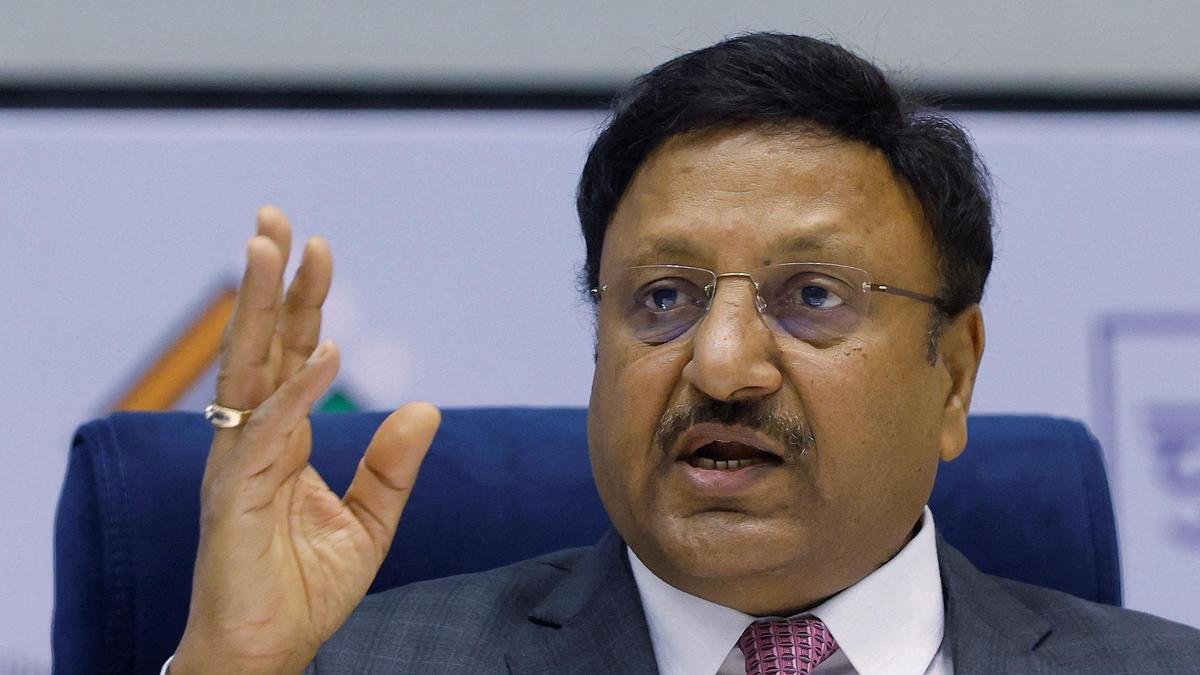
The Board of Directors of HDFC Bank, at its meeting held on Monday (June 29, 2026), approved the appointment of former Finance Secretary Rajiv Kumar as an Additional Director (Independent Director) of the Bank for a period of four years, with effect from June 30, 2026.
This decision was based on the recommendation of Governance, Nomination and Remuneration Committee.
The said appointment as an Independent Director is subject to the approval of Shareholders of the Bank.
He will replace interim part time chairman Keki Mistry who had to step in following the sudden resignation of former part time chairman Atanu Chakraborty citing ethical reasons.
Atanu Chakraborty’s resignation: HDFC board members assert bank’s corporate governance ‘robust’ The Board also approved, subject to the approval of Reserve Bank of India (RBI), the appointment including remuneration of Rajiv Kumar as a part-time Chairman of the Bank for a period of 3 (three) years effective from the date as approved by RBI.
“It is being confirmed that, Rajiv Kumar is not debarred from holding the office of a Director, by virtue of any order passed by SEBI or any other such authority,” the bank said.
“In view of the above, the Board of Directors at the said meeting, also approved the revised Notice convening the 32nd Annual General Meeting of the Members of the Bank scheduled to be held on Wednesday, August 5, 2026, by way of inclusion of resolution(s) relating to the above appointment,” the bank said in a regularly filing.
External review clears HDFC Bank of ex-chairman’s concerns Mr.
Kumar, 66, is a 1984-batch Ex IAS officer.
He retired as Finance Secretary of India in February 2020.
Post retirement Mr.
Kumar also briefly served as Chairman of Public Enterprises Selection Board (PESB).
As Secretary, Department of Financial Services (2017-2020), he assumed charge at a time when public sector banks were grappling with high levels of unrecognised NPAs, capital inadequacy, lenders frozen out of fresh credit, gold plating being rampant, equity and debt being diverted and recirculated to leverage fresh credit, governance challenges including large consortiums, NBFCs struggling to fill micro credit gaps post demonetisation, Ponzi schemes defrauding citizens, etc.