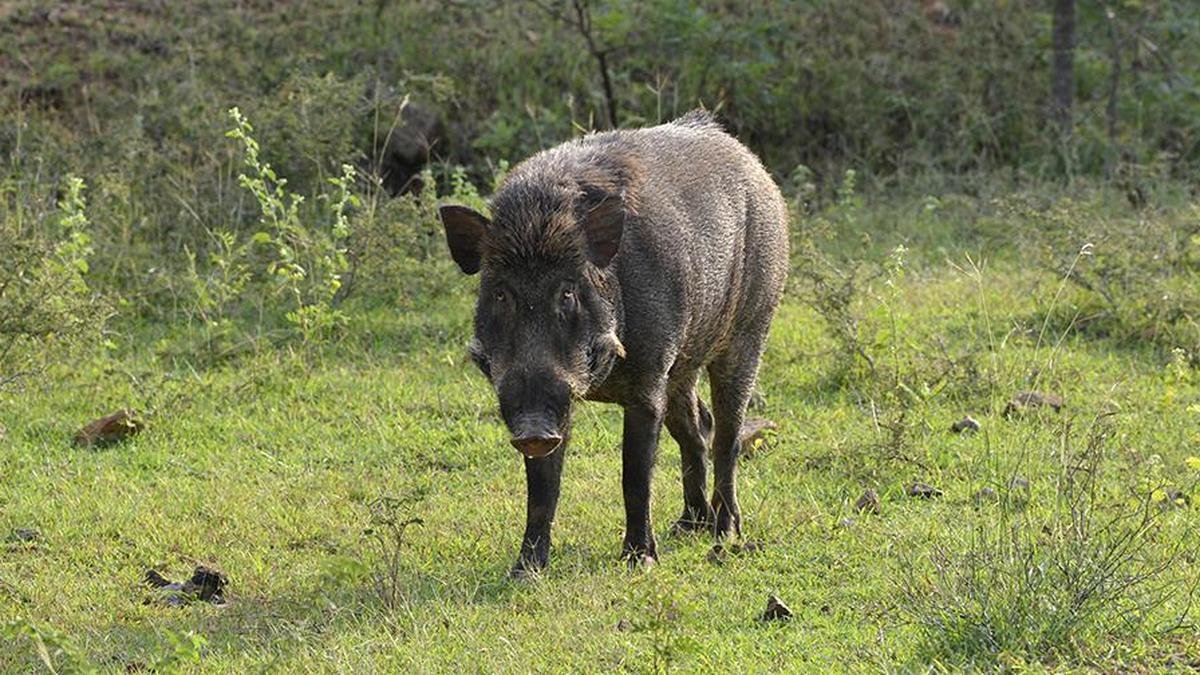
The Indian Council of Agricultural Research (ICAR) has developed India’s first indigenous African swine fever (ASF) vaccine for pigs. The ASF, caused by the African swine fever virus, is considered as one of the most devastating trans-boundary animal diseases affecting domestic and wild pigs worldwide. The ICAR termed the development as a “major leap” in animal health.
Director General of ICAR M.L. Jat said the breakthrough marks the dawn of a new era in veterinary science. “It reflects India’s growing scientific capability to develop world-class animal health solutions and paves the way for a new generation of indigenously developed vaccines and innovative technologies that will strengthen livestock health, enhance disease preparedness, and support the nation’s food and biosecurity,” he said.
Scientists at ICAR-National Institute of High Security Animal Diseases (ICAR-NIHSAD), Bhopal, have developed the vaccine using a novel attenuated “ASFV Genotype II virus”. “The vaccine has successfully undergone comprehensive laboratory evaluation, including sterility, purity, safety, genetic stability, immunogenicity, protective efficacy and virulence reversion studies,” the Union Agriculture Ministry said in a statement.
Helps pig farming sector
The vaccine is recommended for healthy pigs above eight weeks of age and is administered as a 1 millilitre (ml) intramuscular injection, followed by a booster dose 14 days after the primary vaccination. “The indigenous vaccine is expected to substantially reduce pig mortality, minimise economic losses and improve the livelihoods of pig farmers across the country. By providing an effective preventive tool against one of the world’s most destructive livestock diseases, it will significantly strengthen India’s animal health security and support the sustainable growth of the pig farming sector,” the Ministry said.
The ASF’s mortality rates may approach 100% and the disease has caused “severe socio-economic losses” to the global pig farming sector. “Since its first detection in India in 2020, ASF has spread to several States and Union Territories, resulting in massive pig mortality, disruption of pig production, restrictions on animal movement and trade, and significant livelihood losses for smallholder pig farmers, particularly in the Northeastern region,” the Ministry said in the release.
The Ministry said in the absence of an effective treatment or a commercially approved vaccine in India, disease control has largely relied on rapid diagnosis, culling of infected animals and strict biosecurity measures. “The economic impact of ASF outbreaks in India has been significant. During the initial outbreaks in Assam in 2020 and 2021, pig mortality and culling resulted in estimated losses of approximately ₹276 crore. In Mizoram, ASF outbreaks have reportedly affected more than 11,382 households up to 2025, resulting in an estimated financial loss of approximately ₹982 crore,” the Ministry said.