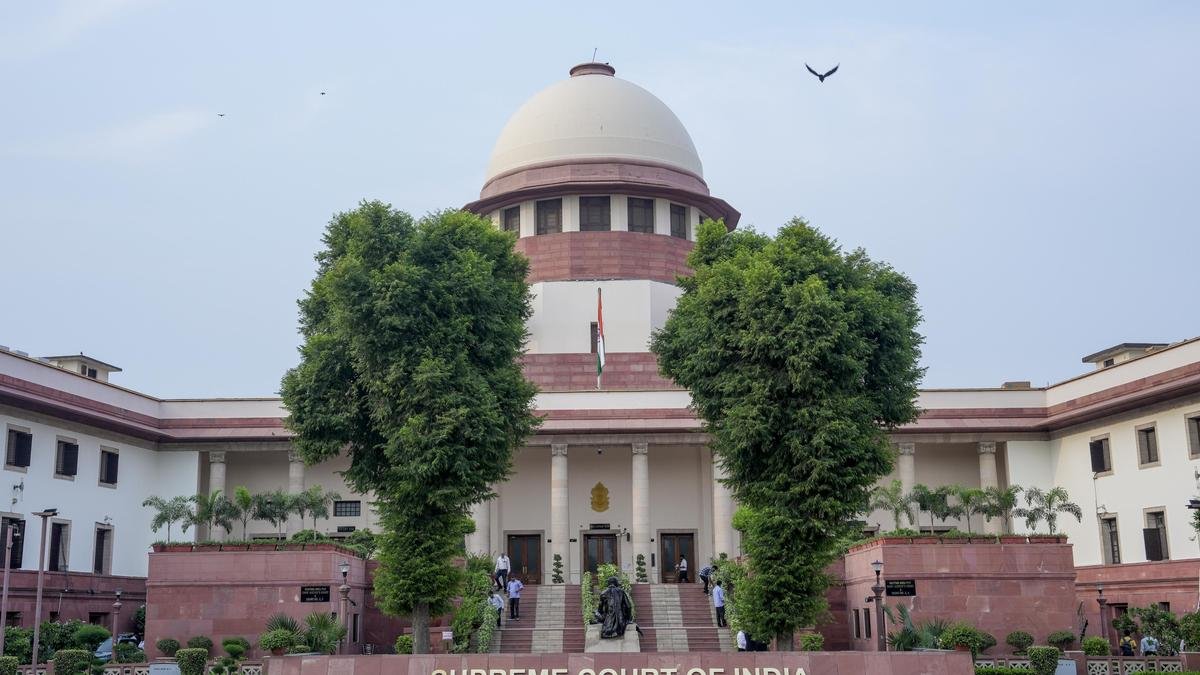
The Supreme Court began a 15-page judgment concerning a bitter tussle between a litigant and her former lawyer with the observation that in a trial in which the parties already know the truth, “it is the judge who is on trial".
A Bench headed by Justice Vikram Nath, who authored the recent verdict, observed that neither party in the dispute had been candid but confidently expected vindication from the court.
Justice Nath said the Bench had to burn the midnight oil to “prise out” every fact of consequence from the records in a case in which suppression, embellishment and afterthought were the common currency of both sides.
“The machinery of justice is not a facility placed at the disposal of parties to settle scores, to salvage reputations they have themselves imperilled, or to extract advantage from a controversy of their own making. We say at the outset, and give our reasons in what follows, that neither the appellant nor the respondent leaves this court with credit," Justice Nath observed.
The case dates back more than a decade, when a woman accused a senior police officer in Maharashtra of sexual assault. According to her, she had kept the lawyer, who is the respondent, for professional legal advice.
The woman alleged that the lawyer acted against her interests by “coordinating” with the police officer. She said he further put confidential material regarding her in the public domain, breaching the “heightened” professional and ethical obligations of an advocate towards his client. She alleged that the harm caused to her was irreversible. The disclosures had affected her dignity, her privacy, her mental peace and her standing in society. She sought compensation of ₹2 crore from the advocate.
The case finally came before the Disciplinary Committee of the Bar Council of India (BCI). The lawyer claimed that the woman’s grievances against the police officer had not included rape or any other sexual offence. At the highest, it was only a case of non-performance of duty, the lawyer had said. He also submitted that the woman wanted to appear on a reality television programme and was seeking to sensationalise the matter in order to “generate publicity and advance her career”.
The BCI removed the lawyer from the rolls for two years and ordered him to pay a fine. Meanwhile, the police officer, in separate proceedings, was discharged from all accusations.
At the Supreme Court, the woman sought an enhancement of punishment for the advocate, while the latter maintained that the findings of professional misconduct against him were unsustainable.
‘Drama no measure of merit’
The record in these matters makes for compelling reading, Justice Nath observed.
“Litigation of this kind holds a certain fascination, and we do not pretend otherwise. But a court is not an auditorium, and the drama of a case is no measure of its merit. Stripped of its theatre, what these proceedings disclose is a controversy which two litigants have between them manufactured, prolonged and brought to the highest court in the country, each in the hope that we would be sufficiently diverted by the spectacle to overlook their own part in creating it. We have not been,” Justice Nath observed.
The court directed both individuals to pay ₹5 lakh each in costs for wasting judicial time that belonged to other litigants waiting for relief they genuinely need.