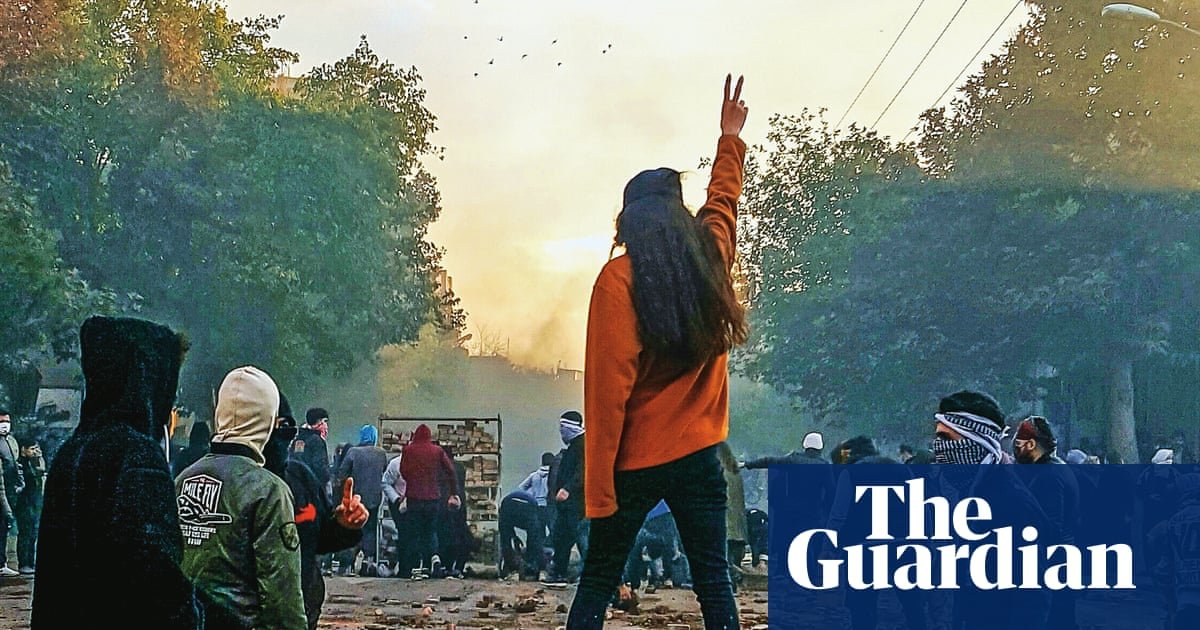
A young woman in Bukan, Iran, without a hijab during nationwide protests, September 2022.
Leaked documents and testimony reveal extent of regime’s crackdown in 2022 and how it paved the way for more brutal killings of protesters this year Iranian security forces “coordinated” the killing, torture and sexual abuse of hundreds of people who took part in the women-led nationwide protests in September 2022, according to leaked state documents and interviews.
Tens of thousands of people, including children, took to the streets of towns and cities across Iran after the death in custody of Mahsa Amini, a 22-year-old Kurdish woman, after her arrest by the “morality” police for allegedly not complying with the country’s hijab regulations.
In response, the Iranian state instigated a brutal crackdown.
Official statements and leaked documents cited by Amnesty reveal instructions for a “firm and severe” response.
One leaked order instructed forces to “respond mercilessly and go as far as causing death”.
The rights group has now investigated and verified the deaths of 377 protesters and bystanders, including 56 children.
It also documented the cases of 16 people who were reportedly subjected to rape while arbitrarily detained in connection with the uprising, who included six women, seven men, a 14-year-old girl and two boys aged 16 and 17.
The Amnesty report said: “State agents penetrated women and girls vaginally, anally and orally, while men and boys were penetrated anally.
Victims were penetrated with wooden and metal batons, glass bottles, hosepipes and/or the sexual organs and fingers of agents.” The harrowing findings echo testimonies gathered by the Guardian during and after the crackdown.
In a Guardian report from December 2022 medics said security forces were shooting female protesters in the faces, breasts and genitals, and warned that the severity of the injuries could leave hundreds of young Iranians with permanent damage.
An X-ray of a woman shot in the crotch during Iran protests in 2022, with about 200 metal balls embedded in her upper thigh and pelvic area.
Similar testimonies involving sexual assault and torture were reported by people interviewed following the anti-regime protests that took place in January 2026.
Amnesty’s report says years of impunity for the violent crackdown paved the way for the even more brutal crackdown on the nationwide anti-government protests in January 2026, which culminated in the deaths of thousands of protesters over 48 hours on 8 and 9 January.
Agnès Callamard, Amnesty International’s secretary general, said: “This investigation exposes the layers of command and coordination behind the Iranian authorities’ deadly protest crackdowns.
The agents on the streets operated within a hierarchical and coordinated chain of command linking them to officials who directed, enabled, facilitated and supported crimes committed on a massive scale.” skip past newsletter promotion after newsletter promotion Amnesty identified 87 Iranian officials, including the late supreme leader Ali Khamenei, and Mohammad Bagheri, the former chief of the general staff of the armed forces, killed in an airstrike in June 2025, who it said should be investigated for “crimes against humanity”.
Amnesty also named the then minister of interior, Ahmad Vahidi, who has since become the general commander of the Islamic Revolutionary Guard Corps, and the then deputy minister of interior for police and security, Majid Mirahmadi.
Explore more on these topicsGlobal development Rights and freedom Iran Middle East and north Africa Protest Human rights Amnesty International Arab and Middle East unrest news Share Reuse this content