ByUmir Irfan Football tactics correspondent Published 23 minutes ago In the early 2000s, Premier League defences tried to make the pitch as small as possible, giving their opposition less space to score in.
Coaches therefore encouraged their attackers to play quickly, taking advantage of open space that saw them face fewer defenders.
Logically, this made total sense.
It was Pep Guardiola's influence that, in part, flipped this logic on its head over the last decade.
His Manchester City sides looked to force teams back into a compact defence, a challenge that in theory should be harder to break down.
The counter logic was that they were forcing opponents to give them a familiar challenge they were prepared for.
City's defenders also had big spaces to cover, often standing at the halfway line.
But for Guardiola, those spaces were less worrying if the ball stayed near the opposition's goal for as long as possible.
After all, if you have the ball, the opposition cannot score.
So why now are teams that dominate the ball dropping points?
Across this season's opening 50 Premier League matches, teams recording at least 60% possession have won only 36.4% of those games, while in 2023-24, the figure was 53.5%.
Does this suggest possession football is on the way out?
Well, the answer isn't that simple.
Are teams winning because of their low possession, or having less possession because they have taken the lead early?
There could be some truth in both answers.
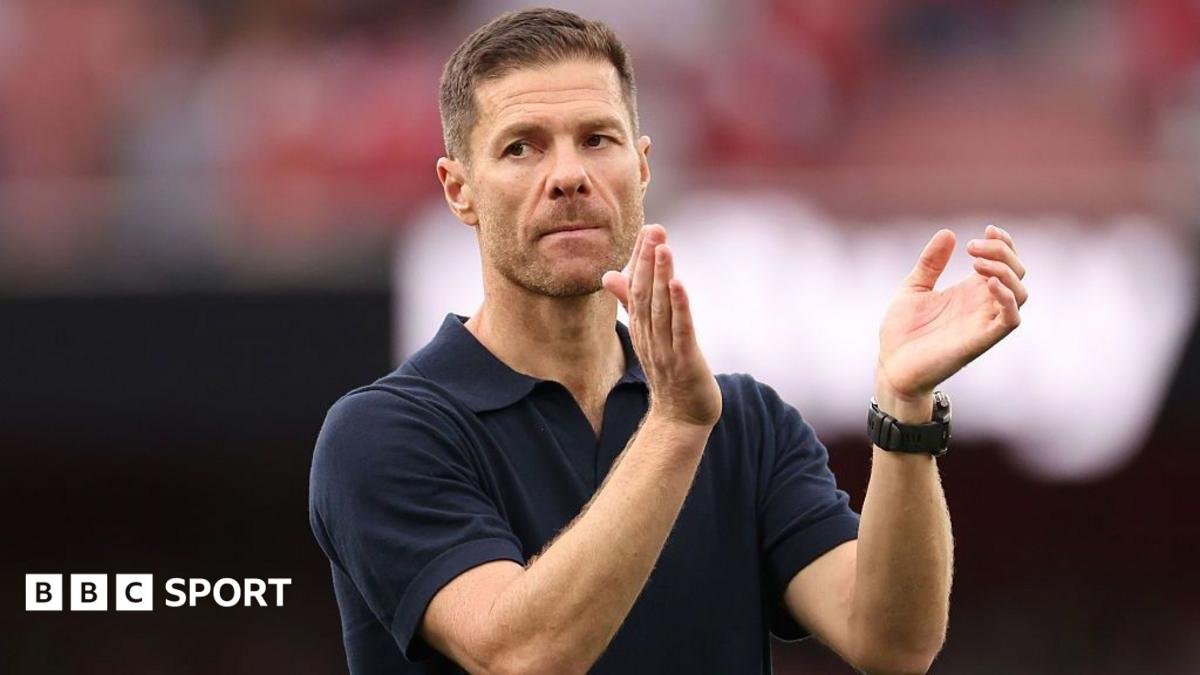
Why less might be more in 2026 Let's use Xabi Alonso's Chelsea as a case study.
They won their opening games against Fulham and Brighton - 3-2 and 4-3 respectively - with the minority of possession, then drew 2-2 with Hull and lost 3-0 to Brentford despite having considerably more of the ball.
Against Brighton, Chelsea's 25.6% possession and 146 successful passes were their lowest recorded figures in a Premier League match, with records beginning in 2003-04.
And yet, the Blues scored four goals.
For three of them, accelerating play from throw-ins and counter-attacks allowed their direct attackers to find space against fewer defenders.
This dynamic can partly be explained by Fabian Hurzeler's Brighton wanting to dominate the ball - with only Manchester City averaging more possession than the Seagulls this season - which played into Chelsea's hands.
Joao Pedro, Cole Palmer, Pedro Neto and Morgan Rogers boast skillsets suited to transition-heavy football, and the low possession against Brighton helped them play to their strengths.
Image caption, By breaking quickly, Chelsea scored their third against Brighton in what became a two-against-two situation.
Issue of philosophy for top teams Counter-attacking comes with a stigma.
It is more accepted underdogs like newly promoted Hull will play this way.
For bigger teams, there is an expectation to eventually control the game with the ball.
This makes a low-possession approach harder to sell long term, even if the players might look better conceding possession.
And that disconnect between players' skillsets and tactics could help explain some dropped points.
Alongside Chelsea, Manchester United have also suffered in this way.
Under Michael Carrick, they have averaged 1.5 points per game with more than 50% possession.
With less, that rises to 2.6.
Clubs without the same expectation, like Brentford, Leeds and Hull, can concede possession and have built squads for that style.
With impressive box defenders, dangerous counter-attackers and set-piece specialists, their tactics can align with their players' strengths, helping them compete against more less aligned opponents, irrespective of their wealth gap.
How tactical landscape has changed things In recent seasons, there has been a rise in man-to-man pressure that has made building out from the back challenging.
Teams, as a result, have looked to play long over the press or past its first line into space for players to drive with the ball - think the likes of City's Nico O'Reilly or Arsenal's Declan Rice.
Both of these have been great solutions to the initial problem, but it does mean that teams full of physical athletes, focused on bringing down long passes or driving with the ball over distance, could be less suited to the intricate play required to unlock stubborn defences - a situation commonly faced by teams who have more of the ball.
To dominate in 2026 likely requires a squad that has enough solutions in small spaces as well as big ones.
Image gallerySkip image gallery Image caption, In this example we see Liverpool look to press Manchester City high.
City play the ball through the pressure into Nico O'Reilly behind Liverpool's first line of pressure.
Image caption, O'Reilly then uses his ball-carrying ability to take advantage of the big space ahead of him.
1 of 2 Slide 1 of 2, Screen grab showing City's build-up play against Liverpool last season., In this example we see Liverpool look to press Manchester City high.
City play the ball through the pressure into Nico O'Reilly behind Liverpool's first line of pressure.End of image gallery Opponents have used man-to-man defending closer to goal too, making it harder to find the unmarked player, a key attacking principle used in Guardiola's positional play.
With players marked, attacks can then depend on winning one-against-one situations, requiring individual quality often in the form of dribbling.
Given the way teams have been built over the last few years, certain sides may lack this type of problem solver.
Success of style of play depends on players It is important to note possession is an average across a match, which can hide how the scoreline changes a team's approach.
Chelsea scored within seven minutes in each of their opening four league games after which opponents pushed forward looking for a goal.
The Blues dropped deeper, defending their lead and attacking the space left behind.
Across their opening five matches, Chelsea averaged 51.4% possession when level, 34.5% when ahead and 67.2% when behind - highlighting how much their possession has varied with the score.
Interestingly, protecting a lead created favourable opportunities for Chelsea's attackers to play intuitively, carry the ball and attack space.
When chasing a goal, they had more possession but appeared to lack solutions against compact defences.
Arsenal show the value of being able to do both parts well when needed.
Bukayo Saka and Max Dowman's dribbling, combined with the passing of Martin Odegaard, Martin Zubimendi, Bruno Guimaraes and Christos Tzolis, provides repeatable solutions against packed defences.
Their set-piece threat can also give them the lead when clear chances are difficult to create despite dominating the ball.
Image caption, For Max Dowman's goal against Ipswich, Arsenal's ability to keep the ball and unlock defences was on show.
Once ahead, Arsenal's possession falls from 60.4% to 56.6% - a small drop but a signal of intent.
Gabriel, Ezri Konsa, Jurrien Timber and Rice then offer the defensive quality to control the game with less of the ball.
Manchester City protect leads differently.
Their possession remains at 64.9% when ahead.
This approach works partly because it is familiar to the squad Enzo Maresca inherited from Guardiola in the summer.
Rather than repeatedly defending their penalty area, they protect their advantage by keeping the ball and keeping opponents away from their goal given their technical quality.
Winning football is ensuring game is on your terms From all of the successful examples, the same objective is being achieved: a game that suits your players and one that makes the opposing players uncomfortable.
"If you are brave, they have to play a game that is not [the opponent's] preferred game," current Liverpool boss Andoni Iraola told The Independent in 2025.
At the time, he was managing Bournemouth - a team notorious for winning with less of the ball against some of the league's best.
It would be fair to argue fewer teams in the league now have the players or the solutions needed to break down teams given the evolution in defensive tactics, and advantages are more commonly found in attacking the big spaces.
Therefore bridging that gap, from thriving without the ball to dominating with it, will take time for those wanting to do so.
But at the top level, this is time not all coaches are afforded.