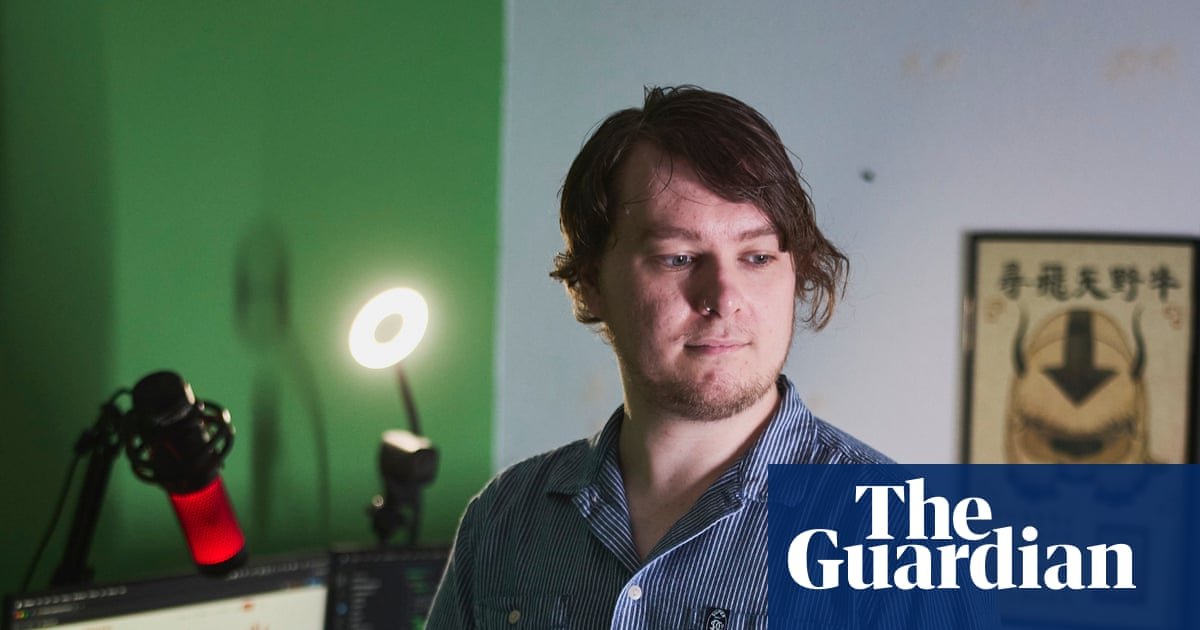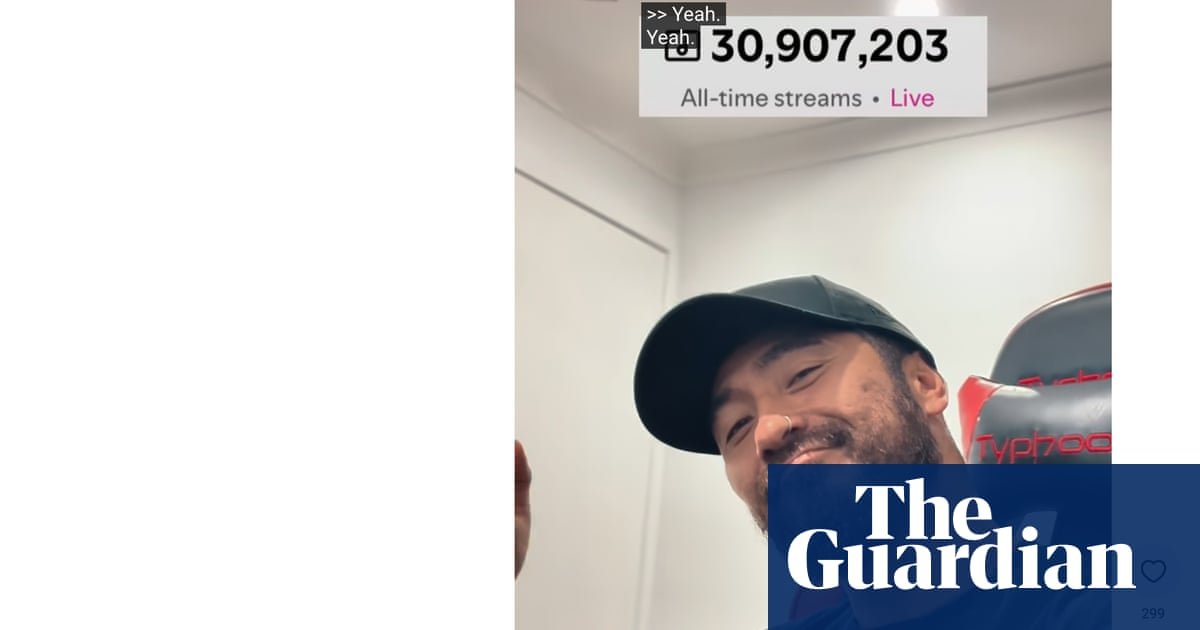
Josh Fawaz' YouTube channel, HIs cover of Like A Prayer has topped the Australian commercial radio charts and the global iTunes electronic music charts.
Photograph: @joshfawaz/YouTube Josh Fawaz' YouTube channel, HIs cover of Like A Prayer has topped the Australian commercial radio charts and the global iTunes electronic music charts.
Josh Fawaz’s song, a cover of Like a Prayer, has raised questions over how generative AI is being used in music and whether it should be declared An Australian producer has gone from a little-known artist to a viral sensation in a matter of months, with his hit song catapulting onto global charts and receiving thousands of radio spins.
There’s just one problem: music experts and other musicians are questioning whether he produced it.
They claim Josh Fawaz’s most popular song, a cover of Madonna’s Like a Prayer which reached the #1 spot on the National Radio Airplay chart, could have been made using AI.
While producers often use software like Bandcamp or pitch-shifting tools in their work, or use AI to mix, master or otherwise enhance tracks, in an AI-created song, generative AI is the creator, requiring nothing from a human but a text prompt.
The song credits on Like a Prayer – and all his tracks - list Fawaz as the “performer”, meaning the vocalist; and his uncle, Fadi Fawaz (best known as George Michael’s former partner), on synths and production.
But Sam Whiting, a senior research fellow at RMIT’s school of media and communication, and others, say Like a Prayer has hallmarks of AI music generators like Suno, such as being “heavily compressed”.
“This is a very ... impressive vocal performance if it was delivered by a human but if it’s not, that brings in really worrying questions around what we value any more in terms of human expression.” Breakthrough hits “I use AI as a tool,” Fawaz said on Instagram, under a post criticising his work.
“What I care about [is] providing my listeners with good music.” Fawaz began releasing music in the 2010s.
But it wasn’t until he pivoted to covers with vocals this year that he gained commercial success, first with Like a Prayer in April and months later with his debut 18-track album, Dance Like Nobody’s Watching – filled with heady, club friendly re-imaginings of hits like Oasis’s Wonderwall and Cyndi Lauper’s Girls Wanna Have Fun.
Since its release, Fawaz’s version of Like a Prayer has had 35m streams on Spotify and topped the iTunes Electronic chart worldwide.
His album also climbed to #18 on the ARIA Australian artist albums chart.
On 1 July, a new commercial radio code of practice came into effect requiring programs to be transparent about using AI generated voices on air.
But it doesn’t apply to music.
The large commercial radio networks ARN, NOVA Entertainment and Southern Cross Austereo did not respond to requests for comment or provide their policies on AI use.
Late last month, a producer and DJ called Needs No Sleep took to Instagram to describe AI generated content as the “biggest issue in music right now”.
He said he spoke up because music produced by AI receives royalties each time it is streamed or played on the radio.
Plus, the work of artists, including Needs No Sleep, is used to train AI models.
“If this is the future of music production … then we really are cooked.” Neither Fawaz nor his management company, Hallwood, responded to questions from Guardian Australia.
But he hit back at Needs No Sleep on Instagram, claiming that he used AI “as a tool”.
“It’s not that deep,” he wrote.
“[I’ve] been releasing music way before AI was invented.
What I care about [is] providing my listeners with good music.
Maybe you should do the same.” skip past newsletter promotion after newsletter promotion Needs No Sleep told Guardian Australia he first became aware of Fawaz’s music when it landed in his inbox from a DJ promoter service.
“I’ve been doing it for 15 years and you can tell the way that AI music is produced – it has distinguishable features,” he said, pointing to “sloppy drums”, vocals with “artefacts” and a low quality streaming file.
“Those royalties that are collected are diverted away from other artists making real music.
“The song Like a Prayer is a remix/cover of a musical work written by Madonna L Ciccone and Patrick R Leonard.
As the original human rights holders of that musical work, they will be entitled to be paid all performance royalties in the usual manner,” they said.
If Fawaz is using prompts to make his music, he’s not the first to do so successfully since AI music tools went mainstream.
Last year, three AI songs reached the highest spots on Spotify and Billboard charts – and some major labels are even striking deals with AI music companies.
Whiting said the past decade of streaming culture and “TikTok-ification” of music had “primed” listeners for AI-produced sounds.
“The reason why AI music is not being more heavily interrogated is because streaming has conditioned us all not to engage with music in a critical, proactive way,” he said.
“And commercial radio in Australia has decided to heavily promote this track without any scrutiny of where it’s come from, who’s involved, or where those vocals were generated.” Explore more on these topicsAustralian music AI (artificial intelligence) news Share Reuse this content