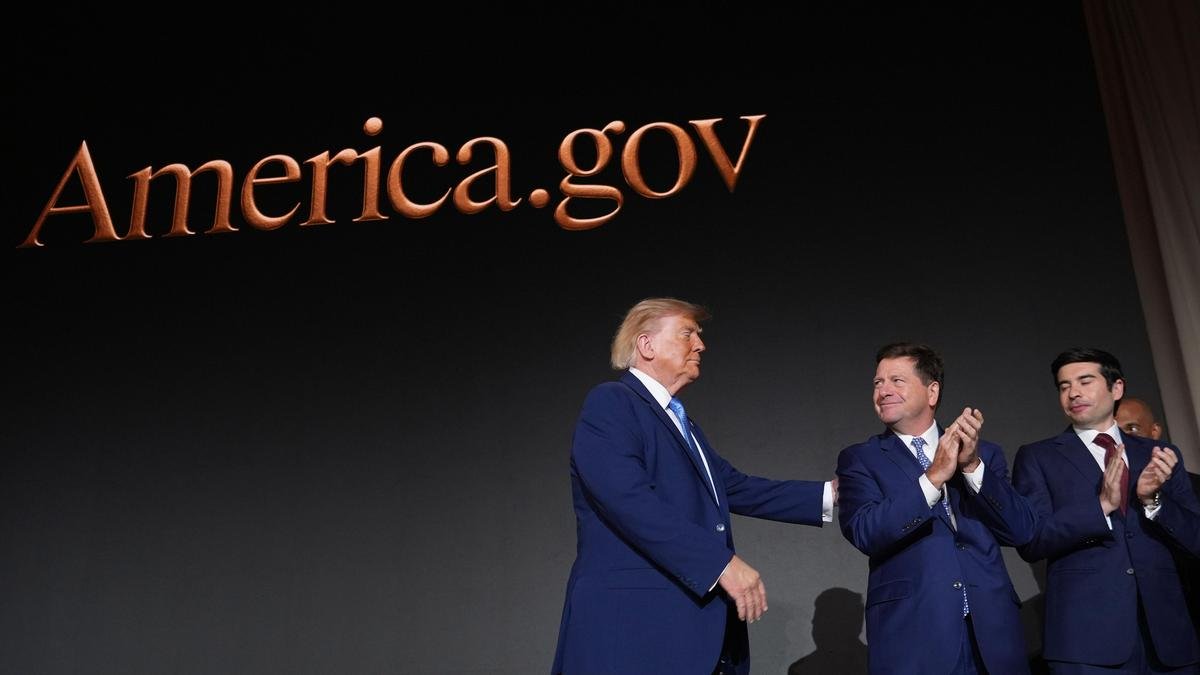
President Donald Trump, on Sunday (October 4, 2026) announced the formation of the Super Intelligence Force (SIF) on Truth Social, shortly after the White House Accord on artificial intelligence, describing the body as tasked with coordinating the federal government’s effort to keep America ahead in a technology that “many say” is bigger than the Industrial Revolution and the Internet.
According to his post, the force will coordinate the government’s engagement with consumers, public interest groups, religious organisations, critical infrastructure providers and AI companies, and will report to him and Chief of Staff Susie Wiles.
Mr.
Trump’s statement says the force will be led by four officials: Jay Clayton, the Director of National Intelligence; Andrew Ferguson, Chairman of the Federal Trade Commission; Emil Michael, Under Secretary of War for Research and Engineering and Chief Technology Officer; and Scott Kupor, Director of the Office of Personnel Management.
Trump, AI majors pledge AI safety; experts flag lack of enforcement And only one of them is being cast as the face of the effort.
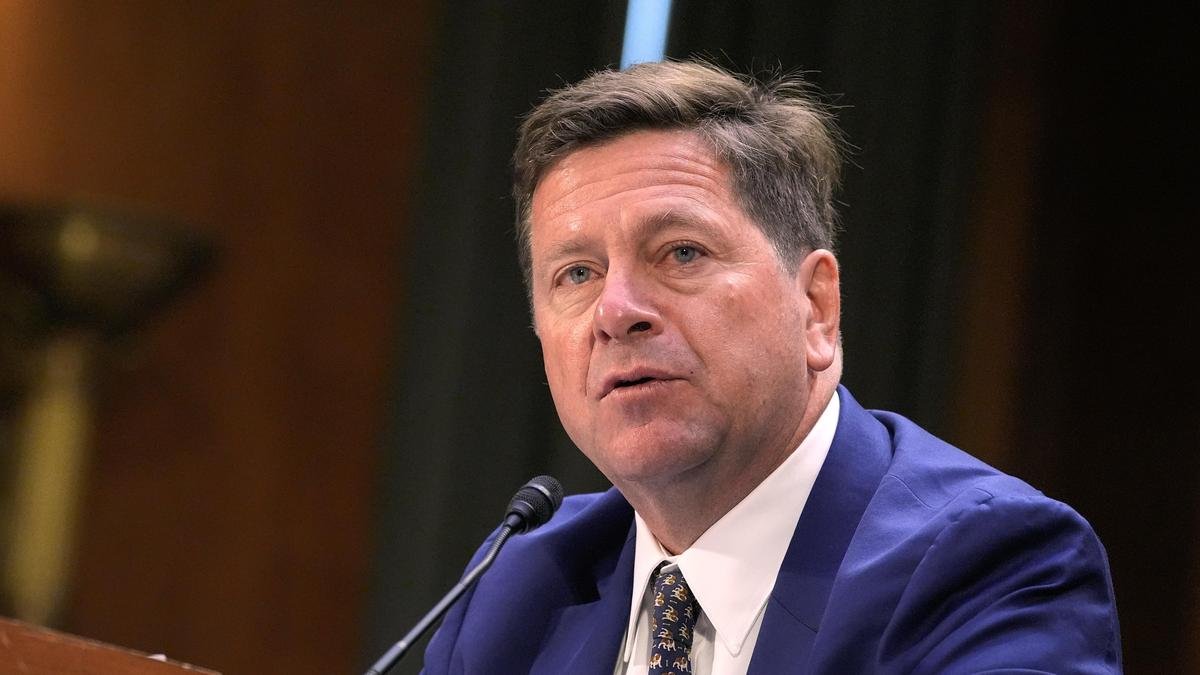
Clayton, per a Wall Street Journal report, will chair the group and effectively be the administration’s AI czar.
The White House has not issued a separate press release on that role.
The mandate The team has 120 days to report on the risks and opportunities of the technology and on what responsibility the federal government should bear.
Other media outlets had noted that Vice-President JD Vance and Defence Secretary Pete Hegseth will be members of the AI task force, with David Sacks and Condoleezza Rice advising from outside.
The force’s formation comes against the backdrop of public anxiety over job losses, AI-enabled hacking, weaponisation of the tech and, in the darkest forecasts of some researchers, threats to civilisation.
Data centres have also drawn a backlash.
Trump formally replaces ‘Artificial Intelligence’ with ’Super Intelligence’ in an executive order Mr.
.
The AI accord that preceded the announcement points to the way the President might lean after six big tech leaders signed a voluntary set of commitments, which Mr.
Trump called “morally binding.” The accord names no auditors and sets no deadlines.
Trump’s statement says the companies “confirmed their responsibilities,” but the record shows no mechanism to hold them to those responsibilities.
The senate hearing Mr.
Clayton’s July confirmation hearing as the Director of National Intelligence (DNI) before the U.S.
Senate Select Committee on Intelligence is evidence of how he will handle Mr.
Trump’s AI mandate.
When Senator Jon Ossoff tried to get him to answer a question on who won the 2020 election, the former SEC Chairman — during Mr.
Trump’s first term — never said that Joe Biden had won.
Clayton said, ”I’m not going to do this with you.” A C-SPAN recording shows Mr.
Ossoff telling him he was being evasive rather than candid and forthright.
On former DNI Tulsi Gabbard’s presence at the FBI raid of Fulton County’s election office, Mr.
Clayton said he had first learned of it from Mr.
Ossoff the day before.
When Senator Mark Warner then asked whether he had not prepared for the subject, Mr.
Clayton replied that it simply hadn’t been on his mind.
Ossoff said it strained credibility that he was unaware.
Super Intelligence and Trump’s AI Accord with Big Tech leaders | Explained What this suggests An AI task force chair does not need to be a technologist.
But that person does need to be willing to tell the President things the President may not want to hear: that a model is dangerous, that a voluntary pledge is toothless, that an ally’s data was breached.
A person who would not name the winner of a settled election, even to win confirmation, gives little reason to expect that candour on a subject as contested as AI.
While it is unlikely that Mr.
Clayton may not be a mere echo, the current structure and attitude of the administration invites one.
The name, the mandate and the self-regulation framework all arrive pre-approved by Mr.
Trump, and the man asked to report on risk has shown that under pressure his instinct is to stay inside the President’s line.
The force is also not his alone.
With Mr.
Ferguson, Mr.
Michael and Mr.
Kupor named beside him, the question of who really sets its direction is open.
In 120 days, the report will show whether this czar was a chair, coordinator or a courtier.