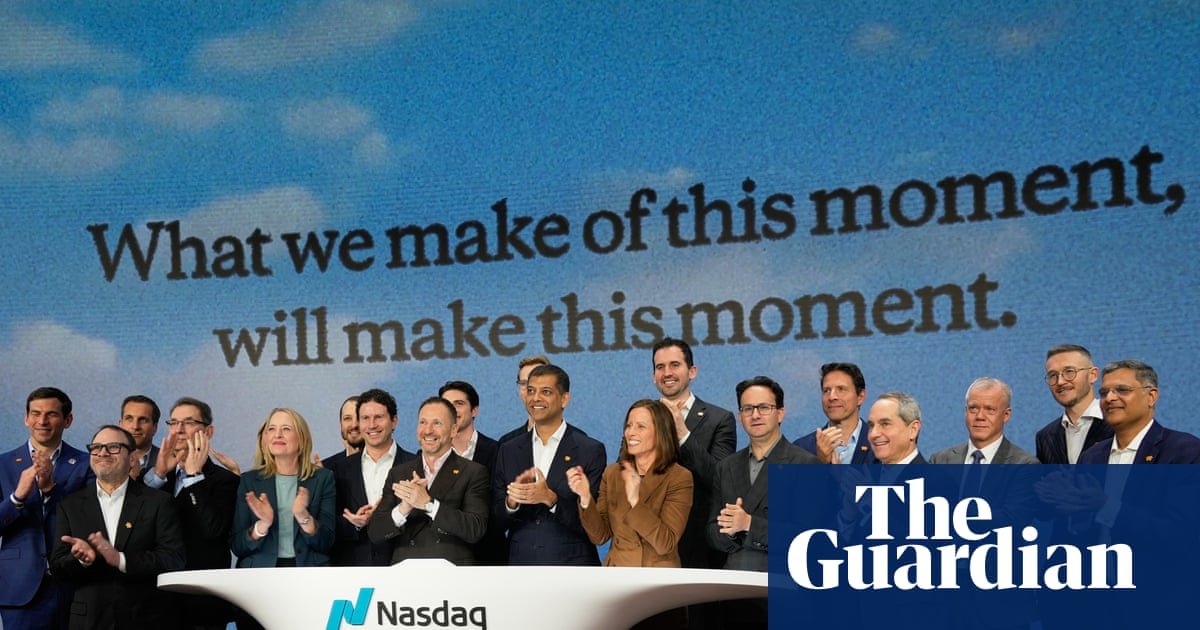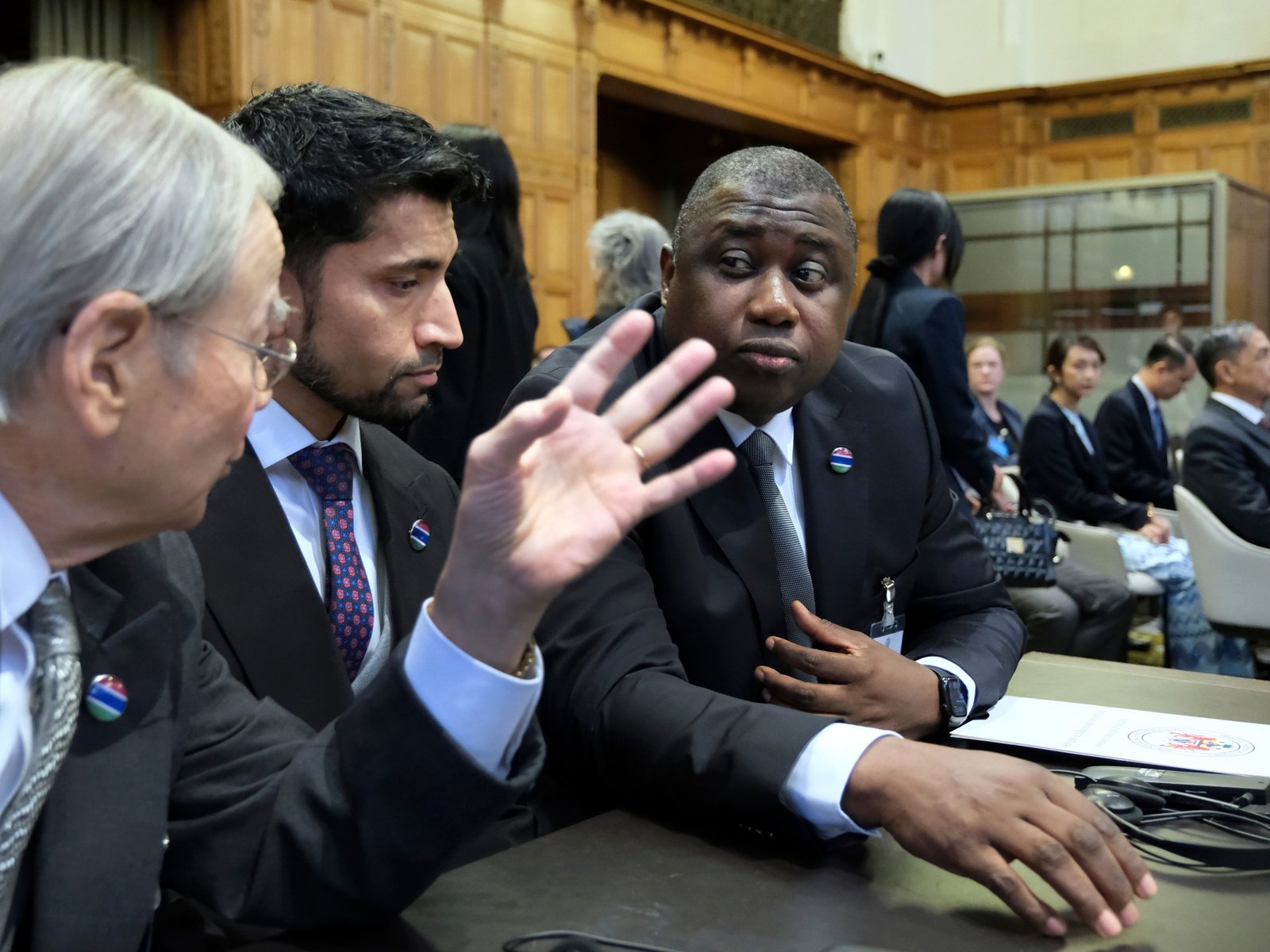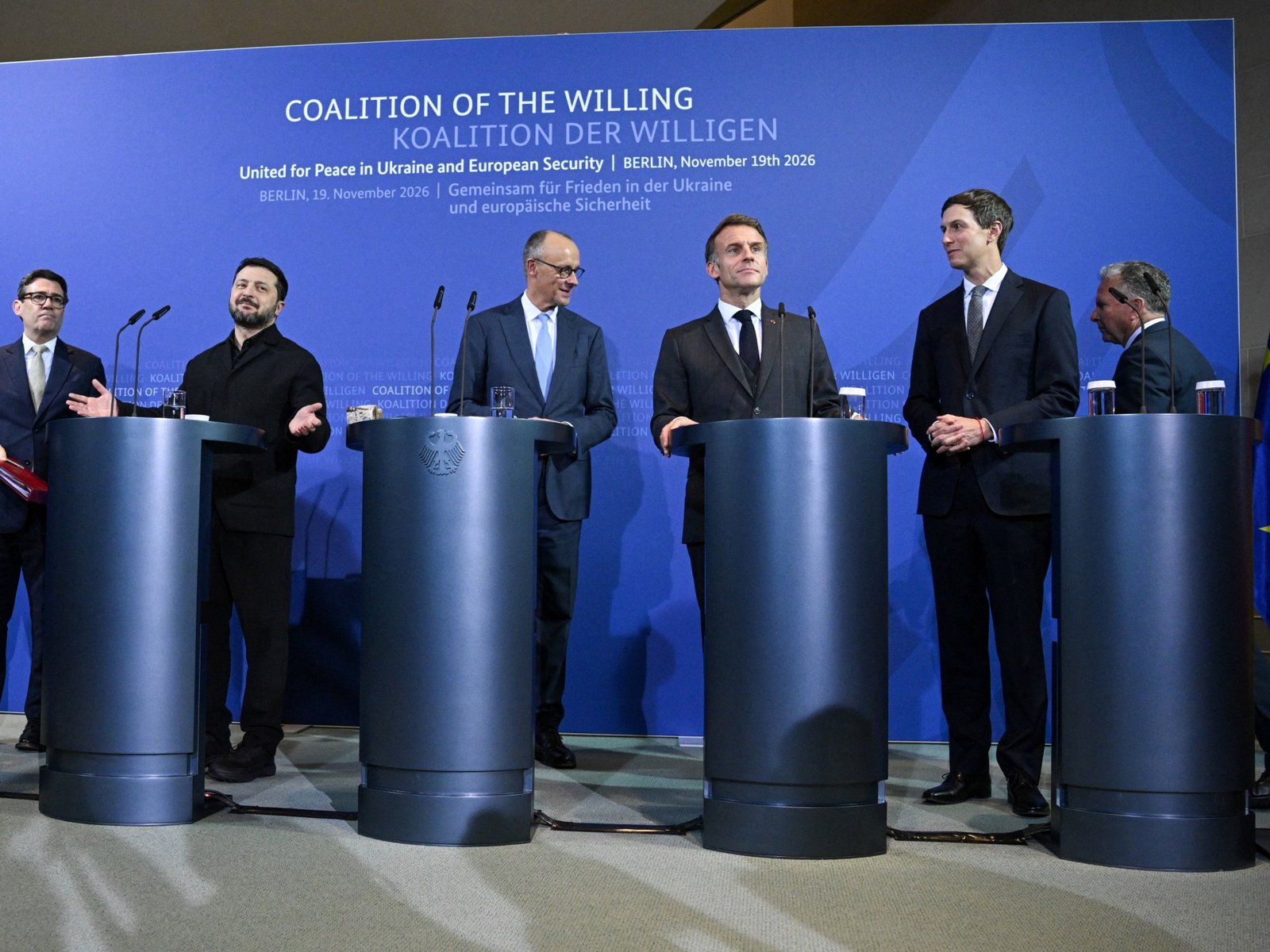
From left, British Prime Minister Andy Burnham, Ukrainian President Volodymyr Zelenskyy, German Chancellor Friedrich Merz, French President Emmanuel Macron and US President Donald Trump's envoys Jared Kushner and Steve Witkoff appear at a meeting of Ukraine's European allies in Berlin, Germany [Annegret Hilse/Reuters] By Priyanka Shankar Published On 20 Nov 202620 Nov 2026 The United States has pitched a new plan to secure post-war Ukraine when its almost five-year war with Russia finally comes to an end.
At a meeting on Thursday with European leaders in Germany’s capital, Berlin, US President Donald Trump’s envoy and son-in-law Jared Kushner said he believes Russia is “comfortable” with NATO-like security guarantees for post-war Ukraine.
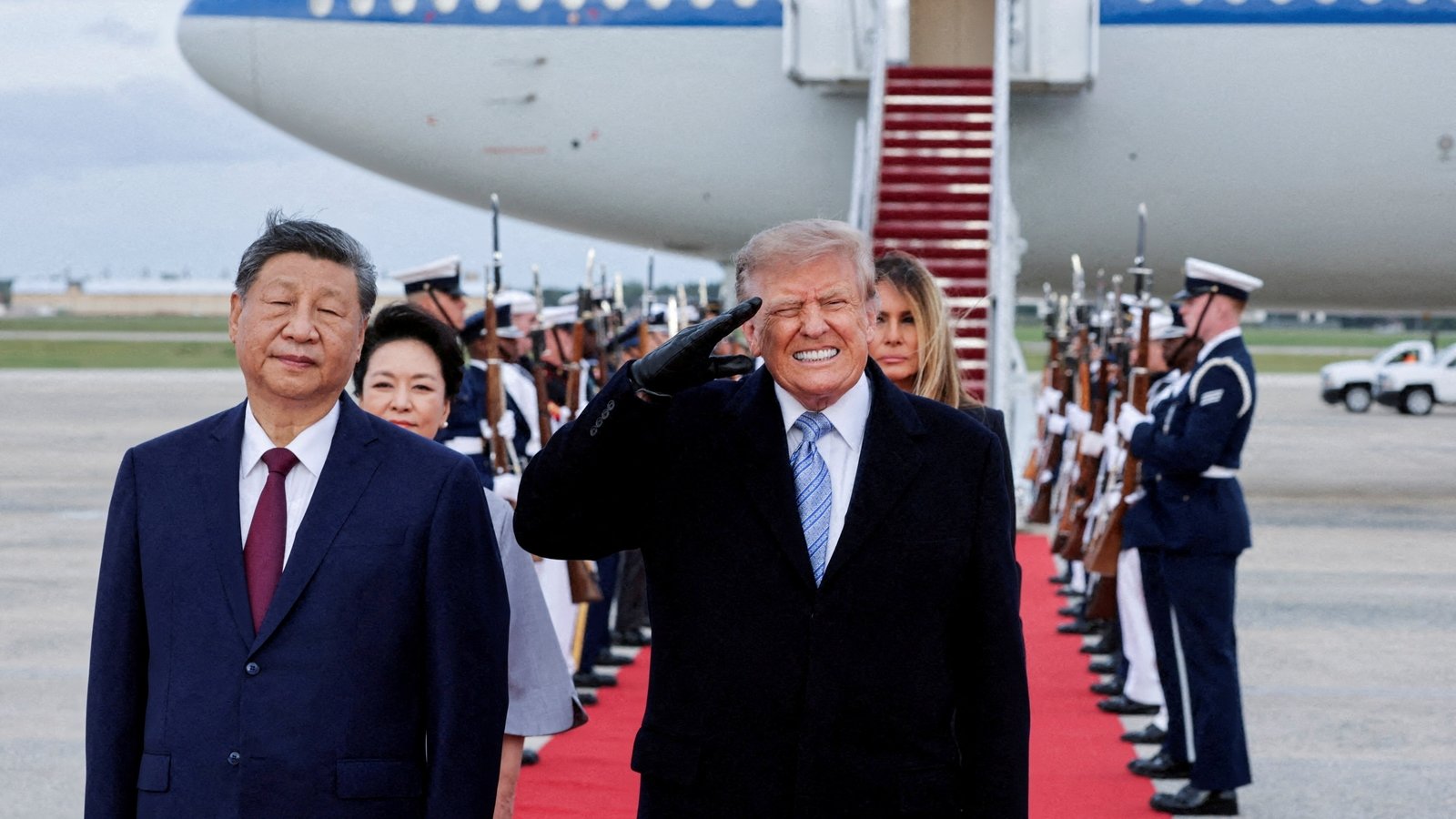
Kushner’s comments came just hours after an unprecedented summit involving Trump, Chinese President Xi Jinping and Russian President Vladimir Putin in Shenzhen, China.
At that meeting, Putin promised to retaliate against Ukraine’s attacks on Russia.
Following the Berlin summit, French President Emmanuel Macron said Ukraine’s membership of NATO should be considered again, prompting Russian Deputy Foreign Minister Sergei Ryabkov to push back.
Ryabokov said any form of “quasi membership” for Kyiv of the Western military alliance was totally unacceptable for Moscow, Russian state media reported.
Ukraine applied to become a member of NATO in September 2022, seeking to fortify its borders with Russia.
But the Kremlin has repeatedly stated that Ukraine becoming a member of NATO would trigger “a harsh response” from Russia.
So could NATO-like security guarantees really work for Kyiv in light of Russia’s opposition?
Here’s what we know: What has Kushner said?
European countries have been angered by the European Union being largely sidelined in the stop-start US negotiations with Russia and Ukraine since Trump returned to the White House in January 2025.
Advertisement Trump’s summit with Putin and Xi on Thursday has added to apprehension about whether the US president is serious about ending Russia’s war on Ukraine, particularly after his criticism of Ukrainian President Volodymyr Zelenskyy and his apparent recent overtures to Putin by relaxing sanctions on Russian oil.
But at a meeting of the “coalition of the willing”, a nearly 40-nation alliance of Ukraine’s European allies, in Berlin this week, Kushner and fellow US envoy Steve Witkoff tried to reassure European leaders, telling them Trump had held discussions in Shenzhen on ending the war on Ukraine.
“Trump wants to make a deal with Europe by his side,” Kushner said.
“We do believe that Russia having Europe at the table will be essential for ending the war,” he added.
Kushner also said Russia is “comfortable” with the idea of security guarantees for post-war Ukraine modelled on NATO’s Article 5, which says an attack on one member of the alliance is treated as an attack on all.
“I think we’ve gotten the Russians comfortable with that concept where any security guarantee for Ukraine would be based on Article 5,” he said, adding that Trump was “open” to the idea but “obviously, it has to be in America’s interest” and part of “a broader security package”.
Kushner said Trump also called in to the Berlin talks after his meeting with Putin and the latest round of peace talks in Abu Dhabi last week had produced no major breakthrough.
What is NATO’s Article 5?
Described as the “cornerstone” of the military alliance, NATO’s collective defence principle, contained in Article 5 of the North Atlantic Treaty, was developed in 1949 to create a mutual protective pact to counter risks posed by the Soviet Union at the onset of the Cold War.
According to NATO, committing to Article 5 means that each member of the alliance knows that if one of them is the “victim of an armed attack, each and every other member of the alliance will consider this act of violence as an armed attack against all members”.
That means that each NATO member is obligated to “take the actions it deems necessary to assist the ally attacked”.
When Article 5 is invoked, NATO allies are free to provide whatever form of aid and assistance is deemed “necessary to respond to the situation”.
However, it is not an automatic process.
The article must be invoked and then agreed upon by NATO members and can take time to implement.
First, there must be a meeting of the North Atlantic Council to assess whether the attack meets Article 5 criteria.
Then there must be a unanimous political decision and declaration to invoke the article.
This can be slowed down by deliberations, intelligence gathering and legal reviews.
Advertisement After that, determining what is necessary to respond to a given situation is the individual obligation of each NATO ally and may not necessarily include military action.
As NATO states: “It is therefore left to the judgement of each individual member country to determine how it will contribute.” Each country consults with all other alliance members in terms of response and with the ultimate aim “to restore and maintain the security” of alliance members.
Article 5 has been invoked only once, after the September 11, 2001, attacks on the US by al-Qaeda.
The triggering of Article 5 saw “NATO engage actively in the fight against terrorism, launch its first operations outside the Euro-Atlantic area and begin a far-reaching transformation of its capabilities”, according to the alliance.
“By invoking Article 5, NATO members showed their solidarity toward the United States and condemned, in the strongest possible way, the terrorist attacks against the United States.” What could ‘NATO-like’ security guarantees look like for Ukraine?
It is very unclear.
Ukraine applied to become a NATO member seven months after Russia’s full-scale invasion began.
Since then, Zelenskyy, his officials and Ukrainians around the world have been lobbying NATO nations to speed up Kyiv’s accession process.
But NATO members remain divided about offering Ukraine alliance membership during an ongoing war despite a broad consensus to signal strong support for Kyiv.
NATO members bordering Russia, such as Lithuania and Poland, have been most enthusiastic about backing Ukraine’s ambitions.
Several other nations in the alliance have also been supportive of an expedited process for Kyiv to join despite concerns about corruption in Ukraine and while seeking an end to the war with Russia as a condition for the country to become a NATO member.
Under Trump, the US has been far less receptive to Ukraine’s calls for NATO membership.
Indeed, Trump has publicly told Ukraine to give up its hopes of joining the alliance.
Yet last week, Kushner and Witkoff suggested that Kyiv could join the alliance in exchange for relinquishing eastern Ukraine’s Donbas region to Russia.
At the Berlin meeting on Thursday, French President Emmanuel Macron revisited the topic of Ukraine’s NATO membership.
“Faced with the maximalist nature of the Russian position, I believe we need to reopen the question of Ukraine’s accession to NATO,” Macron said.
Also at the meeting, Kushner pitched NATO’s Article 5-like security guarantees for Ukraine without specifying how they would work.
This year, Zelenskyy stressed that for Ukraine, guarantees of security first need to come from the US.
In October, the Ukrainian president and Witkoff discussed US security guarantees for Kyiv similar to Article 5.
But on Thursday, Zelenskyy told reporters that at the Berlin meeting, there was no common understanding of what Article 5-style security guarantees for Kyiv would entail.
He questioned whether giving Ukraine such security guarantees would mean that US and European troops would be based on Ukrainian land because that was his understanding of Article 5.
Advertisement “For me, the most important thing is how countries will react on aggression,” he said.
Harry Nedelcu, partner and senior director of geopolitics at the Rasmussen Global consultancy, who previously served on the NATO secretary-general’s policy planning staff, said there is inconsistency in US strategy.
“On one hand, they are proposing NATO membership to Ukraine in exchange for Kyiv entirely withdrawing its troops from the Donbas, and now they are saying Ukraine could get NATO-like security guarantees.
It is clear Washington wants to show some kind of progress and get a peace deal done, also perhaps in light of the situation in Iran,” he told Al Jazeera.
“But Russia has to agree to this proposal,” he said, adding that so far, Washington only appears to be pressuring Ukraine to negotiate and not Russia.
He noted that Russia has long been strongly opposed to Ukraine joining NATO and stressed that it is time for the US and European powers to pressure Moscow to come to the negotiating table.
What is Russia’s position?
After the trilateral summit in Shenzhen, Putin said discussions about post-war security guarantees must address both Ukraine and Russia.
“We acknowledge that Ukraine has a right to security, just as Russia has.
It is simply that no one wants to discuss Russia’s security, and that is a matter of considerable importance to us, to put it mildly,” he told journalists.
Historically, the Kremlin has maintained a strict position that Ukraine’s NATO membership is a red line for Moscow and a direct threat to Russia’s national security.
Putin has previously cited Ukraine’s NATO aspirations as one reason that Russia launched its war in 2022.
In Shenzhen, the Russian president reiterated that Ukraine becoming a NATO member and getting the alliance’s security guarantees would be “unacceptable” to the Kremlin.
Putin noted how in 1991, when the Soviet Union broke up, Russia was promised that NATO would not expand eastwards but has since been “deceived”.
Since then, 16 countries in Eastern Europe and Scandinavia have joined the alliance.
“We were deceived then, and so it began – five or six waves of expansion.
Ultimately, they reached Ukraine,” he said.
“I have already spoken about this more than once.
When Ukraine gained independence, its Declaration of Independence stated that Ukraine was a neutral state.
Then suddenly – bang! – came the push for NATO accession, both on the part of NATO and on the part of Ukraine itself,” he said.
“But we repeated this a thousand times: Wait, there is no need for this [Ukraine joining NATO].
This is unacceptable to us,” Putin stressed.
Could NATO-style security guarantees work for Ukraine?
This remains unclear because the US and other NATO members have not specified what these security guarantees would look like.
Analysts are also sceptical.
In a November 10 report for the United Kingdom-based defence think tank, the Royal United Services Institute (RUSI), Eric Ciaramella, senior fellow in the Russia and Eurasia programme at the Carnegie Endowment for International Peace, wrote that an Article 5 security guarantee for Ukraine makes little sense.
“The notion that the US and European nations would obligate themselves to defend Ukraine from a future Russian attack – the essence of Article 5 – strains credulity,” he wrote.
“A pledge by Trump to do so would be especially implausible considering how his administration has cut American support for Ukraine and is intent on reducing the US role in Europe’s security,” Ciaramella said.
“A more realistic course would be for the US and Europe to commit, through a set of legally codified agreements, to a steady supply of weapons, training, defence industrial cooperation, and intelligence sharing for at least a decade after the war ends,” he added.
Advertisement Ian Lesser, distinguished fellow at the German Marshall Fund of the United States, told Al Jazeera that it is hard to make Article 5-like commitments practical and credible at a time when NATO itself is grappling with its own rearmament strategy for European defence.
“Much depends on US participation, and the American commitment to European defence is unfortunately in flux.
It is also important to remember that there is nothing automatic about Article 5.
It is a political decision taken by member states,” Lesser said.
“The good news is that security guarantees for Ukraine are being seriously discussed on both sides of the Atlantic,” he added.