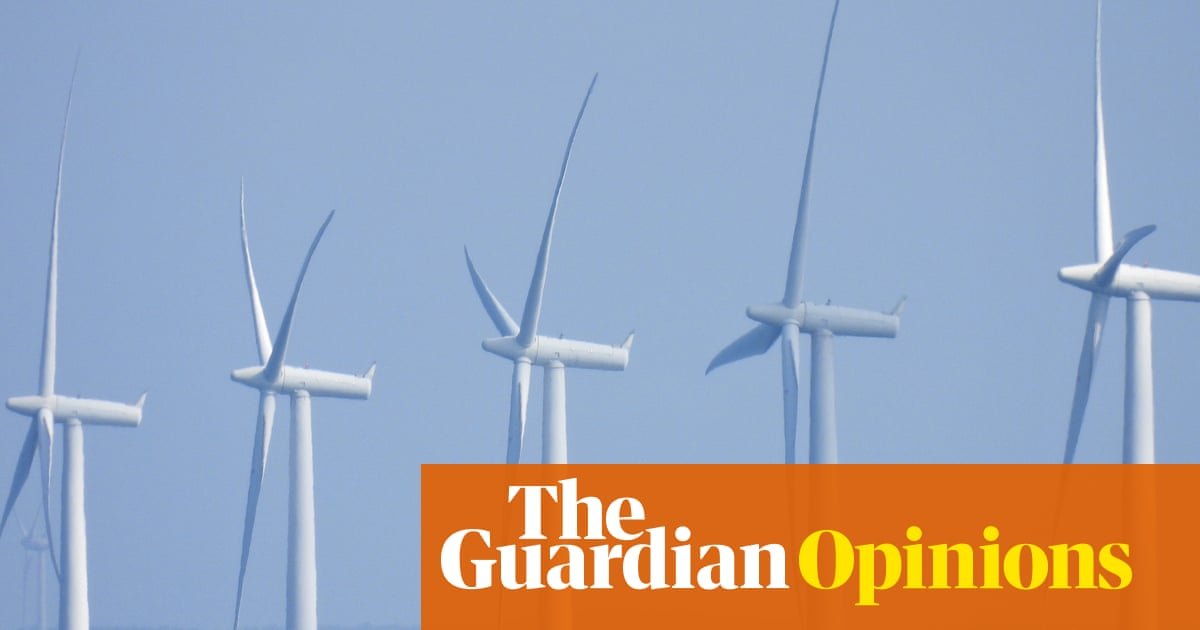
A wind farm near Hartlepool.
The chancellor announced the government ‘will only buy and build new projects when they lower bills and when they can connect to the grid’.
Photograph: Caroline Walker Labour is still searching for an energy fix for a new world Nils Pratley The chancellor is right to focus on pure affordability, but £100 handouts and delayed decisions won’t shield consumers from the next wave of price hikes Amid the myriad of small measures, virtually everything in John Healey’s budget came back to the cost of energy.
The higher energy prices that have resulted from the Iran war have pushed up inflation, are eating into households’ incomes, are a drag on businesses – and are the main reason why the forecast for GDP growth next year was cut from 1.6% to just 1%.
And energy was the focus of Healey’s sole surprise in his consumer-facing policies – the £100 payment to 20m households in A-D council tax bands to help with fuel bills this winter.
It will be funded, in effect, by tapping the banks for a few quid for 15 months via the bank surcharge.
But the chancellor will know that £100 won’t look generous when the bills land.
Gas prices are still rising, and leading supplier EDF’s latest prediction is that the regulator’s price cap will be hiked by £466 in January, pushing the annual rate for an average household to £2,189.
When Labour took office in July 2024, talking naively about taking £300 off bills over the life of the parliament, the cap was £1,568.
No surprise, then, that the messaging on energy is shifting.
Here is the passage in Healey’s speech that hinted at big changes ahead: “Today I’m setting a new course on energy: to get UK energy costs down in line with Europe.
From this point, our Labour government’s priority is first and foremost cheaper energy, with clean power key to achieving this.” .Thank goodness for the reset towards affordability.
It is long overdue.
The biggest impediment to economic growth, including the prime minister’s longed-for “reindustrialisation”, is the cost of energy in the UK.
There is little Healey can do about international gas prices, but he can do “deep reform of our energy system”, as he put it.
So what’s the plan?
That, unfortunately, is where the “new course” turned blurry.
Take the promise to introduce “a new cost control framework to drive down all aspects of energy bills”.
The ambition is laudable, because energy bills have become littered with levies and charges – everything from socialising unpaid consumer energy debt to funding Sizewell C – that should more naturally be funded from general taxation.
It’s about time the Treasury took an interest in such hidden taxes.
But the costs don’t disappear just because they are placed within a new framework.
The tough question is how much a chancellor is willing to fund from Treasury coffers in the interest of lower upfront bills for consumers and business.
It is not a small question, because wide-ranging definitions of levies can produce figures as high as £15bn.
It’s good that Healey is demanding no new levies (unless they bring down bills), but that’s not the same as hacking into the existing thicket.
Funding for green hydrogen projects is being taken on by the Treasury, which is a start.
But come back in next year’s spending review, it seems, to discover the size of Healey’s scythe.
More urgency is needed.
There was a bit more clarity on the electricity generation side.
“This government will only buy and build new projects when they lower bills and when they can connect to the grid,” said Healey.
That reads as a strong hint that offshore wind commissions will be slowed until prices fall (which probably requires a fall in borrowing costs for developers) and the upgrade of the grid is more advanced.
Very sensible: sequencing matters, as the alarming costs of “wasted wind” demonstrate regularly.
But Healey’s ambition to “break the grip of international gas prices” by switching older renewables projects on to lower fixed-price contracts is not new.
Ed Miliband, when energy secretary, said the same.
The test is how hard ministers are willing to twist the arms of renewables owners, who are very attached to arrangements that give them jackpot revenues when gas prices are high.
The basic tension remains: for consumers to win, somebody has to be paid less than they were expecting.
So, yes, one can applaud the change of tone and direction.
A reset in energy policy to prioritise affordability was bound to arrive eventually.
The drive to clean power also had to be a drive to cheap power.
But one cannot yet say the new approach is joined-up.
Policies to drive the electrification of homes and transport were not turbo-charged, which they need to be to reduce long-term dependency on gas and oil.
And “deep reforms” to the electricity market are, to put it gently, a work in progress.
More urgency needed.
Explore more on these topicsEnergy bills Budget 2026 Household bills Consumer affairs comment Share Reuse this content