Muse has been a hit in the US and is ranked first and second, respectively, on Google and Apple’s free app store.
Then let your AI agent do it.
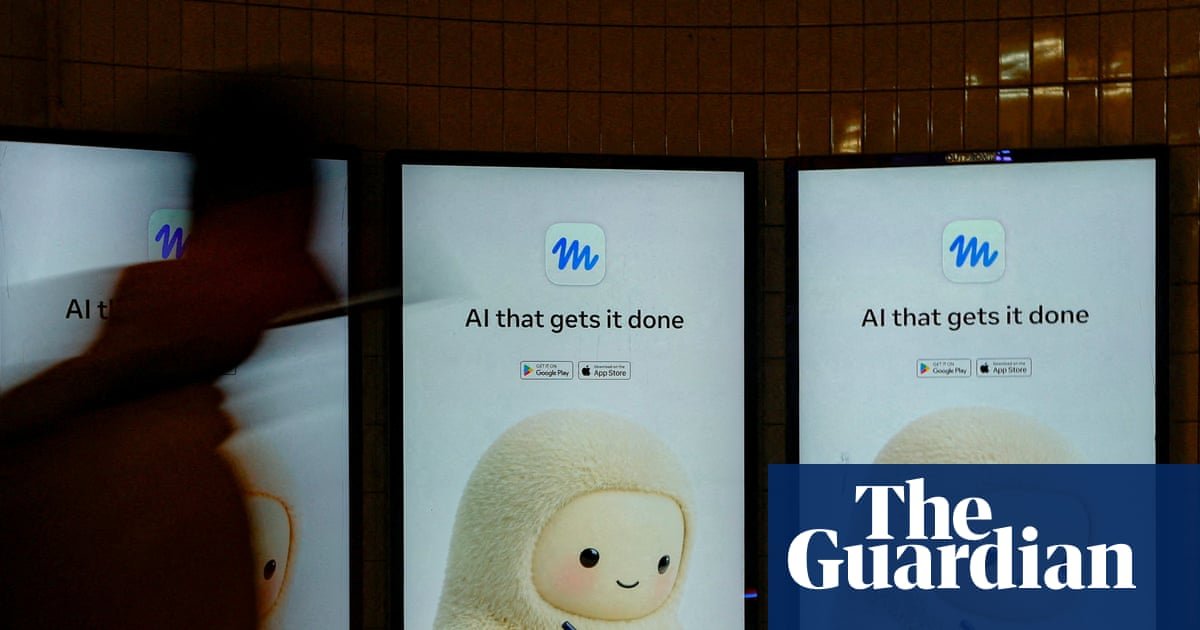
Mark Zuckerberg’s Meta is launching its Muse AI assistant in the UK and is encouraging users to let it loose on their apps – and the high street.
Muse has been a hit in the US and is ranked first and second respectively on Google and Apple’s free app store, having been downloaded millions of times.
Muse can be used as an app or directly within Meta’s WhatsApp messaging platform.
Meta invites users to give their assistant a name, a look and a personality, so they can talk to it as well as assign it tasks such as sending an email, booking travel or buying festive presents.
“From doing the Christmas shopping and searching for a cheaper energy deal, to sorting the school calendar … Muse can get it done for you,” said Meta.
Meta acknowledged that handing control of your day-to-day digital life to an AI agent is “an act of trust”.
Muse cannot make a purchase or send an email without your permission and will only connect to apps you let it join.
The app has no visibility into people’s passwords or payment methods, Meta said, and it does not share your conversations with advertisers.
It will ask for your approval before making a purchase or sending an email, while a separate “security agent” checks Muse’s actions against the permissions you’ve granted.
“Think of it as a helping hand for the jobs that pile up, like chasing a refund, renewing car insurance or keeping on top of the school calendar,” said Meta.
“To get those jobs done, you can connect Muse to the apps you already use, from your email and calendar to the retailer apps you shop on.” Meta said it has signed deals with an array of British businesses – including Marks & Spencer, electrical retailer Currys, Sainsbury’s and easyJet – allowing Muse to navigate their websites more easily.
In a statement last month UK regulators including the Competition and Markets Authority and the Information Commissioner’s Office said AI agents – the term for AI programmes that carry out series of tasks without human intervention – could “unlock wider innovation” but could also “amplify and accelerate risks and introduce new ones”.
The watchdogs said concerns such as fraud, scams and misuse of personal information needed to be addressed by companies providing personal AI agents.
Reuters reported last week that Meta employees had raised concerns about the app’s performance, including one staff member receiving a reminder to respond to a message from her sister on Signal, an encrypted messaging app.
In another example reported by Reuters, Muse delivered a message with random bank account balances in it.
Meta said internal testing is vital for product development and allows the company to implement safety and privacy protection before releasing anything publicly.
It is understood the majority of problems flagged by Reuters related to a bug that has been fixed. skip past newsletter promotion after newsletter promotion Muse is powered by Muse Spark, Meta’s first model from the company’s “super intelligence” AI lab.
In a social media post on Sunday, Meta’s chief AI officer, Alexandr Wang, raised the possibility of humanity losing control over AI systems that are able to improve themselves autonomously.
“It is … hard to imagine a world where humanity maintains control with super intelligence that is 1000x smarter and more capable than humans in every field,” he wrote.
Responding to reports that AI had cracked one of the most important unsolved problems in mathematics – the Riemann hypothesis – Wang said the tech industry needed to make progress in the “extremely urgent” areas of AI safety, security and alignment.
Alignment refers to ensuring an AI system adheres to human goals and values.
Explore more on these topicsMeta AI (artificial intelligence) Virtual assistant Computing news Share Reuse this content