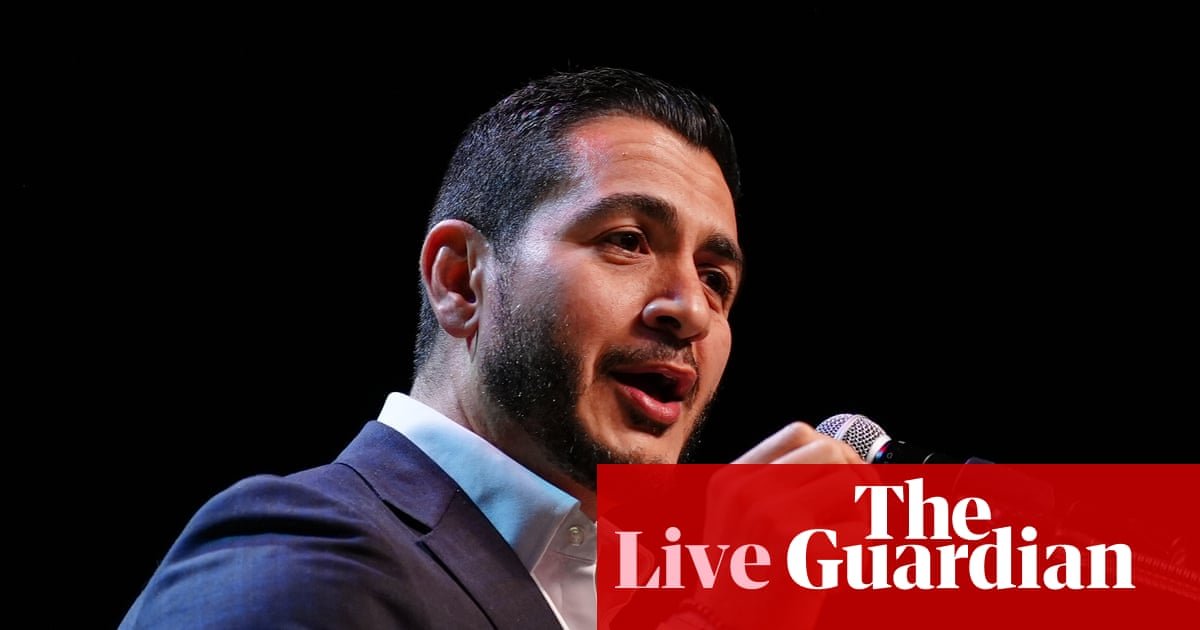
The former public health official has slight lead over congresswoman Haley Stevens, but vote count could continue well into the day
El-Sayed holds narrow lead in Michigan Senate primary but race too close to call
27m agoRepublican Chuck Edwards withdraws reelection bid following censure recommendation
1h agoMissouri's top election official rejects referendum on Trump-backed redistricting plan
2h agoMichigan Senate Democratic primary race remains too close to call
Hello and welcome to our live coverage of US politics.
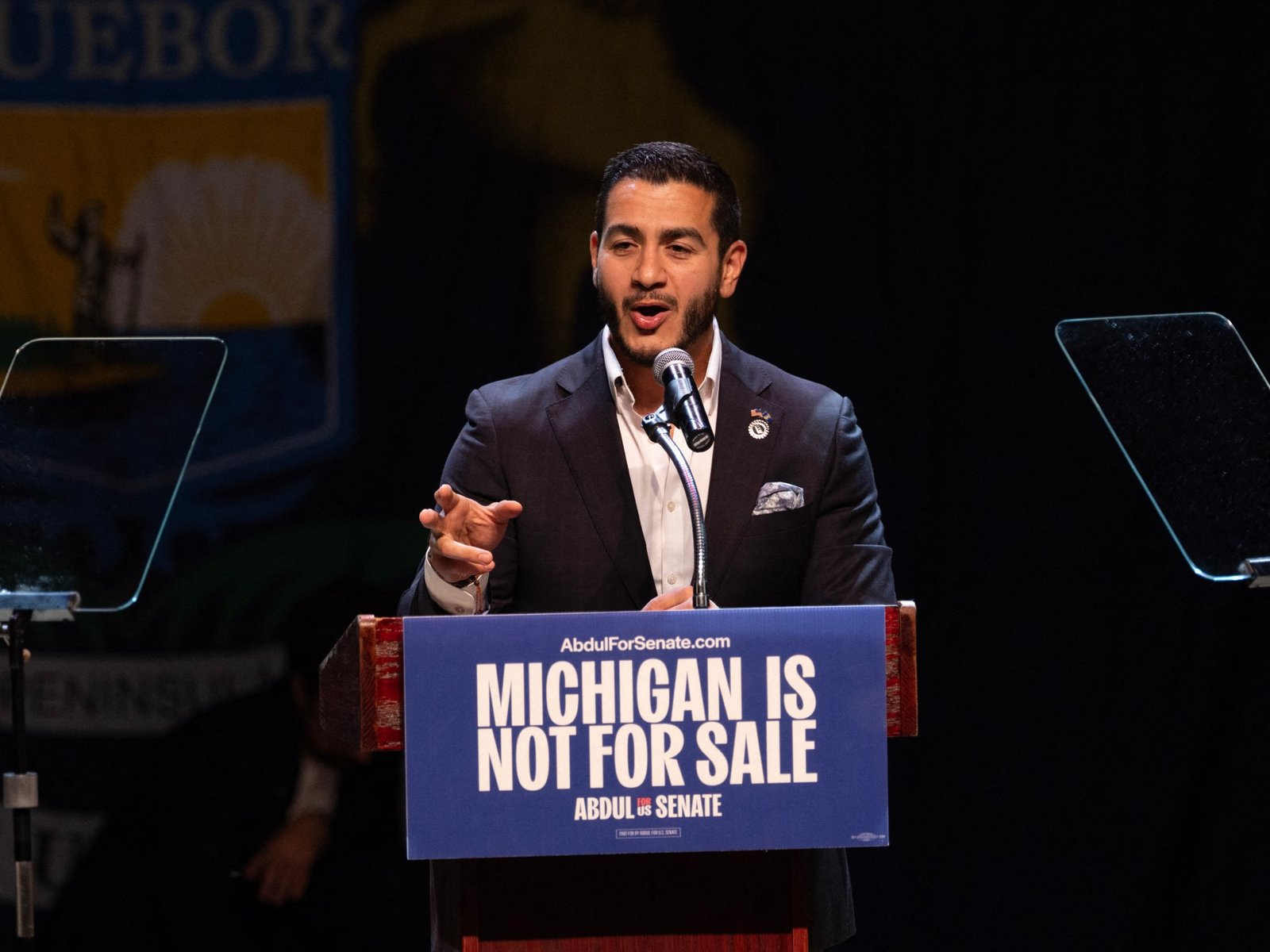
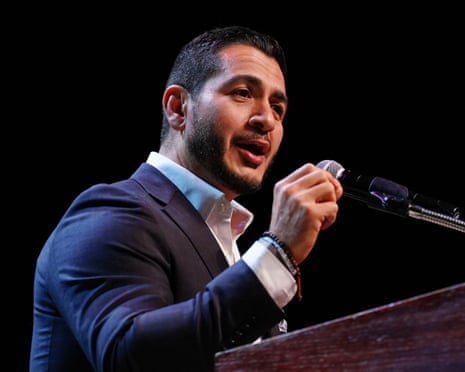
The race for the Democratic nomination for Senate in Michigan remains too close to call early on Wednesday with Abdul El-Sayed, a progressive former public health official, holding a narrow lead over congresswoman Haley Stevens.
At around 5am local time, El-Sayed had 49.5% of the vote and Stevens 45.78%, with more than 95% of votes counted.
Both addressed supporters, saying the vote count could continue well into the day.
“We knew that this was going to be a close race, and that’s exactly what we’ve got,” Stevens said. “I am feeling fired up, and you should be too.”
The bitter and expensive campaign attracted national attention not just because the general election for the seat will help decide which party controls the Senate. It also became the most notable proxy battle between the Democratic Party’s establishment and progressive wings.
Candidates from the left-flank – including democratic socialists – have found surprising success in the party’s US House primaries, including in New York and Denver, in areas that tend to veer farther left. A progressive victory in Michigan would be significant for the movement.
The winner of Tuesday’s race will face the Republican nominee, former representative Mike Rogers, in November, to succeed the retiring Democratic senator Gary Peters. Rogers ran unopposed in the Republican primary.
Also in Michigan, Jocelyn Benson clinched the Democratic nomination in the governor’s race and will face the John James, who won the Republican contest. Benson, the state’s secretary of state, will take on James, a congressman who received an endorsement from Donald Trump, to replace the term-limited Democratic governor, Gretchen Whitmer, in November.
Further down ballot, William Lawrence, a progressive, won a competitive three-way Democratic primary race in Michigan’s seventh congressional district. Lawrence, a community organizer who co-founded the Sunrise Movement, will now challenge Republican incumbent Tom Barrett, who has bucked his own party while in office, after he flipped the key battleground district red in 2024.
Meanwhile in Washington state, Marie Gluesenkamp Perez, the two-term centrist Democrat, has advanced to the general election for her competitive US House seat. She’ll face the Republican candidate and state senator, John Braun, who is backed by Trump. The state votes on single ballots – meaning the top two finishers, regardless of party, advance to November’s contest. More here.
And in Missouri, Democratic congressman Wesley Bell won his primary in the St Louis area on Tuesday, ending the progressive former representative Cori Bush’s bid for a comeback. Bell’s victory blunted the momentum pro-Palestinian candidates have shown in recent elections. In this deep-blue district, this also makes Bell the favorite to win a second term in the November election. More here.
Also in the midwest, Cindy Holscher, a state senator, won the Democratic nomination in Kansas’s gubernatorial race. She beat two other Sunflower state politicians to advance to the general election. Ty Masterson, the Trump-backed Kansas state senate president, clinched the GOP nomination in a crowded race. It’s set to be a fierce competition, as Republicans are angling to retake the governor’s mansion from Democratic control.
All eyes may be on Michigan right now to see if progressives can win yet another race in the Democratic primary for Senate – latest numbers have Abdul El-Sayed leading at 49.43% ahead of moderate Haley Stevens with 45.85% of the vote.
But in Missouri, the victory of Democratic congressman Wesley Bell against Cori Bush, the progressive former representative Cori Bush, blunted the momentum pro-Palestinian candidates have shown in recent elections.
The Guardian’s Chris Stein has more here:
Chuck Edwards, a Republican congressman from North Carolina, has withdrawn from his reelection campaign after the House ethics committee reported determined that he had “fostered a hostile work environment and engaged in sexual harassment” by giving gifts and lavishing attention on two young female staffers.
“After much prayer and reflection, I’ve decided to withdraw from my re-election campaign,” Edwards posted on X. “I will complete my current term. Serving Western North Carolina has been the honor of my life. Thank you for your trust, prayers, and support. God bless WNC and America.”
The Guardian’s Chris Stein reports that the bipartisan ethics panel began investigating the second-term congressman earlier this year after receiving complaints. The report approved by Democratic and Republican committee members determined that there “was substantial reason to believe” Edwards broke House rules by singling out the two unidentified aides for special treatment that made them uncomfortable and harmed relations with other employees.
In more election news: Missouri’s top election official on Tuesday rejected a citizens’ petition seeking a statewide referendum on a redistricting plan backed by Donald Trump, the Associated Press reports.
Republican secretary of state, Denny Hoskins, said that the petition was void because congressional redistricting plans cannot be subject to voter referendums and “challenging a congressional map is unconstitutional under Missouri law”.
Missouri joined Texas last year in responding to Trump’s call to redraw congressional districts to the GOP’s advantage. The new map dramatically reshapes the Kansas City-based fifth congressional district that has been long-held by Democratic representative Emanuel Cleaver. Under the new map, the district stretches into rural central Missouri, giving it a Republican tilt.
Republicans already hold six of Missouri’s eight congressional seats.
People Not Politicians, the group sponsoring the referendum drive, had submitted more than 300,000 signatures to the secretary of state’s office in December calling for a statewide referendum on the plan. The group said it would contest Hoskins’ decision in court.
In some non-primary news: Max Miller, the beleaguered US Republican representative from Ohio, has vowed to defy a rising groundswell of resignation calls from his own party over domestic abuse allegations after his ex-father-in-law, Bernie Moreno, a GOP senator, said he was unfit to serve in Congress.
Miller – who married Emily Moreno at Trump’s club in Bedminster, New Jersey, in 2022 – has been accused of holding a gun to her head and scalding her with boiling water. Their toddler daughter, who was born in 2023, is also said to have suffered a broken collarbone due to his actions.
Robert Tait and Coral Murphy Marcos have more here for the Guardian:
US representative Haley Stevens, who is currently trailing in the Democratic primary for Senate in Michigan, has cast herself throughout her campaign as a pragmatic problem-solver and workhorse.
Stevens, who has represented Michigan’s 11th House district since 2019, after flipping the seat, has a long list of high profile endorsements from within the Democratic party that include the Senate minority leader, Chuck Schumer, the Michigan governor, Gretchen Whitmer, and Gary Peters, the retiring senator who holds the seat she is now running for. Her campaign had also been boosted by tens of millions of dollars in outside spending, including from groups affiliated with the American Israel Public Affairs Committee (Aipac), the pro-Israel lobbying organization.
The Guardian’s Rachel Leingang has more here:
The Guardian’s Joseph Gedeon spoke to Abdul El-Sayed, the progressive former public health official who is currently leading the race for the Democratic nomination for Senate in Michigan.
An epidemiologist who served in health director roles in Detroit and its county, El-Sayed has frequently tied the Israel-Gaza war, which he unflinchingly calls a genocide, and other conflicts involving the US to affordability at home.
He had attempted to win office before, losing the Democratic gubernatorial race in Michigan in 2018. But he believes that the anti-establishment coalition he now represents has grown larger than the one that rejected him eight years ago.
“I think people are sick and tired of the establishments on both sides of that, and I think we are having success because we’re speaking to that frustration,” El-Sayed said. “And politics doesn’t have to suck, and you can build a politics that doesn’t suck.”