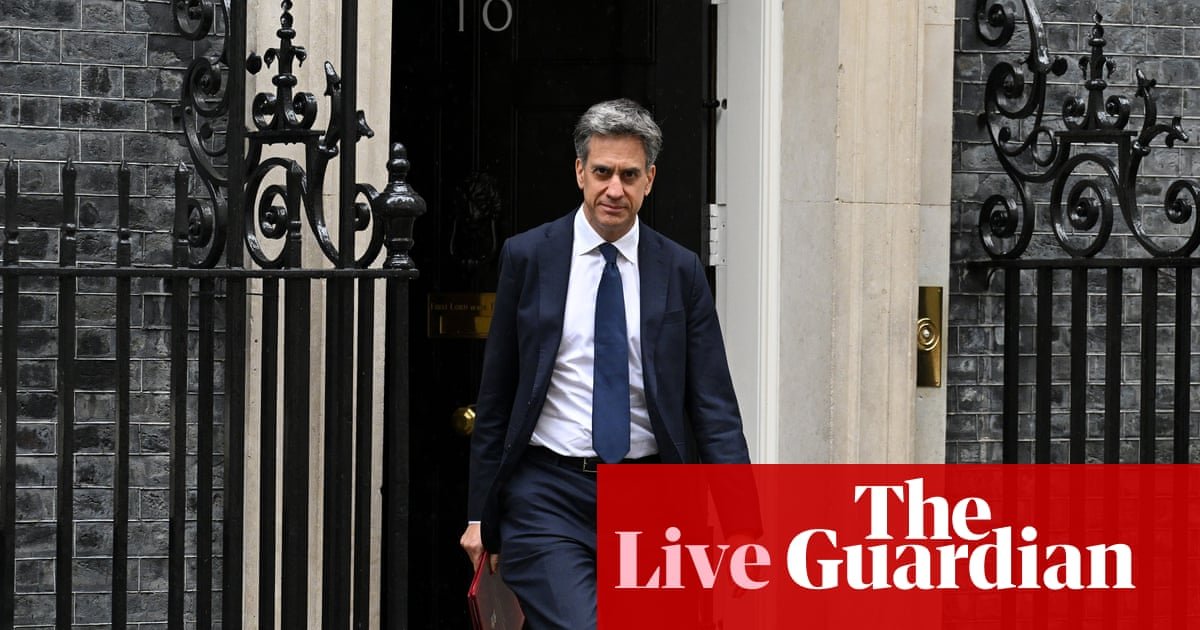
UK foreign secretary ‘regrets’ Israel’s response to ban on trade with illegal settlements but ‘proud’ of his actions
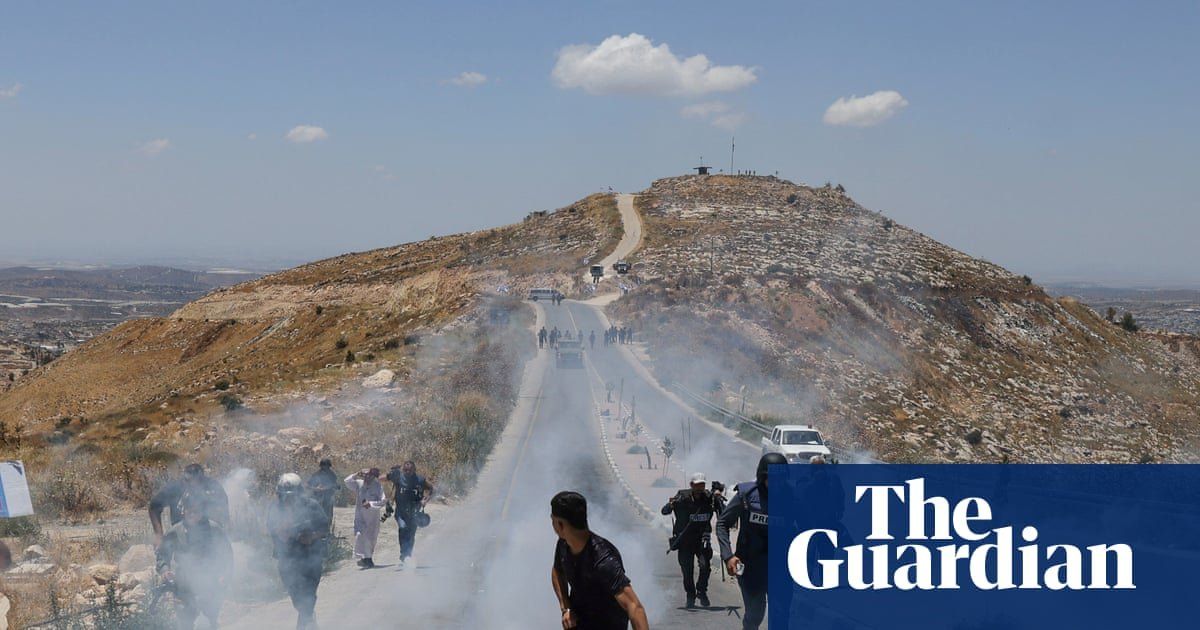
UK accuses Israeli ‘terrorists’ of ethnic cleansing in West Bank with government backing
12m agoMiliband says he is 'confident' that security cooperation with Israel will continue despite backlash over sanctions
18m agoMiliband confirms UK sanctions could hit Israeli banks dealing with West Bank settlers
1h agoMiliband plays down significance of Israel's retaliatory measures, saying UK sanctions still 'right thing to do'
1h agoMiliband defends sanctions on Israeli settlements and pushes back against chief rabbi’s criticism
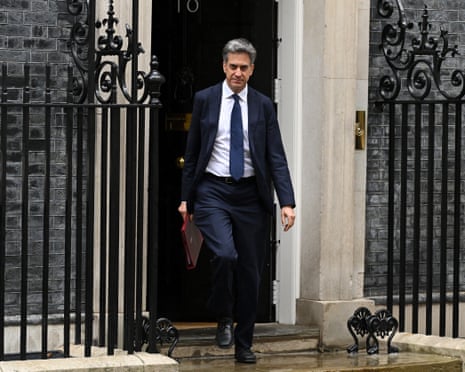
Good morning. Yesterday Ed Miliband, the foreign secretary, made what may turn out to be one of the most important Commons statements of the year. Here is our overnight report by Pippa Crerar, Jessica Elgot and Kiran Stacey.
Here is an analysis by Patrick Wintour, the Guardian’s diplomatic editor.
And here is the Guardian’s editorial.
It starts: “Rarely in recent years has the Commons felt like the cockpit of history. On Tuesday it did.”
Ministers were worried about a backlash from Donald Trump. So far, that has not happened, and in the US Axios is reporting that, when Andy Burnham spoke to Trump on Monday, “two sources with knowledge of the call said Trump didn’t push back or ask Burnham to change course”. In his report for Axios, Barak Ravid says: “US officials told their British counterparts they shared their concerns about the Netanyahu government’s West Bank policy, even if they disagreed with these specific sanctions, sources say.”
But in the UK some of the leading organisations representing the Jewish community have strongly condemned the decision to ban trade with Israeli settlements in the West Bank, and Sir Ephraim Mirvis, the chief rabbi, described yesterday as “truly a dark day for British Jews”. The rightwing papers are all leading their coverage on his remarks.
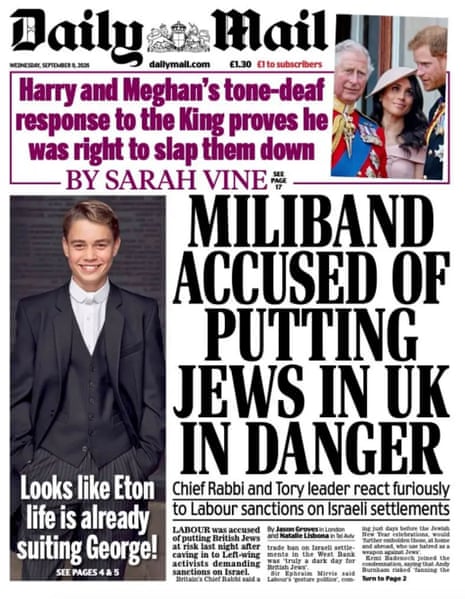
Miliband has been giving interviews this morning, and he has said he does not agree.
Asked about the chief rabbi’s statement, Miliband told Sky News:
Well, I’m a proud British Jew, and I don’t agree with the chief rabbi. I have great respect for the chief rabbi, but I don’t agree with him, and I believe that it must be possible to do what we did yesterday, which is to stand up for British values of the rule of law, of dignity for people, of the prevention of injustice, and do so in a way, as I did yesterday, to say to anyone in our country who holds British Jews responsible for the actions of the Israeli government, that is antisemitism, pure and simple.
Well, I’m a proud British Jew, and I don’t agree with the chief rabbi.
I have great respect for the chief rabbi, but I don’t agree with him, and I believe that it must be possible to do what we did yesterday, which is to stand up for British values of the rule of law, of dignity for people, of the prevention of injustice, and do so in a way, as I did yesterday, to say to anyone in our country who holds British Jews responsible for the actions of the Israeli government, that is antisemitism, pure and simple.
We will hear from Andy Burnham on this later at PMQs.
Here is the agenda for the day.
9am: Zack Polanski, the Green party leader, speaks at the Wild Summit in Bristol. Words and video planned
From 9am: David Anderson and Jonathan Hall, the former and current independent reviewer of terror legislation respectively, are among those giving evidence to phase two of the Southport inquiry, looking at Prevent’s role in managing violence-fixated individuals.
10am: Prof Alexis Jay, chair of the Independent Inquiry into Child Sexual Abuse (IICSA), is among the experts giving evidence to the London assembly’s police and crime committee on grooming gangs.
Noon: Andy Burnham faces Kemi Badenoch at PMQs.
After 12.30pm: Heidi Alexander, the transport secretary, may make a Commons statement on the air traffic control chaos. She is also opening the second reading debate on the civil aviation bill.
I’m afraid we are no longer able to have comments open below the line every day on this blog. If you want to contact me, please email politics.live@theguardian.com. You can use this email to flag up corrections, comments for publication, questions or complaints.
In his interview on the Today programme, Ed Miliband also said that he was “confident our security cooperation with Israel will continue” despite the sanctions.
The Tories are claiming the government’s move puts that cooperation in jeopardy, and that British lives are at risk as a result.
Asked why he was confident that there would not be a problem, “given how angry [the Israelis] are”, Miliband replied:
I won’t go into the details of this, but we have important intelligence and security relationships with Israel and I’m confident they will continue. And I was very clear yesterday that we do believe in working with our Israeli partners when it comes to the threats they face from Iran. For example, I announced new sanctions on Iran yesterday.
I won’t go into the details of this, but we have important intelligence and security relationships with Israel and I’m confident they will continue.
And I was very clear yesterday that we do believe in working with our Israeli partners when it comes to the threats they face from Iran. For example, I announced new sanctions on Iran yesterday.
Emma Graham-Harrison wrote a good explainer for the Guardian yesterday about the potential impact of the sanctions imposed by Ed Miliband.
She explained that, while the most obvious part of the announcement relates to the ban on the import of goods produced in settlements, the measures relating to financial services are potentially much more significant.
Miliband highlighted that the Israeli settler population in occupied Palestine had almost tripled over the past three decades, from 270,000 in 1993 to 770,000 today. That expansion is underpinned by large government subsidies. A trade ban alone would be unlikely to have much impact on the viability of construction that is a government priority, or on the broader Israeli economy. However, plans to place sanctions on any company that finances or facilitates settlement expansion could force Israel’s main banks and insurance companies to choose between their business interests in the UK and those in occupied Palestine. Miliband has not provided details of the new measures, which he said would take between six and nine months to put in place. But they have the potential to slow or stop construction. The activist Yehuda Shaul wrote in a social media post about new building projects: “Companies that bid for tenders on government-led projects, including settlement expansion, must have a financial guarantor. Without the backing of Israeli financial institutions, these projects cannot occur.”
Miliband highlighted that the Israeli settler population in occupied Palestine had almost tripled over the past three decades, from 270,000 in 1993 to 770,000 today.
That expansion is underpinned by large government subsidies. A trade ban alone would be unlikely to have much impact on the viability of construction that is a government priority, or on the broader Israeli economy.
However, plans to place sanctions on any company that finances or facilitates settlement expansion could force Israel’s main banks and insurance companies to choose between their business interests in the UK and those in occupied Palestine.
Miliband has not provided details of the new measures, which he said would take between six and nine months to put in place. But they have the potential to slow or stop construction.
The activist Yehuda Shaul wrote in a social media post about new building projects: “Companies that bid for tenders on government-led projects, including settlement expansion, must have a financial guarantor. Without the backing of Israeli financial institutions, these projects cannot occur.”
Some Israeli commentators have expressed doubts as to whether, in practice, these sanctions really will cover mainstream Israeli banks. But, in his interview on the Today programme this morning, Miliband insisted they could.
I also make this wider point, because this is about a substantive intervention to make a difference to the facts on the ground. With our sanctions regime, we are also seeking to cut off the supply of the supply lines of British finance, British construction, for settlement expansion. This is about a clear purpose, which is to draw a line in the sand and to stop this infinite, ever-expanding settlement expansion.
I also make this wider point, because this is about a substantive intervention to make a difference to the facts on the ground.
With our sanctions regime, we are also seeking to cut off the supply of the supply lines of British finance, British construction, for settlement expansion. This is about a clear purpose, which is to draw a line in the sand and to stop this infinite, ever-expanding settlement expansion.
Asked if Israeli banks would be covered too, Miliband replied:
The way this works is that we sanction companies, and we don’t name the companies in advance. We sanction companies that might be engaging in the occupied territories. And then it is about the relationship with British citizens and British companies.
When Justin Webb, the presenter, put it to Miliband that this meant the sanctions would go much wider than just applying to people “selling dates”, and that they would apply to companies in Israel with relationships with settler companies, Miliband replied:
Yes, because this is about seeking to have an impact on the services that are provided to expand the occupation. And we are very serious about making a substantive difference and using the power of our sanctions regime to make a difference to the facts on the ground.
Yes, because this is about seeking to have an impact on the services that are provided to expand the occupation.
And we are very serious about making a substantive difference and using the power of our sanctions regime to make a difference to the facts on the ground.
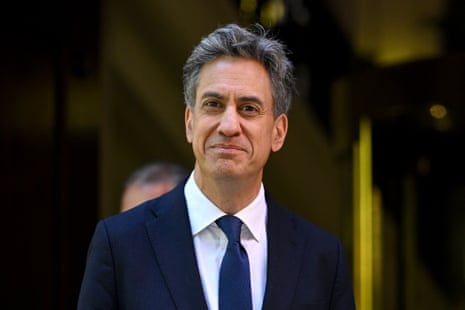
A spokesperson for the Israeli embassy in London has accused the UK of deploying a diplomatic “nuclear option” against his country.
In an interview with the Today programme this morning, Alex Gandler said:
A response and a conversation between friends is something that is wanted. Operating a nuclear option of sanction between democratic countries, especially towards a country that is at war for the past few years and is fighting a shared enemy in Iran, is something that is unheard of. Hence, our assessment that this has nothing to do with realities on the ground and everything to do with the fact that there’s politics involved.
A response and a conversation between friends is something that is wanted.
Operating a nuclear option of sanction between democratic countries, especially towards a country that is at war for the past few years and is fighting a shared enemy in Iran, is something that is unheard of.
Hence, our assessment that this has nothing to do with realities on the ground and everything to do with the fact that there’s politics involved.
Gandler also claimed the timing of the announcement was particularly bad.
The timing couldn’t be worse than it is regarding Israel, as we are less than 50 days away from elections in the country, days away from our high holidays in Israel. It definitely does not promote the relationship between Israel and the United Kingdom, that is for sure, and it does create an atmosphere for violence against Jews.
The timing couldn’t be worse than it is regarding Israel, as we are less than 50 days away from elections in the country, days away from our high holidays in Israel.
It definitely does not promote the relationship between Israel and the United Kingdom, that is for sure, and it does create an atmosphere for violence against Jews.
The BBC’s Tom Bateman has posted this on social media. It is the sign outside the UK consulate in Jerusalem that Israel is now closing. (See 9.21am.)
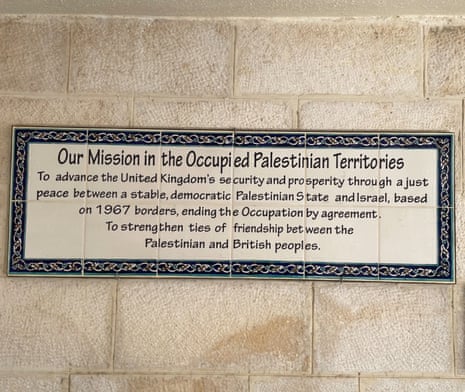
The very long standing sign that used to be on the wall in the British consulate in East Jerusalem. Israel has said it will close the consulate in retaliation for the UK’s trade ban on settlements
In his interview with Sky News this morning, Miliband sidestepped a question about what Washington is telling the UK government about its decision to impose sanctions on Israel relating to the illegal West Bank settlements.
I’ll let our American friends speak for themselves. We obviously talked to them in advance of our announcement. You know, I think the whole international community has been quite frustrated, to put it mildly, with some of the actions of the Israeli government. I will let them say what they feel, but I think there is real concern about what is happening … Underlying so many of the conflicts in the Middle East is this failure to really grasp the situation between Israel and Palestine, and this is why it’s in our interest to act.
I’ll let our American friends speak for themselves.
We obviously talked to them in advance of our announcement.
You know, I think the whole international community has been quite frustrated, to put it mildly, with some of the actions of the Israeli government.
I will let them say what they feel, but I think there is real concern about what is happening … Underlying so many of the conflicts in the Middle East is this failure to really grasp the situation between Israel and Palestine, and this is why it’s in our interest to act.
In his interview with Sky News this morning, Ed Miliband, the foreign secretary, said that he regretted the fact that Israel is ordering the UK to close its consulate in Jerusalem in response to the UK sanctions. But he said the government had weighed up “the costs and benefits” of its move in advance.
I regret what the Israeli government has announced, but I’m proud of what we did yesterday and it was the right thing to do. It will be damaging, that’s true, but we weighed up the costs and the benefits in advance of this. And we did something very important. We talked to the representatives of the Palestinian people, the Palestinian prime minister, the representative here, and they both said to us with a very clear voice, you need to act from our point of view.
I regret what the Israeli government has announced, but I’m proud of what we did yesterday and it was the right thing to do.
It will be damaging, that’s true, but we weighed up the costs and the benefits in advance of this.
And we did something very important. We talked to the representatives of the Palestinian people, the Palestinian prime minister, the representative here, and they both said to us with a very clear voice, you need to act from our point of view.
I would prefer that Israel hadn’t announced what it did, but overall, I strongly believe that what we did, along with other international allies, was absolutely the right thing to do.
Politics live with Andrew Sparrow