Multicultural Business Coalition sues New York City mayor, alleging plan for city-run stores will harm smaller grocers
A New York City business group sued mayor Zohran Mamdani on Monday over his plan to create five municipally owned grocery stores.
The Multicultural Business Coalition, which says it represents hundreds of small supermarkets, filed two lawsuits in New York county supreme court on Monday, arguing that the plan violates the civil rights of smaller, immigrant- and minority-owned businesses. The group argues that smaller stores would be unable to match the discounts offered by the city grocery stores and “therefore, will be put out of business,” according to the lawsuits.
During his campaign, which focused heavily on the issue of affordability, Mamdani proposed introducing city-owned, subsidized grocery stores, which he said would help combat rising food costs.
The city plans to open five stores by 2029, with one in each borough. Mamdani has said that plans call for the stores to offer some produce, meat and seafood pantry staples, dairy and other refrigerated goods at prices 30% below typical retail prices – and he has said that the program is projected to cut New Yorkers’ “average grocery bill by 15%”.
The first store is scheduled to open in the Bronx in 2027.
The first lawsuit filed on Monday against Mamdani’s plan argues that the city did not conduct any “serious analysis” of how the new stores could affect smaller neighborhood grocers before launching the initiative. The second, meanwhile, argues that the city does not have the legal authority to create the stores.
Speaking to CNN on Monday, attorney Mark Jaffe, general counsel for the Multicultural Business Coalition and president of the Greater New York Chamber of Commerce, said: “You cannot expect hard-working small business owners to compete with a supermarket that isn’t going to pay rent, won’t have to pay an electric bill and won’t have to buy their products at full price.”
He added: “They cannot possibly compete because no one will be subsidizing them.”
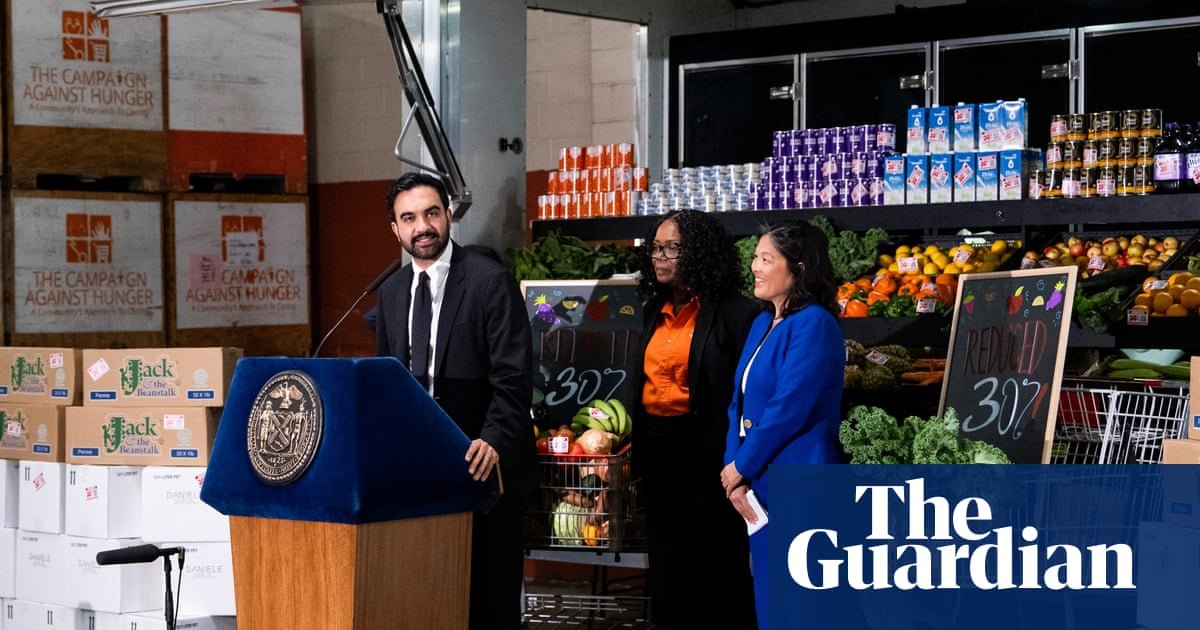
Mamdani defended the plan at a news conference on Monday, where he was asked about the lawsuits.
“I continue to be fully confident in both the legality and the importance of our initiative to deliver five city-run grocery stores, one in each borough, to the people of our city,” he said. “We are talking about a reflection of a cost of living crisis that has seen grocery prices increase by about 30% over the last few years, and we’re also talking about delivering five city-run grocery stores in a city of 8.5 million people that has more than a thousand grocery stores.”
He also said the city has subsidized groceries on Essex Street in Manhattan and Moore Street in Brooklyn. And he argued that they have “not had a negative effect on bodegas around them or on grocery stores around them”.
New York City’s Economic Development Corporation (EDC), which is overseeing the stores, did not immediately respond to a request for comment on the lawsuits on Tuesday.
But, a spokesperson for the EDC told the New York Times on Monday that the city was “evaluating programs and policies to support local grocers”.
“We are looking at the potential for tax abatement, incentives and zoning benefits through existing city programs to ensure that the city is doing everything in our power to alleviate cost pressures for small businesses across the city,” the spokesperson added.