A fundamental rupture in the values that have united North America is not a problem that can be wished away: this is a warning to the western alliance
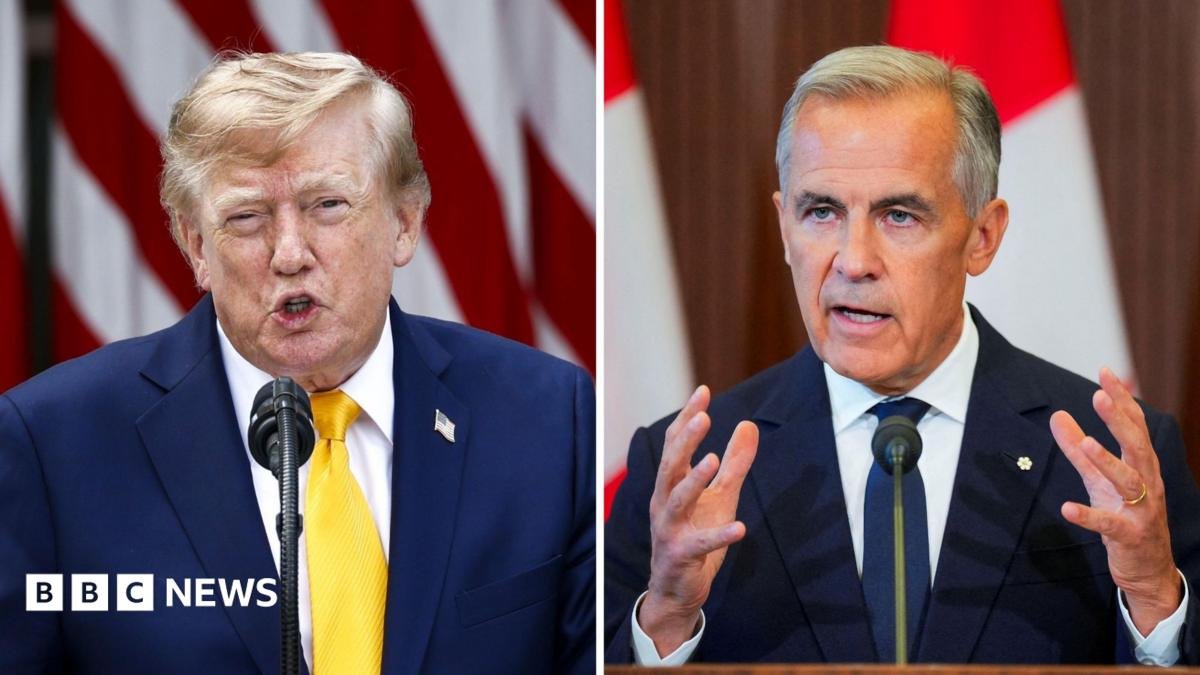
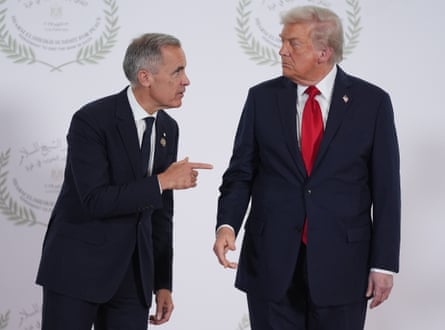
The Canadians are exceedingly angry. I realise this can sometimes be difficult for foreigners to deduce, given our national struggle to express the full range of human emotion outside ice hockey riots. However, let me assure you that the prime minister Canadians saw take the stage on Saturday morning in the wake of the collapse in trade negotiations with the US was a Mark Carney practically vibrating with fury.
“You’re at war when you get attacked. We got attacked,” he said, in a rare press conference that was as candid and clear as he ever tends to be. “That’s fine … We’ve got the reserves, we’ve got the resilience, we’ve got the plan, we’ve got the focus. We’re gonna respond, we’re going to focus on what we can control and what we’re going to build.”
Canada walked out of negotiations, with a deal apparently on the verge of completion, mere hours before 50% tariffs on a range of Canadian exports were due to kick in.
Dollar-for-dollar retaliatory tariffs, scheduled to take effect on 8 September, will follow in turn. In a statement, Carney said that last-minute demands from the US were “uneconomic, and called into question the reliability of any deal.” The US denied this, insisting that it was Canadians who made last-minute demands.
In subsequent interviews with Bloomberg, Canadian ambassador to the US Mark Wiseman said there was no specific item that put a deal out of reach; rather, it was a range of issues in which the text that ultimately wound up on the page – or, at least the interpretation of that text – did not align with what the Canadians thought they had agreed to. The most contentious issues appear to be related to tariffs on autos, digital and cultural policy, and the US claiming the right to veto Canada’s attempts to form trade alliances with other countries. Meanwhile, Canadians have no reason to trust this administration not to unilaterally impose new tariffs on a whim – which it has done, repeatedly, and as recently as this week.
In short, Carney noted, sometimes the US signature on trade deals is “written in pencil”.
Canadian voters, who were pensive about the prospect of any new deal with the US in the first place, have come out strongly in support of the prime minister. Despite the fact that the deal’s collapse will almost certainly entail painful economic penalties, the mood is one of sustained and general anger toward the US not born merely of trade irritants – very few Canadians have opinions about rules of origin tariffs on auto parts, or softwood lumber protections, or supply managed dairy quotas. In cordial times, these are the ordinary frictions between close friends and neighbours.
Rather, it’s an emotion born of a real and visceral sense of betrayal: that the people we trusted with shared security and military obligations, that the nation with which we allowed ourselves to grow economically interdependent, has turned on us. They are using ordinary trade irritants as an excuse to exercise mafioso-style dominance in the pursuit of our subjugation and maybe outright annexation. We know very well that this isn’t about trade.
We are being trained to know our place in the new world order that the so-called Dunroe doctrine is seeking to impose on the western hemisphere.
So how, exactly, are any of us supposed to respond when the US secretary of transportation, Sean Duffy, goes on Fox News in the aftermath of the collapse to say things like: “We provide their security for them and they take advantage of us? President Trump was the first one to go and say ‘that’s not the kind of relationship friends should have’.”
The US does not provide Canadian security – although many commentators, including myself, do criticise our lax military spending. The North American Aerospace Defense Command, or Norad, is a fully integrated entity of both the Canadian and US military. We have our own military, and our own police forces.
How are we supposed to respond, exactly, when our large and once-admired neighbour to the south repeatedly threatens to make us the “51st state”? Or when he posts gag photos of the whole of North America covered in a US flag – provocations we’re supposed to take “seriously but not literally”, as if that makes these threats less horrific or more acceptable.
What does one do when one’s closest “friend” and “ally” repeatedly threatens to disregard border treaties? Or when the US’s actual behaviour aligns perfectly with the president’s threat to use “economic force“ to push us into becoming an American state?
We don’t want to be an American state. And even if we did, we certainly wouldn’t want to be a state of whatever the US is choosing to become right now.
There is not a single Canadian who wants to start a war with the US. No country in Canada’s position storms out of a trade negotiation unless it has to. No country as small and dependent on the US tells the modern imperium to get lost, and risks the consequences thereof, unless there is no other option.
What Carney – and Canada, for that matter – are trying to signal across the Atlantic is that the America we all built our expectations around is over. We cannot plan around the hope of a return to normal, even if Democrats regain power in Washington.
Canada’s location and US-integrated economy mean that we will be the first to face the reality of whatever the US becomes. And if it is coming for us, no European ally – including the UK – can expect to remain untouched, regardless of whatever “special relationship” you imagine may insulate you.
Personally, I simply cannot fathom the commentators and politicians in the UK who fail to understand this. Do you honestly imagine yourselves to be closer to the US militarily, geographically, economically, or culturally than Canada? Guys, we are a little America, albeit with a steadier political system and the king on the money. If they are willing to vassalise us, what sentiment of history or tradition remains to protect you?
A fundamental break in American values and objectives is not a problem that can be contained. It’s not a condition that can be ignored or wished away. Carney is serious when he talks about a historic “rupture in the world order”, as he did at Davos early this year.
Canadians understand that maintaining our sovereignty and independence will entail consequences and sacrifices. We did not bring this trade war on ourselves; we have merely refused to comply in advance to the unreasonable demands of a bad-faith actor. We will be punished for it. We have accepted this. If nothing else, let the US’s retaliation be a warning to the rest of the western alliance. Run, run. Protect yourselves. Move faster.
Jen Gerson is a Canadian commentator and co-founder of The Line. She lives in Calgary, Alberta