
You may be interested in

39% OFF

Oppo Find X9s 5G

12GB RAM

33% OFF
Samsung Galaxy S26 FE
8GB RAM


Google Pixel 11
12GB/16GB RAM
7% OFF

OPPO Reno 15 Pro Mini 5G
43% OFF
Vivo V80
8 GB RAM

October shines as a month that feels no less than a festival for mobile enthusiasts, as major brands gear up to unveil their big guns and set the tone for the coming year’s flagships. Leading the league is OPPO, which has now refreshed its premium Find series with the Find X10 and Find X10 Pro Max.

With an upgraded proprietary LUMO Image Engine and camera hardware, these devices are reportedly designed to push the envelope of how lifelike smartphone photos can be. OPPO has also equipped its new flagship smartphones with the latest flagship-grade MediaTek chipsets, bringing a new AI trick to the table. The battery and display have received their share of upgrades, making them class-leading on paper.
Beyond the Find X10 series, the Shenzhen-based tech giant has lifted the curtain on more devices at the launch event on 22 October.
But ahead of the launch, OPPO hosted a roundtable discussion with journalists. The company's camera and software heads, joined by the head of marketing India, briefed attendees on the key upgrades in the new Find X10 series. Here’s everything you need to know about the new Find series upgrades, the discussion's key revelations, and the new devices OPPO has in store.
Find X10 and Find X10 Pro Max Cameras
As with previous generations, the camera remains OPPO’s primary focus for its new flagship Find X10 series. This year, the Shenzhen-based tech giant has introduced the world’s first triple 200MP camera setup on the Find X10 Pro Max, housed within a squircle camera island.
During the roundtable, a question was raised about why the brand moved back from the circular island on the Find X9 Ultra to the squircle camera housing on the Find X10 Pro Max. In response, Simon Liu, Director of Imaging Technology, explained that the new Find X10 Pro Max features much larger sensors than the former. He added that the squircle design let engineers fit these larger sensors more efficiently without increasing the camera bump's height, with camera quality taking precedence over in-hand comfort.
How much bigger are all three sensors, you ask? The primary 200MP camera features a 1/1.28-inch ISOCELL HPC sensor, developed in collaboration with Samsung specifically for the Find X10 Pro Max, with an f/1.5 aperture.
The 200MP telephoto camera uses a 1/1.56-inch Sensor with an f/2.1 aperture and a 10cm minimum focusing distance. The ultra-wide camera isn't left behind, pairing 200MP resolution with a large 1/1.56-inch sensor, an f/2.2 aperture, and a 124° ultra-wide autofocus lens.
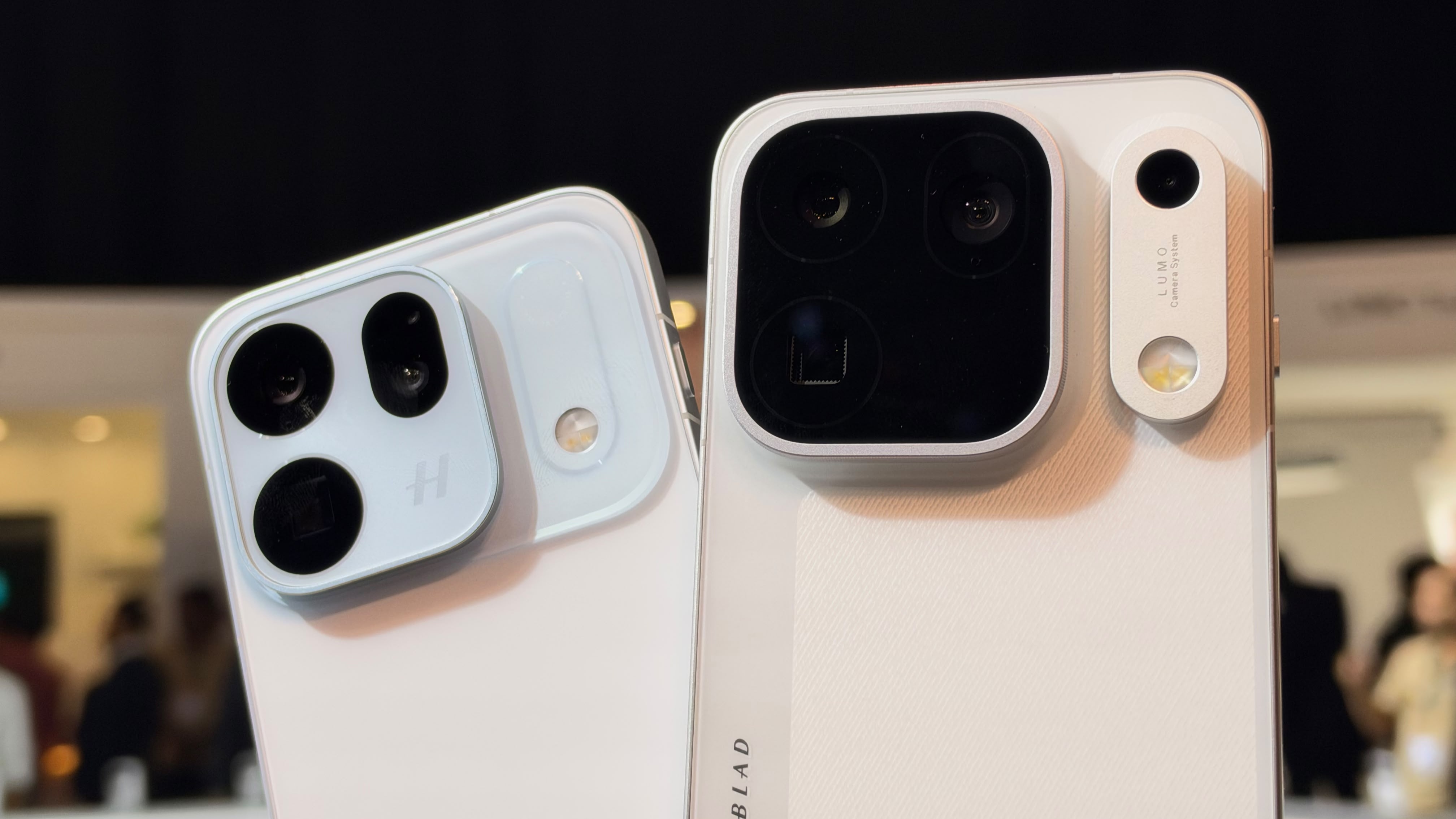
Meanwhile, the base Find X10's primary camera combines 200MP resolution with a 1/1.4-inch sensor and an f/1.6 aperture. Its 50MP ultra-wide camera features a 1/2.75-inch sensor with an f/2.0 aperture. The Find X10’s telephoto shares nearly every aspect with that of the Find X10 Pro Max. It just has a narrower f/1.6 aperture.
On paper, both smartphones have remarkable camera hardware. While most mid-range devices, including the Vivo V80, use a 1/1.56-inch sensor for the main camera, OPPO has used that size for the telephoto and ultra-wide cameras in its lineup, a rare move.
That said, a larger camera sensor doesn’t guarantee you'll take amazing photos. Image processing and optics hardware tuning are what determine the image quality. With that in mind, OPPO has upgraded the Lumo Engine, which debuted with the Find X9 series, for the Find X10 series.
When asked about these changes, Simon Liu explained the new system relies on a true-to-life philosophy. The previous generation focused heavily on the camera's scientific and physical capabilities. Now, the upgraded software tunes photos to reflect a user's memories and emotions.
The human brain often remembers an idealised version of a scene. Therefore, the image processing recreates that mental image instead of just capturing literal physical accuracy.
Liu added that an industry-first triple 200-megapixel camera setup supports this new tuning approach. This gives the device the flexibility needed for high resolution and better light intake across the zoom range. Faster on-device processing can also stack more frames.
This gives the system the power to fine-tune photos so they look exactly how the user experienced the moment.
Find X10 and Find X10 Pro Max Processor and Software
While the camera could be the headline feature of the Find X10 series, OPPO has also paid significant attention to the processors in its latest flagship smartphones. The base Find X10 is powered by the Dimensity 9600M SoC, while the Find X10 Pro Max runs on the Dimensity 9600 Pro chipset. MediaTek, the chipset manufacturer, claims that both processors receive software support for Agentic AI.
Having AI on your smartphone that performs tasks on your behalf, beyond simply clearing your doubts, sounds no less than a scene taken from a sci-fi film. When asked how OPPO integrated it into the Find X10 series, Ellis Tai, OPPO's Software Product Director, explained that the company focused on two main directions: agentic and proactive AI.
Rather than just answering queries, the new AI Agent mode is designed to execute real tasks. By leveraging on-device processing, the assistant can intelligently understand photos and local files across your apps. Users can organise files and perform complex follow-up operations using just a single prompt. Processing this sensitive data locally also ensures better privacy and battery efficiency.

Tai also highlighted a proactive feature called AI Mind Suggest. This tool seamlessly tracks daily schedules, such as flights and train journeys, and provides timely reminders. It integrates with local partners to deliver personalised, context-aware suggestions directly to users. This eliminates the need to constantly switch between multiple applications for updates.
These AI features are part of ColorOS 17, which debuts with the Find X10 series. The latest software delivers a smoother interface, faster app loading, and more intelligent, system-level AI capabilities. OPPO has also highlighted privacy and security improvements, including on-device fraud detection and safeguards for cloud-based AI processing.
For a closer look at the new interface, AI tools, and other changes, read our detailed ColorOS 17 coverage.
However, as AI increasingly relies on personal data to deliver this convenience, questions about cloud-based processing, data privacy, and security remain hard to ignore. Addressing this concern during the roundtable, Ellis said OPPO prefers on-device AI for sensitive personal information, including users' photos and passport details. However, when on-device processing cannot strike the right balance between performance and privacy, the company adopts a hybrid approach. In such cases, the company anonymises the data before sending it to the cloud for processing.
Find X10 and Find X10 Pro Max Display and Battery
Beyond camera and processor upgrades, OPPO has also significantly improved the displays on its latest flagship smartphones. The Find X10 features a 6.59-inch screen, while the Find X10 Pro Max gets a larger 6.78-inch panel.

Both support a 144Hz LTPO adaptive refresh rate, 3,600 nits peak brightness, and Dolby Vision. The displays also support the BT.2020 colour gamut, which covers about 40% more colour than DCI-P3, potentially letting the phones reproduce a wider range of colours in HDR content.
Battery capacity is another area where OPPO has raised the bar with the Find X10 series. Both smartphones pack an 8,000mAh silicon-carbon battery and support 80W wired and 50W wireless charging. This combination promises longer usage between charges and faster top-ups when the battery runs low.
OPPO expands its connected ecosystem with Pad Mini and Enco X4
Beyond its new flagship smartphones, OPPO has expanded its ecosystem with the Pad Mini Matte Display Edition tablet and Enco X4 wireless earbuds. Together, these products make it easier for users to move between capturing content, editing photos, and enjoying media across devices.
The Pad Mini is especially appealing to users who enjoy mobile photography. It features an 8.8-inch 2.5K OLED matte display with a 144Hz refresh rate and up to 3,200 nits of peak local brightness. Its anti-reflection technology improves visibility in bright environments, while the compact 282g body makes it easier to carry. The tablet is powered by the Snapdragon 8 Gen 5 chipset and runs ColorOS 16.
The tablet also supports cross-device file transfers, enabling users to move photos and videos between compatible Android and iOS devices. This could allow Find X10 series users to transfer their shots to the Pad Mini for editing on its larger display. Tools such as AI Eraser, AI Portrait Glow and AI Remix Collage offer additional ways to refine photos, while the OPPO Pencil 3 supports sketching and other creative tasks. The 8,000mAh battery and 67W fast charging are designed to keep the tablet running through longer editing sessions.
Completing the lineup, the Enco X4 earbuds feature an acoustic system co-tuned with Dynaudio, dual dynamic drivers and AI-powered adaptive noise cancellation. They also support lossless audio transmission at up to 2.3 Mbps when paired with compatible Find X10 series smartphones powered by MediaTek processors. Other features include spatial audio, AI-assisted call noise cancellation and real-time translation.
Together, the Find X10 series, Pad Mini, and Enco X4 reflect OPPO's broader push toward a connected ecosystem: the smartphone handles photography, the tablet offers a portable space for editing and creative work, and the earbuds complete the entertainment experience.
OPPO Find X10 series, Pad Mini and Enco X4: Price in India
OPPO has positioned its new flagship smartphones in the premium segment, with the Find X10 starting at 1,39,999 rupees for the 12GB RAM and 256GB storage variant. The 12GB RAM and 512GB storage model costs 1,69,999 rupees. Meanwhile, the Find X10 Pro Max costs 1,99,999 rupees for its 12GB RAM and 512GB storage configuration.
Alongside the smartphones, the OPPO Pad Mini Matte Display Edition costs 94,999 rupees for the 8GB RAM and 256GB storage variant. The Enco X4 wireless earbuds are priced at 19,999 rupees.