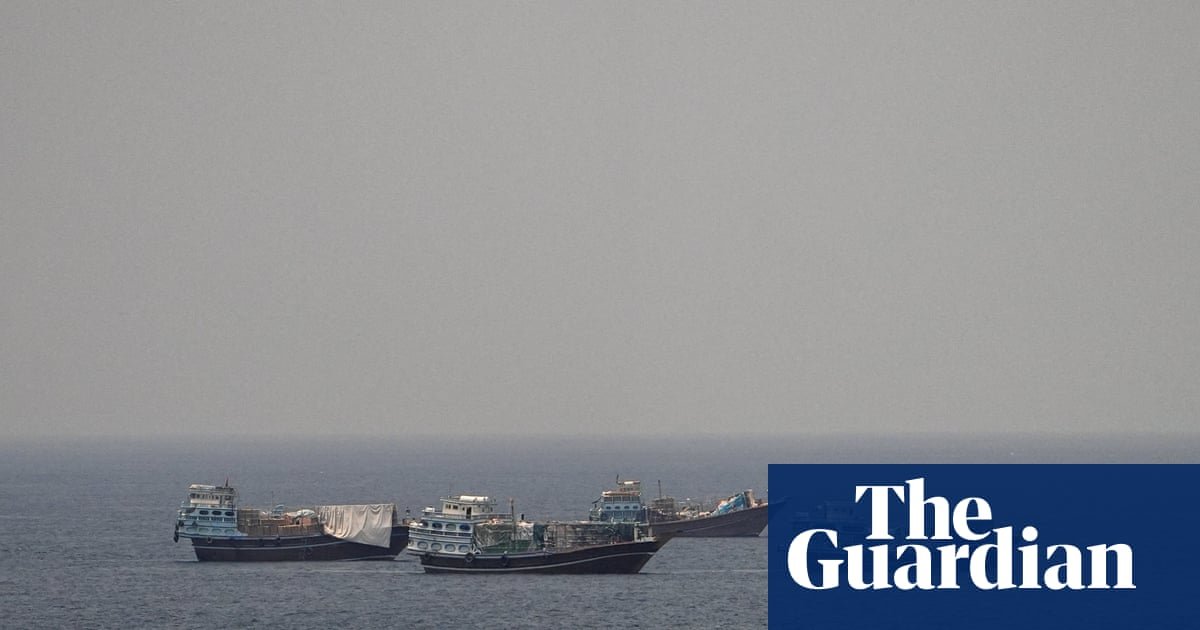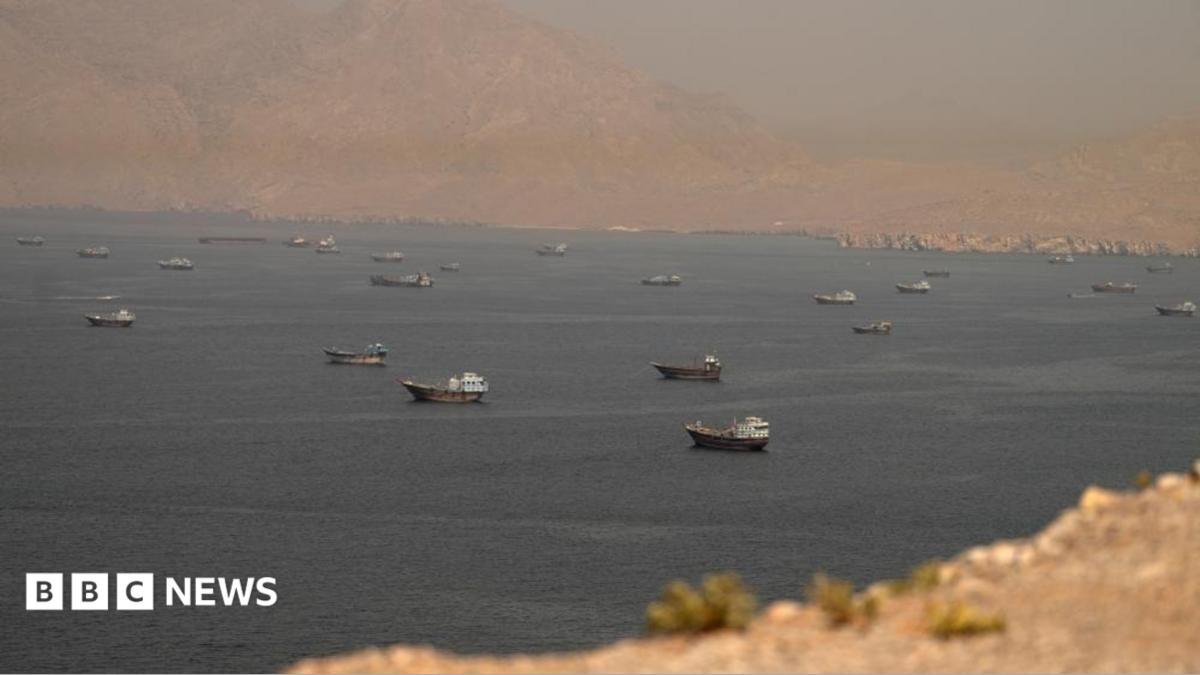
“Jaldi neeche aao, aag aa gayi [Come down fast, there’s a fire],” screamed a sailor in an SOS video sent from the oil tanker Marivex that took fire from the U.S. forces on June 8 in the Gulf of Oman.
Two days later, “precision munitions” fired by the U.S. ripped through the vessel Settebello and killed three Indian sailors — Patnala Suresh, Shivanand Chaurasia, and Aditya Sharma.
Their deaths were among the ugliest outcomes of a war that had begun on February 28 and saw no signs of ending.
On that fateful morning four months ago, the U.S. and Israel launched attacks on Iran and started a conflict that killed thousands, including schoolchildren, and forced upon the world “the biggest energy crisis in history”.
By early June, the conflict was still simmering and threatening to spiral out of control.
The aftershocks of the war spread beyond West Asia and the oil-rich Persian Gulf states to hit the global economy hard, worsening an existing cost-of-living crisis.
It choked the flow of energy, halted maritime traffic, and disrupted the supply of fertilizers.
Revolution to resurgence — Iran’s strategic moment War begets war On February 28, the Israeli Defence Forces fired around 30 precision-guided munitions towards the compound of Iran’s then Supreme Leader Ayatollah Ali Khamenei.
The barrage had several Blue Sparrow missiles, projectiles that briefly left the Earth’s atmosphere and came nose-diving, straight as an arrow from space, towards Ali Khamenei’s residence, where he was in council with many senior commanders of the Islamic Revolutionary Guard Corps.
Grainy aerial footage from that bright Tehran morning showed what U.S.
President Donald Trump loves to call “bing, bing, bing... boom!” A series of explosions flattened Ali Khamenei’s compound, marking the biggest escalation in Iran-Israel hostilities.
The leader’s son, who later became Iran’s Supreme Leader, Mojtaba Khamenei, was nearby but survived.
Since then, he has yet to make a public appearance, nor has he released any audio or video statement.
Before the strike, Iran and the U.S. had been in talks over Iran’s nuclear programme.
The enriched uranium, which Iran maintained was for “civilian” use, was at the centre of U.S. concerns, and yet the U.S. and Israel decided to hit the leadership in violation of diplomatic conventions.
The attack on the Supreme Leader was presented as a “decapitating strike” that would cripple and ultimately topple the Iranian state.
But Iran’s regime did not collapse.
The people did not “take back” their bombed country.
In response, the regime unleashed an arsenal of missiles from underground tunnels and hit Israel and U.S. military assets spread across the Gulf states.
But conventional warfare was never going to be Iran’s forte.
With its navy sunk and the outdated air force destroyed, it quickly changed tack and switched to asymmetric warfare.
It had a leverage it had never used — the Strait of Hormuz.
Far from over: On the U.S.-Iran conflict So, three days after the killing of the Ayatollah, Iran took the war from Tehran’s skies to the Strait of Hormuz, where it struck the merchant vessel MT Vyom.
In hitting a cardboard target that cannot fire back, Iran indicated that it will fight the war on its own terms — unconventionally.
War and destruction spread from Iran to Israel, and then from the Strait of Hormuz to the mountainous villages of southern Lebanon, where Hezbollah rose in support of Iran and unleashed its firepower on northern and central Israel.
Then, seven days after the three Indians were killed, Iranian and U.S. interlocutors supported by Pakistani and Omani representatives, and backed by Qatari good offices, came up with the 14-point Islamabad Memorandum (MoU) on June 17, indicating the end of the war.
But just.
On June 25, Iran attacked a commercial vessel in the Strait of Hormuz saying it was sailing through an “unauthorised route” to exit the waterway.
Trump called the attack a “foolish violation” and soon the U.S. struck Iran’s missile and drone storage facilities, radar positions, threatening a fragile truce, and negotiations as per the MoU.
Time to talk The MoU signifies a remarkable turn in the nearly five-decade-long Iran-U.S. hostilities that erupted with the ascension of the Islamic regime in 1979 and intensified during the early years of the regime in the 1980s under the stern leadership of Ayatollah Ruhollah Khomeini.
The MoU makes it clear that the two sides will “respect each other’s sovereignty and territorial integrity”.
That the two arch-enemies agreed on this is bound to have an impact far beyond the region.
The two sides also agreed that there would be “immediate and permanent termination of military operations on all fronts, including Lebanon”, which means that the understanding would be binding on Israel too.
Bandar Abbas: The port city at the centre of the Iran-U.S. war Equally important for the other stakeholders, Iran and the U.S. will begin lifting the naval blockade they have imposed on the Strait of Hormuz.
The process will, however, take at least 30 days during which the “traffic of vessels will be in proportion to the numbers of pre-war traffic being restored by the Islamic Republic of Iran.” The U.S. gave a commitment to remove its forces “from the proximity” of Iran within 30 days after the final deal.
The MoU also promises that the U.S.
“undertakes to terminate all types of sanctions against” Iran, “including the UNSC resolutions”, as part of the final deal.
The termination of these long-standing sanctions that made Iran an international financial outcast for decades is of “critical importance”, said the MoU.
In exchange for this major concession, Iran reaffirmed that it will “not procure or develop nuclear weapons”.
The nuclear issue will be dealt with in a phased manner — first, by a mutually agreed “mechanism” that will focus on “disposition of stockpiled enriched uranium”, and second, by a “satisfactory framework” that will deal with “Iran’s nuclear needs”.
The two sides agreed to maintain the “status quo” pending the final deal to be arrived at in 60 days.
End of blockade: A major relief from the U.S.-Iran deal will be for the maritime traffic in the Strait of Hormuz, as the two sides have guaranteed removal of ‘technical and military obstacles’ in the region.
Tankers sail in the Gulf, near the Strait of Hormuz, in March 2026. | Photo The MoU paved the way for the U.S. to issue a waiver for the “export of Iranian crude oil, associated services, including banking transactions, insurance, transportation”.
It also unfroze the funds of the Government of Iran.
The MoU has a provision that the U.S., “with regional partners,” would develop a plan of around $300 billion that would be used for “reconstruction and economic development” of Iran.
Both sides also committed to creating an “executive mechanism” that will monitor the “successful implementation” of the MoU and the “final deal”, which will be endorsed by a binding UN Security Council resolution.
Advantage Iran The MoU makes it clear that it is only the beginning, and the final leg of the deal still requires a lot of hard work.
However, even without the final text, it is clear that Iran defined the scope of the war through the lens of its history of decades of hostilities with the U.S. and, as a result, was able to tie up its economic and energy trade-related requirements at the level of negotiations.
That the U.S. agreed to consider the waiver of sanctions and $300 billion for “reconstruction” activities in Iran is another aspect that is a major concession for Iran, which had earlier demanded reparations for the damage it has suffered because of the bombing.
Iran also presented itself as the arbiter of maritime freedom by being a disruptor in the Strait of Hormuz.
At the same time, Iran yielded to the U.S. by explicitly stating that it will not build nuclear weapons.
But here also, the nuances convey that a final call on the nuclear issue will take into consideration the fact that Iran requires atomic energy.
A major relief will be for the maritime traffic in the Strait of Hormuz and also, by implication, in Bab el-Mandeb in Gulf of Aden, as the two sides have guaranteed the removal of “technical and military obstacles”.
In the strategic domain, the MoU is a clear sign that the war that was started by delivering a so-called “decapitating strike” on the Iranian regime did not achieve its purpose.
If Israeli Prime Minister Netanyahu dictated the beginning of the war, the Iranians flipped the script by attacking Israel, U.S. allies in the Gulf, and by stretching it to the Lebanon-Israel border and the Strait of Hormuz.
A man rides a scooter past the rubble of buildings destroyed in previous Israeli airstrikes in the town of Nabatiyeh, southern Lebanon, Wednesday, June 24, 2026, after a ceasefire between Israel and Hezbollah. | Photo The MoU will also mean that the U.S. will do away with decades of hostilities against Iran and allow Iran’s banking sector and its energy business to be re-integrated with the world’s economic architecture.
Ants and gnats Ever since Israel was formed in 1948, West Asia has seen several major wars.
The Arab-Israeli wars of 1948, 1967 and 1973 were legends that built the story of Israeli military might.
However, unlike the Six-Day War of 1967, the 1973 conflict shattered the myth of Israeli might when early strikes by Egypt and Syria took Tel Aviv by surprise.
The war ultimately led to the Camp David Accords in 1978 and the Egypt-Israel Peace Treaty in 1979.
The subsequent five decades have seen Israel fight mainly the Palestine Liberation Organisation, Palestinian Islamic Jihad, Hamas, and the Iran-backed Hezbollah in Lebanon and the Houthis in Yemen.
All these are non-state actors.
But the 2026 Iran war is a game-changer.
It is the first full-scale state versus state conflict for Israel in little more than five decades, and it is clear after four months that the military campaign did not go as planned or propagated by Israel during the opening days of the attack.
This war was also qualitatively different from other recent U.S.-backed or U.S.-led wars, such as those against Muammar Gaddafi of Libya in 2011, the prolonged campaign against Bashar al-Assad of Syria that ultimately led to Assad fleeing to Moscow in 2024, and the 2003 invasion of Iraq in search of non-existent weapons of mass destruction.
In these campaigns, the U.S. had managed to prevail, though, ironically, it contributed to regional insecurity in West Asia and North Africa.
Fighting non-state actors, however powerful, is not similar to fighting a powerful regional state like Iran.
It is apparent that Israel had framed the war with Iran through the prism of non-state actors, but Iran hit back by activating both its state military power and proxies, which amplified its state-level responses.
That it'’ $50,000 Shahed drones had to be brought down by $4 million Patriot missiles fired by the Gulf countries told another story: of a cost imposition strategy enabled by classical asymmetrical warfare.
As the Persian poet Saadi Shirazi wrote in his seminal work Gulistan in 1258 A.D.: A swarm of gnats will overpower an elephant, Despite all his virility and bravery.
When the little ants combine together, They tear the skin of a furious lion.
The war revealed that at the campaign level, Israel had used the language of “counter-terror”, a useful tactic while dealing with Al Qaeda or ISIS, but labelling Iran’s military infrastructure as a “terrorist regime” ultimately prevented Israel from acquiring a realistic assessment of the power of the Iranian state.
Netanyahu was also wrong in his assessment that following the “decapitating strike”, the anti-government forces in Iran would storm Tehran’s bastion of power and take control of the state.
His February 28 video message to the Iranian people, in which he called upon them to “not sit with their arms crossed”, did not provoke them to challenge the Iranian regime, which has managed to navigate through the military campaign while maintaining diplomatic dialogue wherever possible.
U.S.
President Donald Trump points his finger towards Israeli Prime Minister Benjamin Netanyahu as they shake hands during a press conference after meeting at Trump’s Mar-a-Lago club in Palm Beach, Florida, U.S., December 29, 2025. | Photo Peace: a sequel to war Peace initiatives have followed every major war.
President Trump revived the memory of the Treaty of Versailles, which brought the hostilities of World War I to a close, but the deal-making and negotiations continued for several years, and it would be only in 1923 with the Treaty of Lausanne between Turkey (successor to Ottoman Turkey) and the victorious Allied powers that the process finally concluded.
The U.S.-Iran MoU, therefore, can similarly be interpreted as the beginning of a prolonged peace process that may stretch beyond the 60 days as stipulated in the first 14-point draft.
The history of peace-making is replete with examples of treaties failing under the weight of their contradictions and creating further animosity and hostilities.
The Treaty of Versailles is a classic example of how conditions included in the peace treaty led to World War II.
Article 231 of the Treaty, known as the ‘War Guilt Clause’, forced Germany to accept the “responsibility of Germany and her Allies for causing all the loss and damage” and pay reparations to the Allied nations.
This was seen as a national humiliation by many Germans and enabled, along with other things, the rise of Adolf Hitler.
Then there is the Geneva Accord of 1988, which is comparable to some extent with the Islamabad Memorandum, as, like the Geneva Accord, the latest MoU also includes Pakistan.
The 1988 Accord was an ambitious document aimed at ending conflict in Afghanistan that had turned into a battlefield between occupying Soviet forces and the Mujahideen fighters.
However, soon after the signing of the documents in Geneva between Pakistani and Afghan representatives, guaranteed by the U.S. and the Soviet Union, the agreement started to fall apart.
The Pakistan government, under General Zia ul Haq, started supplying weapons to the Mujahideen fighters, thus violating the agreement.
The Accord neither led to a stable and inclusive Afghanistan, nor to regional stability and paved the way for the growth of Taliban and Al Qaeda in Afghanistan in subsequent years.
The Iran-U.S.
MoU also has imponderables, like the Geneva Accords, that are evident from the beginning as possible spoilers.
The Israeli side, especially Prime Minister Netanyahu, has framed the invasion of Lebanon as a ‘security’ operation to deal with Hezbollah, which continues to engage the Israeli forces inside Lebanon.
The cycle of violence has continued unabated in Lebanon as Israel has clearly stated its intent to stay noncommittal to the peace agreement between Iran and the U.S.
This means that Israel, which triggered the war, will have a de facto veto over the MoU and the final deal.
The U.S. too will be unable to enforce the MoU on Israel.
As of now, the MoU is a clear statement that with mid-term polls drawing closer, President Trump is unwilling to drag this military event any further.
By now, it is clear that the Lebanon front will remain active.
Israel will continue occupying a strip of southern Lebanon as a “buffer zone” to ensure security for northern Israel, and Iran will stand in solidarity with the invaded country.
Past tense, future perfect?
Iran on Friday (July 10, 2026) laid to rest its former Supreme Leader Ali Khamenei over four months after his killing in an airstrike, as two days of U.S. and Iranian attacks raised fears of a return to all-out war.
Tehran is using the killing of Ali Khamenei as a point of regeneration and recovery of the Iranian society that has undergone both an internal political upsurge in January, when anti-government protests rocked Tehran, and attacks from the U.S. and Israel.
Iran is planning a revival which will leave a regional imprint.
Already, its Ministers and envoys are visiting multiple global capitals, including New Delhi and Islamabad, and strategising how to use the opportunity thrown up by the MoU and the prospect of a final deal to reopen its economy for energy trade.
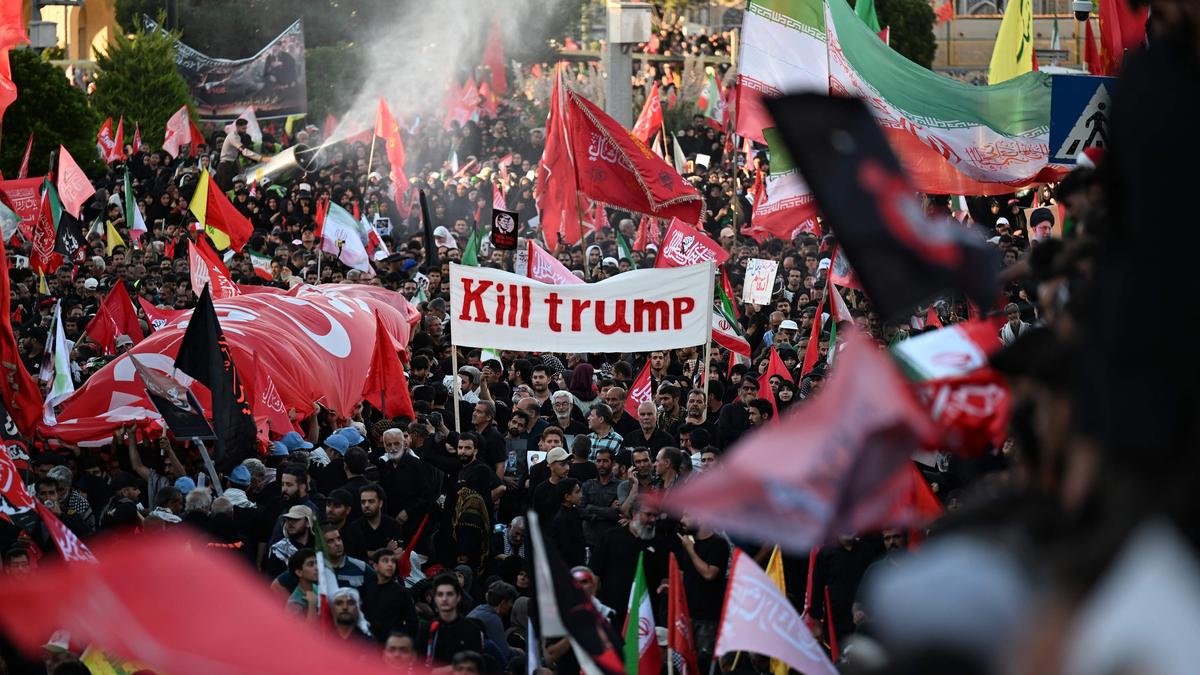
People mourn the death of Iran’s supreme leader Ayatollah Ali Khamenei, who was killed in joint US and Israeli strikes, at a square in Tehran on March 1, 2026. | Photo While a revived Iran will be one part of the story, Iran’s relations with the Gulf states, which faced a setback when Iran hit U.S. targets in these countries, will be another story to watch as several regional stakeholders like the United Arab Emirates will wait and watch Iran’s behaviour before restarting normal dialogue.
Iran and the UAE continue to speak against each other on global platforms, indicating that the ties remain broken.
However, Qatar, which was hit by Iran, has extended support to the negotiations and indicated that the six-member Gulf Cooperation Council (GCC) is divided on how to deal with Iran.
Iran’s emergence from the war will also demand certain recalibration for stakeholders like India and other economies, prompting them to think afresh as far as energy and security relations with Tehran are concerned.
The cessation of hostilities will bring good news for the millions of blue-collar workers in the GCC states, many of whom perished in this conflict in the Gulf region.
Sailors and energy sector workers in Qatar, Saudi Arabia and other GCC states will have a reason to feel happy about their lives returning to normalcy.