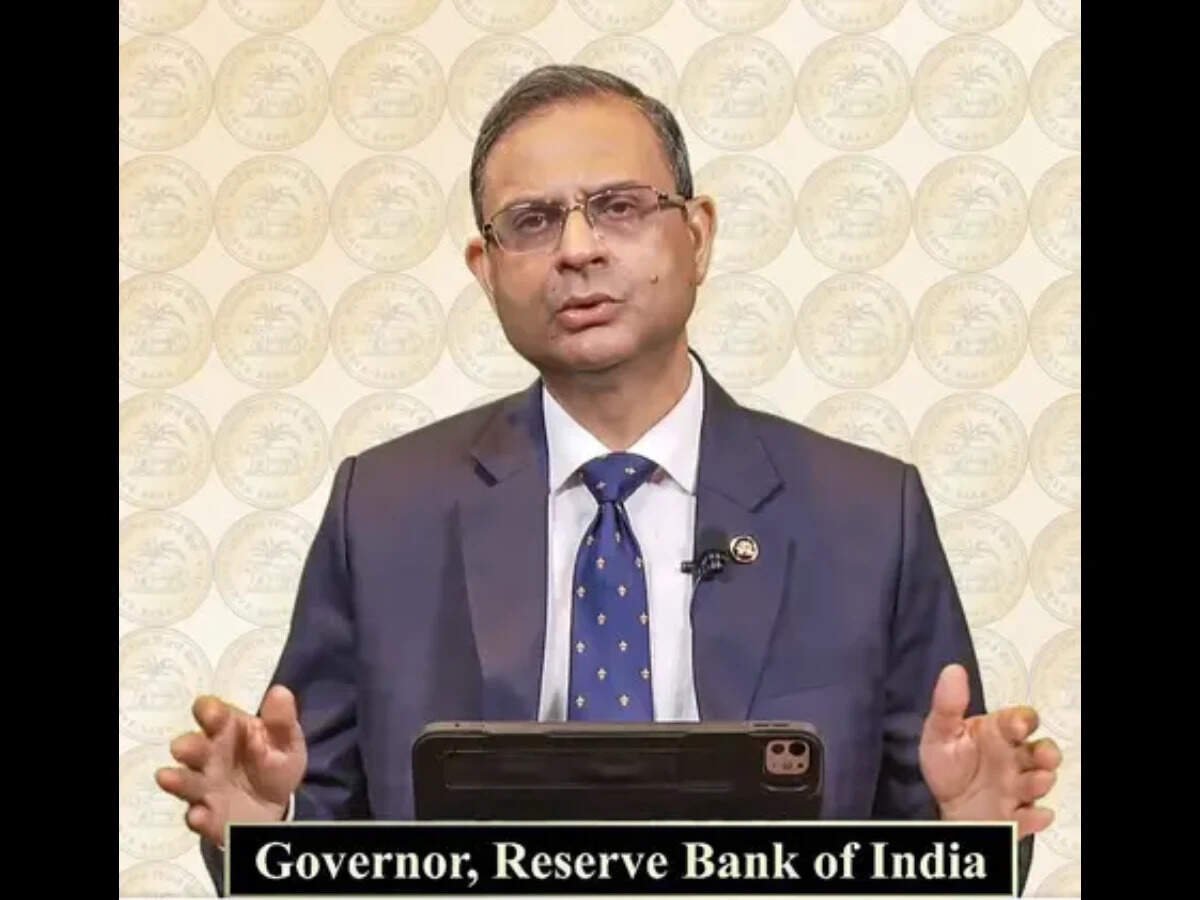
Reserve Bank of India (RBI) Governor Sanjay Malhotra on Friday said the central bank does not target any specific exchange rate or level for the rupee against the US dollar, stressing that its primary objective is to ensure orderly conditions in the foreign exchange market and prevent excessive volatility.
Speaking during an interactive session at the NDTV World Summit 2026 in the national capital, Malhotra said the RBI intervenes in the currency market only when required to address speculative activity or sharp fluctuations.
"We do not target any price or level for the rupee, but, at the same time, it has been our endeavour that we ensure orderly market conditions in the forex markets," he said.
"We have not hesitated, as you have seen in the past, to take measures as may be necessary to curb what we may feel is speculative behaviour or if there is excessive volatility."
His remarks come amid heightened debate over the rupee's movement against the dollar. In recent weeks, the Indian currency had approached its weakest-ever level, nearing Rs 97 per dollar, before staging a recovery.
The rupee strengthened for eight consecutive sessions to touch its highest level in four months before easing slightly to Rs 94.83 against the US currency on Thursday.
The depreciation of the rupee over the years has become a political talking point, with opposition parties citing the currency's weakness as an indicator of economic stress.
A decade ago, in October 2016, the rupee was trading at around Rs 66.83 per dollar, implying a rise of nearly 42 per cent in the cost of the US currency over the period.
Malhotra, however, maintained that India's macroeconomic fundamentals remain robust. Pointing to the country's recent GDP growth rate of 7.8 per cent, he said key economic indicators continue to reflect underlying strength in the economy.
The RBI Governor also addressed concerns around inflation, describing current price pressures as elevated but still within the central bank's tolerance band.
He noted that India's average inflation rate over the past decade stood at 4.7 per cent, significantly lower than the average of 7.4 per cent recorded in the four years preceding that period.