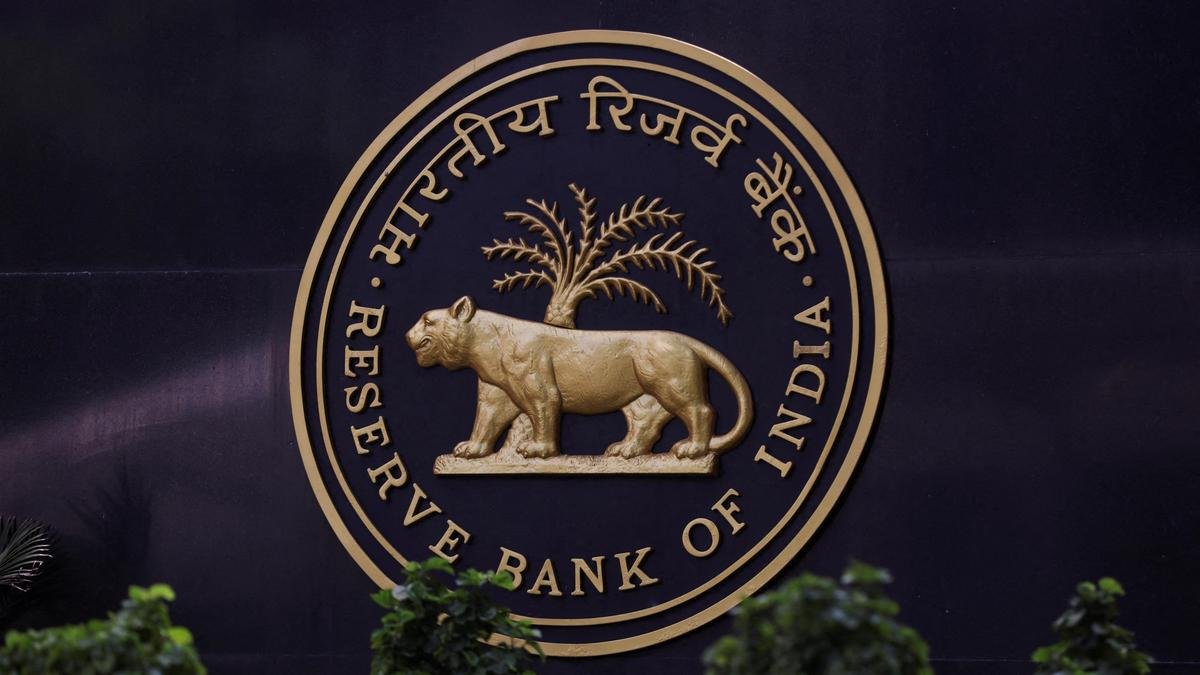
The Reserve Bank of India’s (RBI) recently announced foreign currency swap initiatives have received encountering response attracting strong interest from Non-Resident Indians (NRIs) and overseas investors, thereby strengthening foreign currency inflows and reinforcing India’s external sector, Managing Directors and Chief Executive Officers (CEOs) of Public Sector Banks (PSBs) told Union Finance and Corporate Affairs Minister Nirmala Situaraman on Monday in New Delhi.
Reviewing the progress of the schemes Ms. Sitharaman expressed satisfaction with the encouraging response and urged banks to sustain the momentum through enhanced outreach and innovative financial products, according to a statement issued by the Ministry.
She had interacted with the MDs of PSBs and Public Financial Institutions (PFIs) to review the progress of the RBI’s swap facility schemes covering Foreign Currency Non-Resident (Bank) [FCNR(B)] deposits, External Commercial Borrowings (ECBs), and Overseas Foreign Currency Borrowings (OFCBs) which were designed to swell the country’s foreign exchange reserves that was recently depleted due to capital outflows from the stock market and higher outgoes due to expensive oil imports post the commencement of the West Asia conflict.
As per available latest data India’s forex reserves jumped $7.26 billion in one week between June 26 and July 3, 2026 to $674.19 billion.
India’s forex reserves peaked at $728.49 billion in February 2026, then to $682.3 billion by end-May and further fell in June and then recovered $7.26 billion in the first week of July to $674.19 billion. How much of this has come via the schemes is not known.
Bank chiefs according to the statement informed the Minister that the initiatives had received a positive response from the Indian diaspora, with significant participation from NRIs based in Singapore, Hong Kong, West Asia, the United Kingdom, the United States, and other overseas locations.
They, as per the statement, noted that attractive returns on FCNR(B) deposits, including five-year deposits, made possible by the suspension of the interest rate ceiling on fresh deposits, have contributed to an accelerating trend in deposit mobilisation.
The bank chief also highlighted their customised outreach strategies, including digital engagement initiatives, to expand participation among NRIs, the systems said adding they informed the Minister that International Banking Units (IBUs) at the International Financial Services Centre (IFSC), GIFT City, Gujarat, were effectively utilised to mobilise funds from multiple global jurisdictions.
According to the Ministry, the Finance Minister asked the bank chiefs to maximise the opportunities offered by GIFT City’s financial infrastructure.
During the meeting, the RBI assured continued support to banks and financial institutions in mobilising deposits and facilitating eligible borrowings.
The central bank’s daily reporting framework had enabled transparent and real-time monitoring of progress under the schemes, a top RBI official is said to have told at the meeting.
Bank chiefs, according to the statement, also expressed confidence that mobilisation through External Commercial Borrowings (ECBs) would gather stronger momentum during the third quarter of the current financial year (October–December 2026).
Following the broad-based participation of PEBs, private sector banks, and public financial institutions, the Finance Minister called for intensified outreach to the NRI diaspora and the introduction of innovative deposit products to maintain the pace of mobilisation, as per the Finance Ministry statement.
Announced in the RBI Governor’s Monetary Policy Statement on June 5, 2026, the schemes are aimed at attracting foreign capital, strengthening the balance of payments, boosting foreign exchange reserves, and enhancing the resilience of India’s external sector.
FCNR(B) deposits are eligible under the scheme until September 30, 2026, while ECBs and OFCBs remain eligible until December 31, 2026.