Rashtra Sevika Samiti, the women’s parallel of Rashtriya Swayamsevak Sangh (RSS), on Sunday (July 26, 2026) adopted a resolution expressing concern over what it termed “population imbalance” in the country, urging the Centre and State governments to formulate a uniform national population policy applicable to all communities.
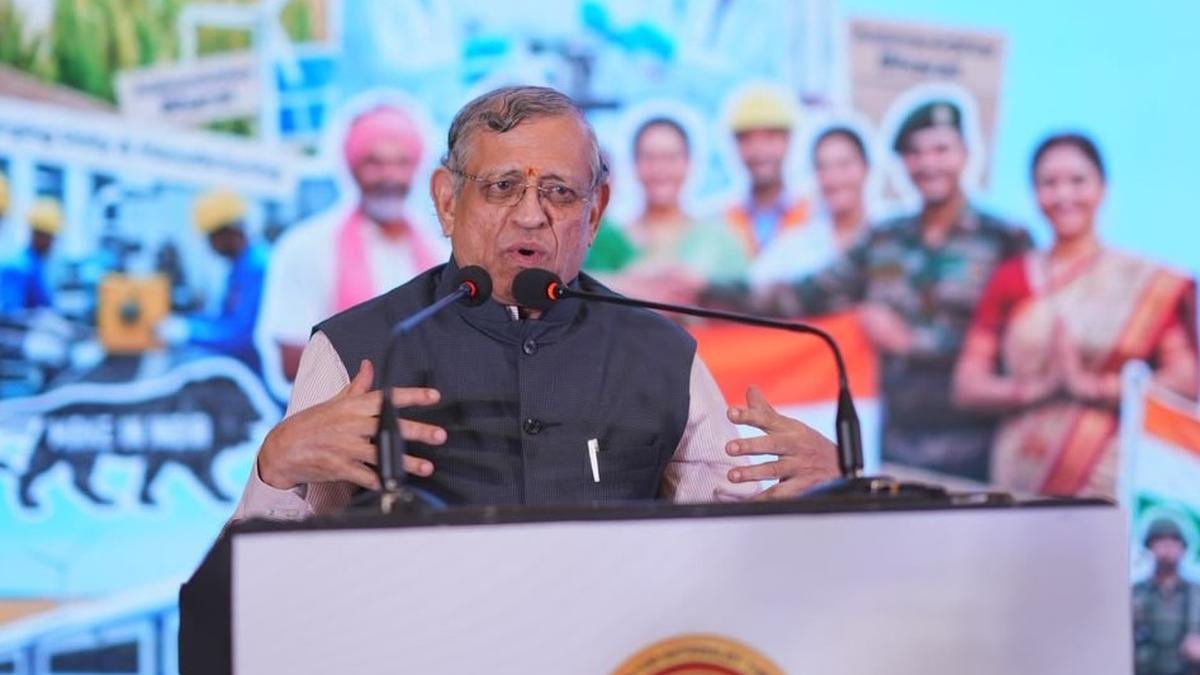
The resolution was passed at the organisation’s Akhil Bharatiya Pratinidhi Sabha (All India Representative Council), which was held at Samalakha and was headed by Samiti chief V. Shantha Kumari.
Arguing that population was not merely a statistical measure but determined a nation’s future and identity, the resolution stated that while India’s population growth rate had declined due to decades of population control measures, demographic changes among religious communities had created an imbalance that warranted a review of the existing population policy.
Citing data from the Prime Minister’s Economic Advisory Council, the resolution said the share of the Hindu population declined from 84.68% in 1951 to 78.06% in 2015, while the Muslim population increased from 9.84% to 14.09% during the same period. It said these demographic trends required policymakers to revisit the country’s population strategy.
“The growing demographic imbalance in India is not only eroding the country’s identity but is also posing a threat to India’s very existence,” the resolution read.
The Rashtra Sevika Samiti urged the government to enact stringent laws to curb illegal immigration, religious conversions and “love jihad”, strengthen border management, identify and deport illegal foreign nationals, and implement a uniform national population policy across the country.
It also reiterated its demand for the implementation of a Uniform Civil Code nationwide, arguing that such a measure would help address challenges arising from what it described as demographic imbalance.
The organisation further called for greater emphasis on education, women’s empowerment and economic development across all communities, while urging society to remain alert to demographic changes and their perceived long-term consequences.
It’s not just Rashtra Sevika Samiti which has expressed concern for demographic imbalance. Even the RSS, on several occasions in the past, has repeatedly linked its demand for a national population policy to what it described as “demographic imbalance” through resolutions passed by its Akhil Bharatiya Karyakari Mandal in 2004 and 2015.