Socialist PM Pedro Sánchez’s high-stakes gamble could end in defeat to a coalition including the far-right Vox
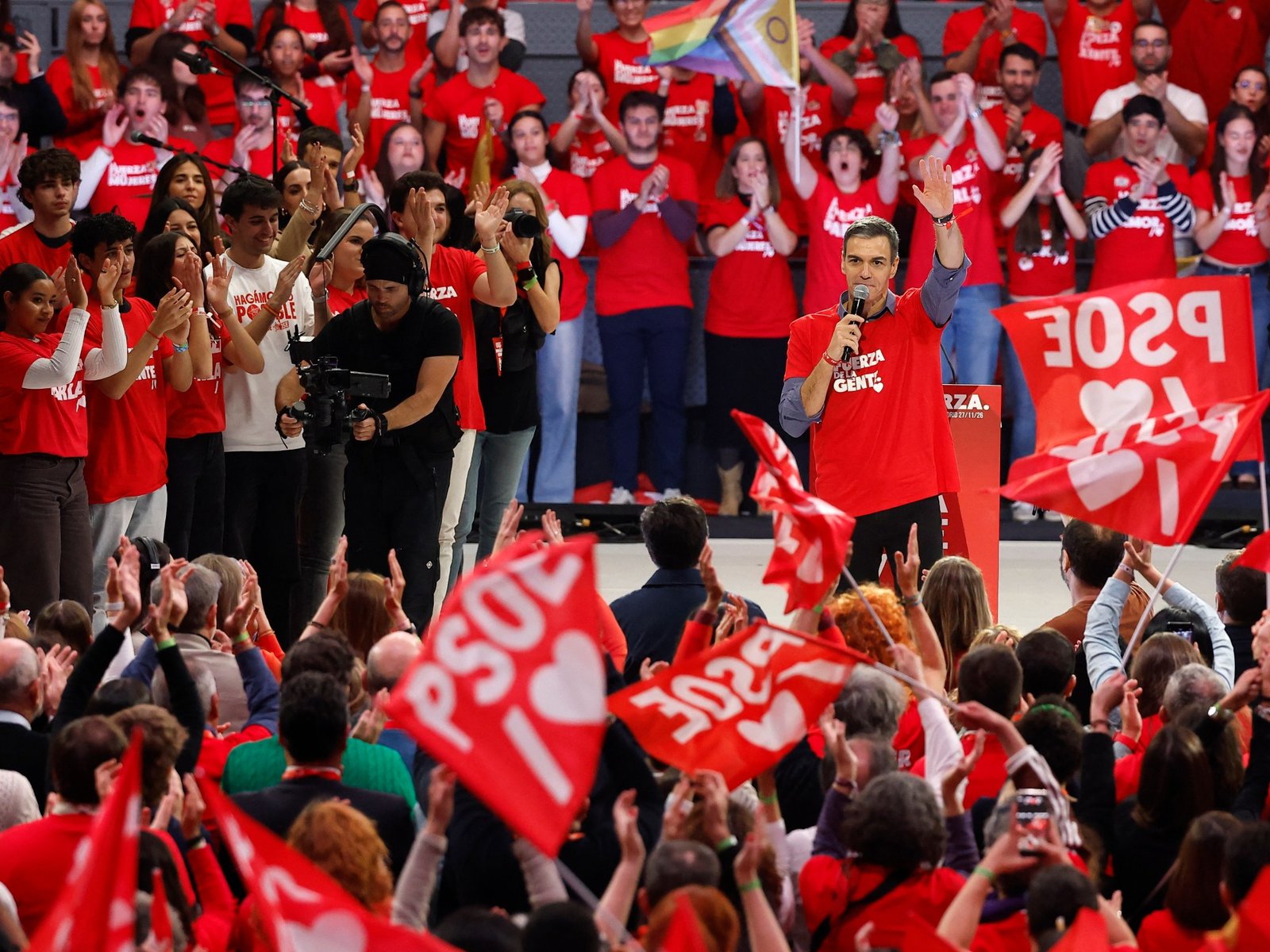
Spaniards head to the polls on Sunday to vote in a high-stakes snap general election that could put a far-right party in government for the first time since the country’s return to democracy after the death of Gen Francisco Franco in 1975.
Although the next election was not due until summer next year, Spain’s socialist prime minister, Pedro Sánchez, called the vote in October after three rightwing and far-right parties voted down the emergency legislation that his government had proposed to address the country’s housing crisis.
Huge public anger over soaring rents exploded in September after the eviction of María del Carmen Abascal, an 87-year-old woman who was removed from her home in Madrid because she could not afford the 230% rent increase demanded by the investment fund that had bought her apartment.
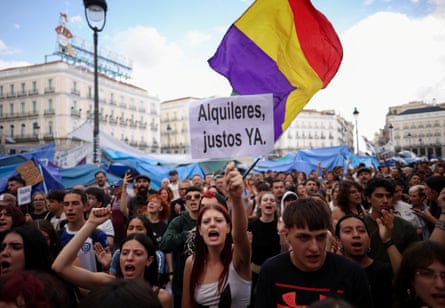
Faced with nationwide protests, Sánchez’s coalition minority government put together a package of measures aimed at improving access to housing, from a ban on evictions until 2030 to the regulation of temporary lettings and lettings by room.
Sánchez opted for one of his characteristic gambles and announced the early election after the proposals were torpedoed by the conservative People’s party (PP), the far-right Vox and the rightwing Catalan separatist Junts.
The prime minister – an inveterate risk-taker whose penchant for unpredictable moves has fuelled his political survival – calculated that his opponents’ decision to block the housing overhauls could work in his electoral favour.
On Friday morning, Sánchez said he was confident of victory. “I can’t conceive of us losing,” he told Cadena Ser radio, adding: “When progressive Spain gets going, it’s unstoppable.”
But while his Spanish Socialist Workers’ party (PSOE) has managed to narrow the distance between it and the PP, which is leading the polls, to fewer than three percentage points, the right looks likely to form the next government in coalition with the far right.
Survey after survey predicts the PP will finish first but fall short of a majority, leaving it dependent on a deal with Vox. Between them, the two parties are forecast to secure a joint majority well above the 176 required seats in Spain’s 350-seat congress of deputies. Even if the PSOE enjoys a last-minute surge and comes first, the parliamentary arithmetic suggests it would struggle to cobble together another coalition administration with the support of its allies in the leftwing Broad Front alliance and with that of regional nationalist parties.
Choosing housing as a key battleground allowed Sánchez to attempt to shift the focus away from the corruption allegations facing his inner circle. It also offered him the chance to move on from his government’s much-criticised handling of the crisis in Spain’s north African territory of Ceuta, which was sparked when about 80,000 people crossed into the territory from neighbouring Morocco in the space of 48 hours.
But some of the energy of the government’s resurgent campaign was sapped at the end of October when 69 people were killed in Spain’s second deadly rail crash in just nine months.
The PP and Vox have used the two crashes to accuse the government of failing in its basic duty to keep Spaniards safe. More broadly, the PP and Vox are using the poll as a referendum on what they disdainfully refer to as “sanchismo”. They argue that the style of government favoured by the prime minister and his allies is cynical, corrupt, opportunistic and self-serving.

“Spain deserves a decent prime minister and [Sánchez] isn’t one,” the PP leader, Alberto Núñez Feijóo, told viewers during a head-to-head debate between the two men last week.
Sánchez, however, insisted that while he had made errors, Spain was in a better state than it was when he came to office in 2018. “My government hasn’t been perfect; I’ve made mistakes,” he said. “But I’m also fully aware that we have always governed in the right direction.”
The prime minister has also sought to depict the snap election as a stark choice between progressive forces and reactionary ones – as typified by the PP’s putative alliance with Vox.
“You must decide whether you want our country to move backwards or continue moving forwards, and whether you prefer a government that works for the interests of the majority of society,” he told Spaniards as he announced the vote.
Over recent days, the government has tried to underline its commitment to social justice and equality by proposing a new tax on fortunes of more than €100m (£84m) that would help fund childcare, housing and public services.

The PP, meanwhile, is promising to lower taxes, build 1m homes, and “restore the country’s ambition and self-esteem”. Vox’s manifesto, which includes plans to have Sánchez and his government prosecuted “for treason and crimes against the security of the state” over the Ceuta mass crossing, focuses on deregulation, “remigration” and giving Spanish-born people priority over those born abroad for housing and public services.
Although the PP’s previous leader, Pablo Casado, famously repudiated Vox and its ideology, accusing the party of practising a politics based on “fear, anger, resentment and revenge”, the PP has repeatedly entered into regional coalition governments with Vox and now runs four of Spain’s autonomous regions with the party.
In recent days, the PP and Vox have attempted to call into question the fairness and transparency of the election, making baseless claims that the government may seek to rig postal votes. Vox’s leader, Santiago Abascal, has also suggested, without providing evidence, that Sánchez is working to undermine democracy and change the country’s demographic makeup.