Record 10-time Super League champions are poised to miss out on playoffs for the first time but their problems run deeper than poor results
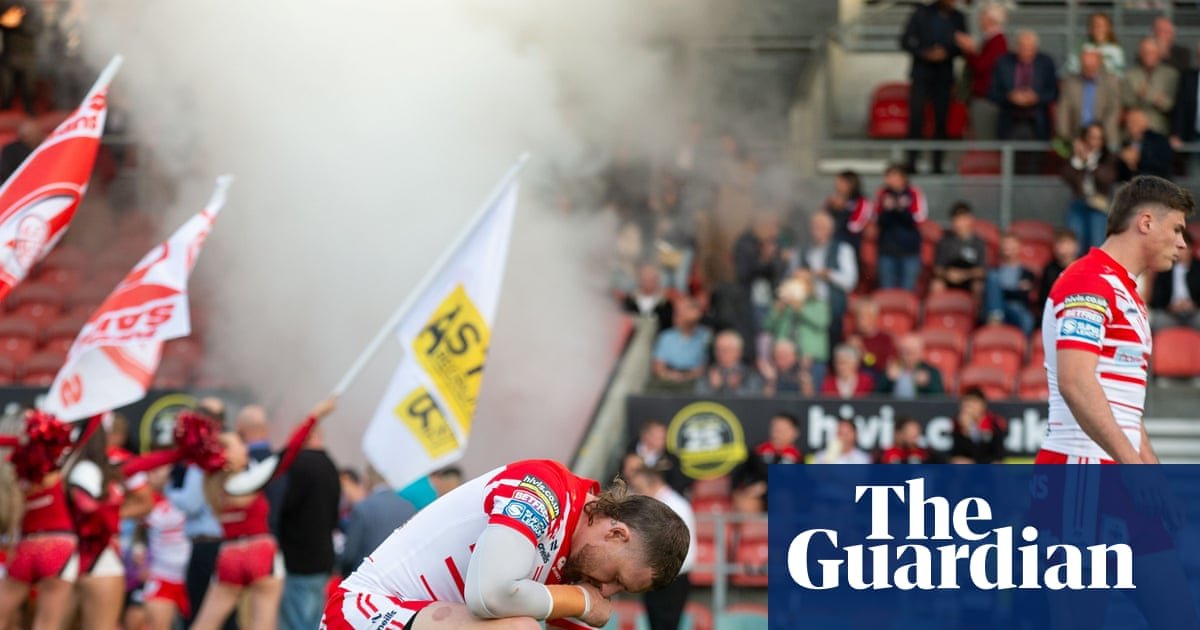
Perhaps the biggest concern as the full-time hooter sounded on another miserable evening for St Helens on Thursday was that the anger, along with thousands of supporters, had long since disappeared and had been replaced with a sense of apathy.
No club have been as consistent a force in the history of Super League quite like Saints. Wigan were almost relegated 20 years ago, Leeds have finished in the bottom half on multiple occasions and the other two champions, Bradford and Hull KR, have spent extended spells outside of Super League. And that is why this is such a story.
With five rounds to go, St Helens – world club champions as recently as 2023 and Super League champions a record 10 times – look set to miss the playoffs for the first time not only in Super League history but in more than 60 years. The defeat against Hull FC on Thursday means they are four points adrift of the top six; it now feels like when, not if, that playoff run ends.
This is not a sudden decline. Since winning four titles in a row between 2019 and 2022 and stunning Penrith in the World Club Challenge three years ago, Saints’ legendary players have left, long‑serving staff have followed and recruitment has been embarrassing.
That has reached breaking point this year. The former Salford coach Paul Rowley was brought in over the winter to not only win games but win in a style that St Helens supporters expect, having long been considered Super League’s great entertainers. Rowley was able to achieve neither remit, being sacked last month after eight months in charge.
Some of the players Rowley brought with him have been appalling and will likely follow him out of the door later this year, clearing the decks for a new head coach. The general consensus is St Helens will try to pluck an assistant coach from Australia, just as they did with Justin Holbrook, who led them to the title in 2019.
The man tasked with finding that coach is Abi Ekoku, the new chief executive who is only a few months into the role but has already sacked Rowley. It would not be unreasonable to suggest he has a monumental task on his hands. “I completely understand the noise,” Ekoku said in the aftermath of their latest defeat.
“What I would say is when you’re a big club and you do things right or wrong you expect people to talk about you; it’s when people aren’t talking about you that you should be worried. We can’t take the glory and not the criticism.
“St Helens penetrates the rugby league culture in both hemispheres; this is a powerhouse of the game: but the key is not to panic.”
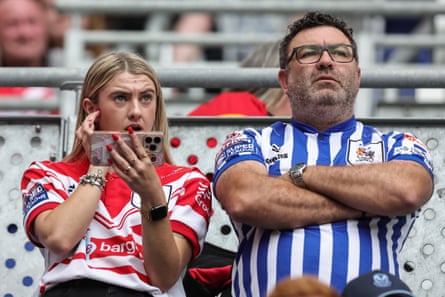
Finding a head coach is one thing. Rebuilding the squad is another: Jackson Hastings, the former Super League Man of Steel, is one example of a big name who will likely have to leave after an underwhelming season. But the biggest challenge of all for Ekoku and St Helens is to stem the bleeding and the ever‑increasing rift between fanbase and club.
The legendary former Saints forward Jon Wilkin summed it up best at the weekend. “There’s a gap between the fans and the club at the minute,” he said. “There is a dramatic drop-off and it’s fundamental you retain your supporters ... there’s more going on than just the team.”
Wilkin has a point. It is plausible that the average attendance at the BrewDog Stadium will be less than 11,000 this year for the first time in a decade and, with the stench of failure lingering, rebuilding trust and convincing lapsed supporters to buy back in can be tricky if you do not act fast. When the booing turns to indifference, you have a big problem.
The pressure is on – but does Ekoku know it? “This is a fanbase that’s been brought up on a diet of success and entertainment. They want a combination of the two. You should never take your fanbase for granted but we don’t envisage a drop-off.”
With four of their final five games against teams above them in the league, the playoff door and their ever-present record is disappearing rapidly. They have also just posted annual losses of more than £3m; not unusual, and they are fortunate to have wealthy benefactors who will cover those losses. But it again illustrates that there are off-field issues as well as on it.
There are slivers of optimism. A new coach must surely see that building the team around homegrown stars Jack Welsby and Harry Robertson is a must. Their injury crisis this year acts as mitigation, with 16 first‑team players sidelined: but it has also been used as an excuse too many times. They should be performing better.
In short, St Helens and their supporters may have to brace for further short-term pain. They will not be able to move out all the under-performing players in one recruitment cycle, and a new head coach comes with uncertainty. The headline will be this famous club missing the playoffs for the first time, but the issues appear to run far deeper.