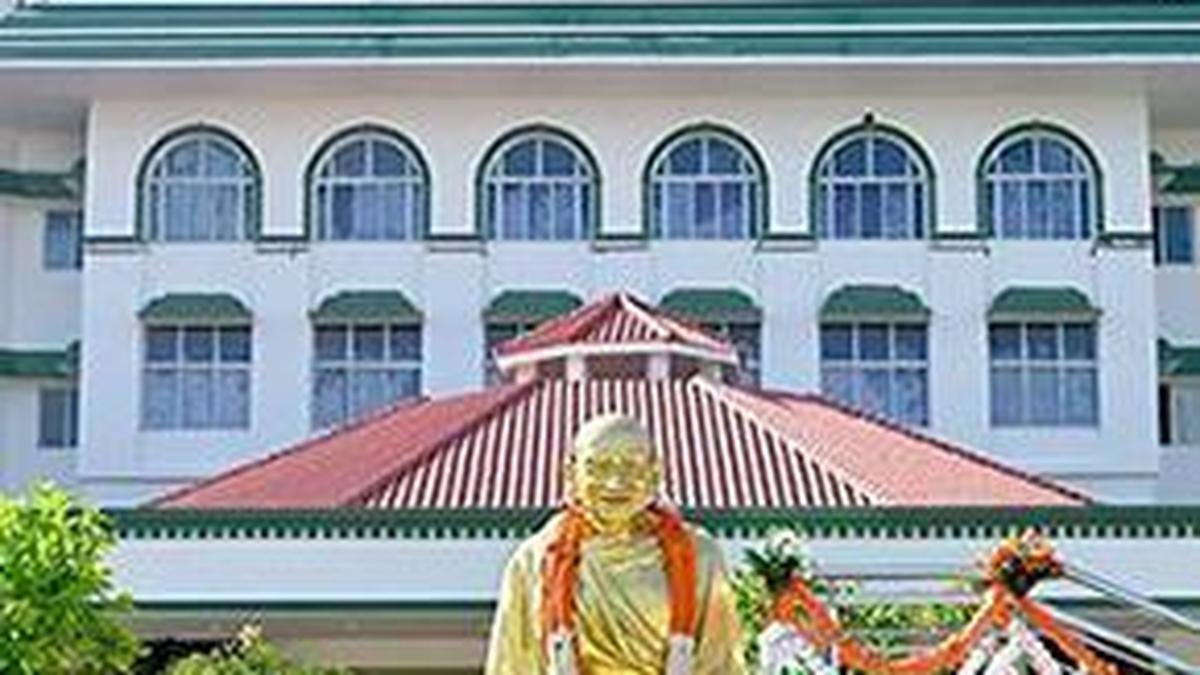
The Supreme Court on Thursday (July 23, 2026) permitted the Taj Trapezium Zone (TTZ) Authority to process around 400 pending applications for the establishment of non-polluting Micro, Small and Medium Enterprises (MSMEs) within the ecologically sensitive area surrounding the Taj Mahal.
The TTZ, spanning nearly 10,400 sq. km. across the districts of Agra, Firozabad, Mathura, Hathras and Etah in Uttar Pradesh, and Bharatpur in Rajasthan, was created pursuant to the Supreme Court’s directions to protect the mausoleum from environmental pollution. In October 2024, the top court had placed a moratorium on the TTZ Authority’s approval of new industrial units and the expansion of existing ones without the court’s prior approval.
A Bench comprising Chief Justice of India Surya Kant and Justices Joymalya Bagchi and V. Mohan, however, directed that every proposal be scrutinised by experts nominated by the Central Empowered Committee (CEC) and the National Environmental Engineering Research Institute (NEERI).
“In cases where both experts, namely the representatives of NEERI and the CEC, are unanimous, and the TTZ Authority also concurs, such applications may be processed and taken to their logical conclusion, strictly in accordance with law and without any reference to this court,” the Bench directed.
It further ordered that a representative from each of the CEC and NEERI must participate in every meeting convened by the TTZ Authority to consider such applications. “No meeting shall be held unless both such experts are present,” the Bench said.
The judges further clarified that where either expert is of the opinion that a proposed unit cannot be classified as a non-polluting industry, the TTZ Authority shall not approve the application without the leave of the top court.
While acknowledging that key studies, including the vision document for the TTZ, a cumulative impact assessment and NEERI’s final report on the definition of non-polluting industries, are still pending, the Bench observed that their completion should not delay the consideration of applications already received by the TTZ Authority.
“While all three pending initiatives are required to be completed expeditiously and within a reasonable time, we are of the considered view that the pendency thereof ought not to impede the processing of those applications which have already been received by the TTZ Authority. What is of paramount importance is that the precautionary principle must be strictly followed and adhered to, with the advice and, wherever necessary, under the direct supervision of domain experts. We, therefore, direct that the TTZ Authority may process the pending applications,” the Bench said.
Upload decisions online
To ensure transparency, the Bench directed that every decision taken on such applications be uploaded on the website of the CEC to enable public-spirited persons to submit objections or suggestions.
“Any such objections or suggestions shall also be considered by the TTZ Authority, in consultation with the experts nominated by NEERI and the CEC, before a final decision is taken,” it said.
During the hearing, Additional Solicitor General Aishwarya Bhati, appearing for the TTZ Authority, submitted that applications for non-polluting MSMEs deserved consideration. She argued that the embargo on the establishment of new commercial units was adversely affecting livelihoods.
“There are around 400 applications pending. A complete ban on setting up new industries is impacting livelihoods. How do we curb the aspirations of millions of people?” she said.
No dilution of safeguards
Senior advocate Aparna Bhat, appearing for an intervenor, opposed any dilution of the environmental safeguards. She alleged that industries had previously been permitted in the Firozabad area despite the Ministry of Environment, Forest and Climate Change advising against their establishment.
The Chief Justice, however, observed that a “workable solution” was required. “Some workable solution is needed with preventive measures,” he remarked, adding that there appeared to be a consensus that only non-polluting industries should be permitted within the TTZ.
Earlier, the top court had prohibited the use of coal and coke in the TTZ and directed 293 industries around Agra to switch to natural gas to reduce pollution while allowing industrial development.
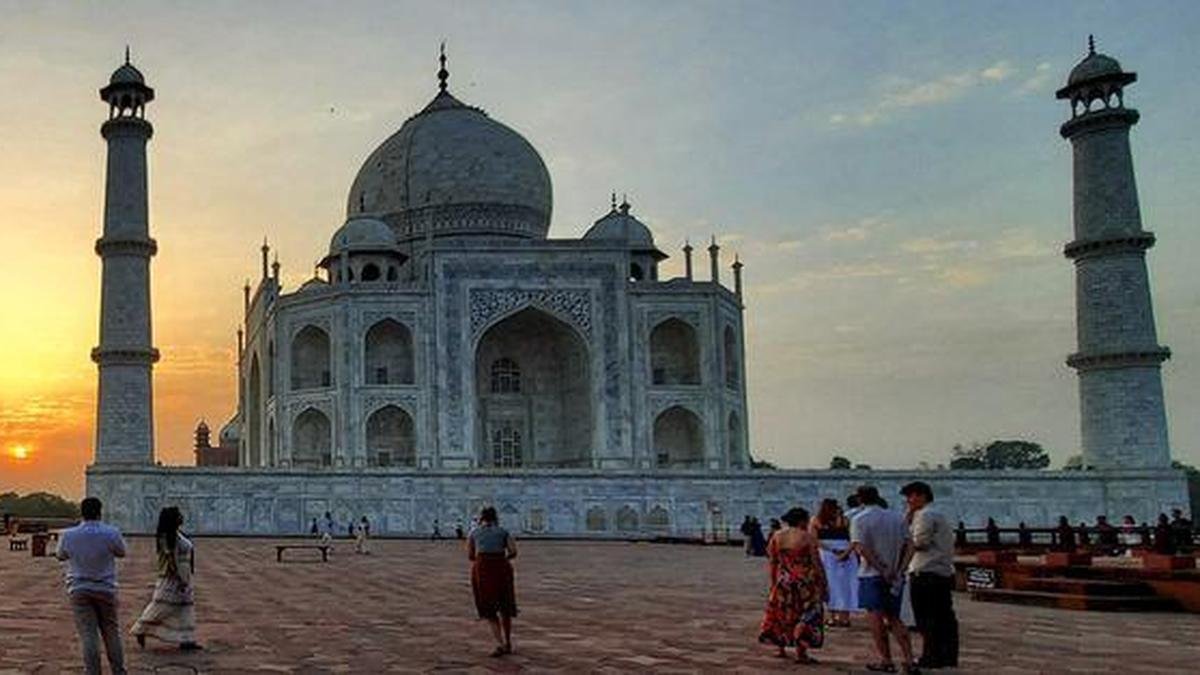
The court has been monitoring environmental protection measures in the TTZ since 1984, when environmentalist M.C. Mehta filed a public interest litigation (PIL) petition seeking measures to protect the Taj Mahal from pollution. The 17th-century mausoleum, built by Mughal emperor Shah Jahan in memory of his wife Mumtaz Mahal, is a UNESCO World Heritage Site.