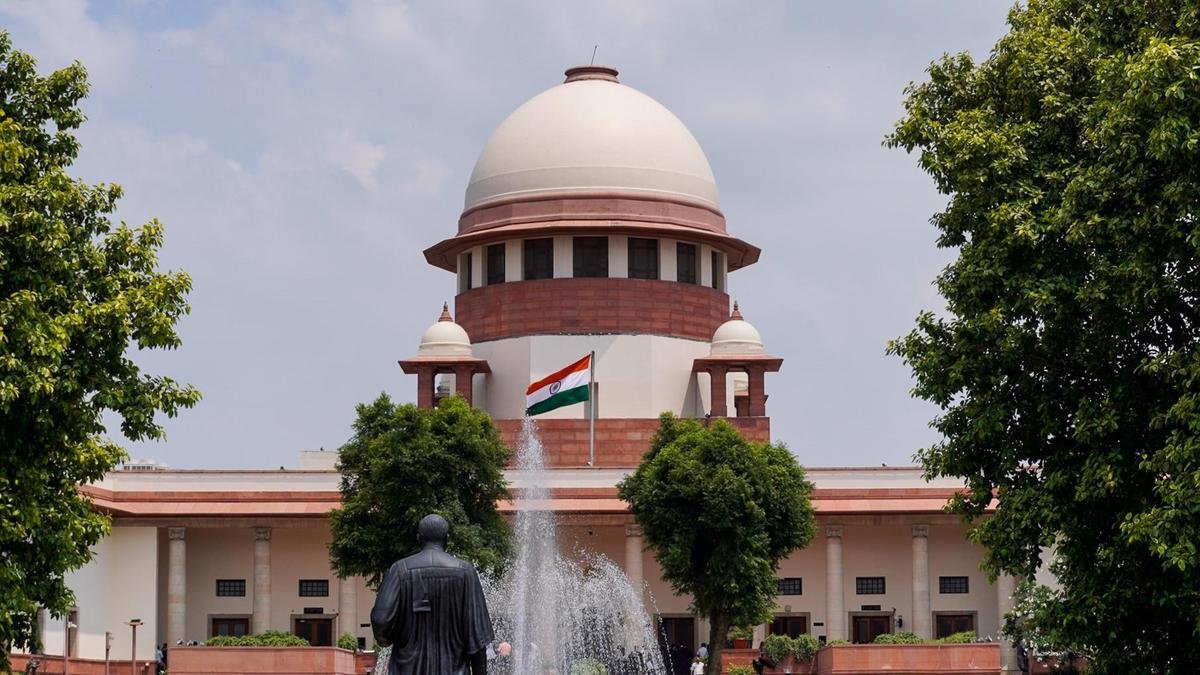
As 5.18 crore cases lie pending in district courts across the country, the Supreme Court has sent a distress call to States to enhance the retirement age of experienced judicial officers from 60 to 62 years.
The court said the “crying need of the hour” is to stop the attrition of the experienced judicial talent lest access to justice remain a mere chimera due to unfilled posts.
Only seven States have so far responded positively to the SOS from the Supreme Court.
Chhattisgarh, Karnataka, Madhya Pradesh, Maharashtra, Sikkim, Tamil Nadu and West Bengal have agreed to enhance the retirement age of their judicial officers.
Five crore Indians wait when the courts take a break Amend in two months A three-judge Bench headed by Chief Justice of India Surya Kant, in a September 1 order published on Friday (September 4, 2026), directed these State governments to amend the service rules within two months.
The State High Court concerned would enhance the age of superannuation to 62 years of judicial officers, subject to their suitability assessment, on their attainment of 60 years of age.
The other States/Union Territories have varied between a direct negative response to plain fence-sitting.
States cannot cite financial burden to oppose raising retirement age of judicial officers: Supreme Court The court has directed them to take a decision on enhancement of retirement age of their judicial officers to 62 years in two weeks.
These States include Andhra Pradesh, Arunachal Pradesh, Assam, Bihar, Goa, Gujarat, Haryana, Himachal Pradesh, Jharkhand, Keralam, Manipur, Meghalaya, Mizoram, Nagaland, Odisha, Punjab, Rajasthan, Telangana, Tripura, Uttarakhand, Uttar Pradesh, NCT of Delhi, Jammu and Kashmir, and Puducherry.
Their hesitation, the court discovered, was fuelled by a sense of insecurity over the financial burden the move would entail.
Plus, these States apprehend that employees in other State services would also demand parity.
Plea seeks denial of perks to judges resigning to avoid removal; SC sends notice to Centre Misconceived apprehensions The Bench said the apprehensions of these States were entirely misconceived.
Judicial officers do a specialised service.
“The alleged financial burden that would be thrown on the State exchequer on account of the enhancement of the superannuation age as a result of the payment of the maximum salary in the pay scale to the officers for a further period of two or five years as the case may be, and on account of the higher outlay on their retiral benefits, is negligible considering the enormous advantage that the administration of justice and the society at large would derive from the enhancement in the age of retirement,” the Bench quoted a 1992 judicial precedent.
Besides, the court said simple math showed that a State, by retaining the retirement age of 60 years, would double-spend post-retiral dues of superannuated judicial officers as well as in paying the salaries of the newly-appointed ones.
On the contrary, if experienced members of the judicial cadre were permitted to continue in service till the age of 62, the additional burden of bearing such post-retiral dues would stand correspondingly postponed.
Besides, the recruitment of independent and competent judicial officers was an arduous task.
“Most of the recruitment drives undertaken in the various States have not resulted in optimum recruitment or in the filling up of the sanctioned cadre strength, and a yawning gap between the sanctioned and working strength persists across the board,” the court pointed out.
The Bench pointed out that most State High Courts have consented to the enhancement of the retirement age as they were face-to-face with the “crisis in dispensation of justice”.
Some High Courts, including Madras, the court recorded has “wisely” introduced relevant riders so that the deadwood did not take advantage of the proposal to enhance superannuation age.
These High Courts have recommended a thorough assessment of judicial work as a condition precedent to ensure that only competent officers of proven integrity were permitted to continue in the cadre.
“This suggestion is most welcome as it would balance the preservation of experienced judicial officers, while removing the clog of deadwood, blocking the entrance of young blood invigorating the system,” the Supreme Court observed.
The court listed the case again on October 1.