The Supreme Court on Thursday (September 3, 2026) declared that the Bar Council of India (BCI) and its chairperson, Manan Kumar Mishra, lack jurisdiction to discipline or penalise law students, rebuking the regulatory body’s attempts to intimidate NALSAR students exercising their constitutional right to protest.
The court insisted on clarifying the limits of BCI’s powers even though the latter had revoked its August 13 letters to NALSAR administration to launch an inquiry against the students and to the State Bar Councils to block their professional enrolment.
BCI withdraws NALSAR enrolment freeze within hours, says all 2026 graduates can enrol A three-judge Bench headed by Chief Justice of India Surya Kant said the order, drawing the boundary for BCI, was designed to safeguard university space and students’ right to freely express dissent against future attempts to breach.
“The BCI has no jurisdiction or statutory competence as regards students.
That is for their universities,” Chief Justice Kant observed.
“On an in-depth consideration of the issue, we are of the opinion that the Advocates Act, 1961, does not confer, expressly or impliedly, any power on the Bar Council of India and State Bar Councils to take any disciplinary or punitive action against law students,” the court recorded in the order.
BCI chairman apologises to law students amid enrolment ban controversy Mr.
Mishra, who was present, said the BCI had a role in regulating legal education.
But the court said the BCI could step in only after enrolment.
Its disciplinary powers under the Advocates Act, 1961, were, obviously, limited to registered advocates.
“Till then, BCI did not come into the picture… To say a student will not be enrolled…” Justice Joymalya Bagchi said, leaving the sentence unfinished.
The court was hearing a petition filed by two former NALSAR graduates, represented by senior advocate K.
Parameshwar and advocate Rupali Samuel, seeking legal action against the BCI and the chairperson for threatening the 2026 batch of NALSAR students.
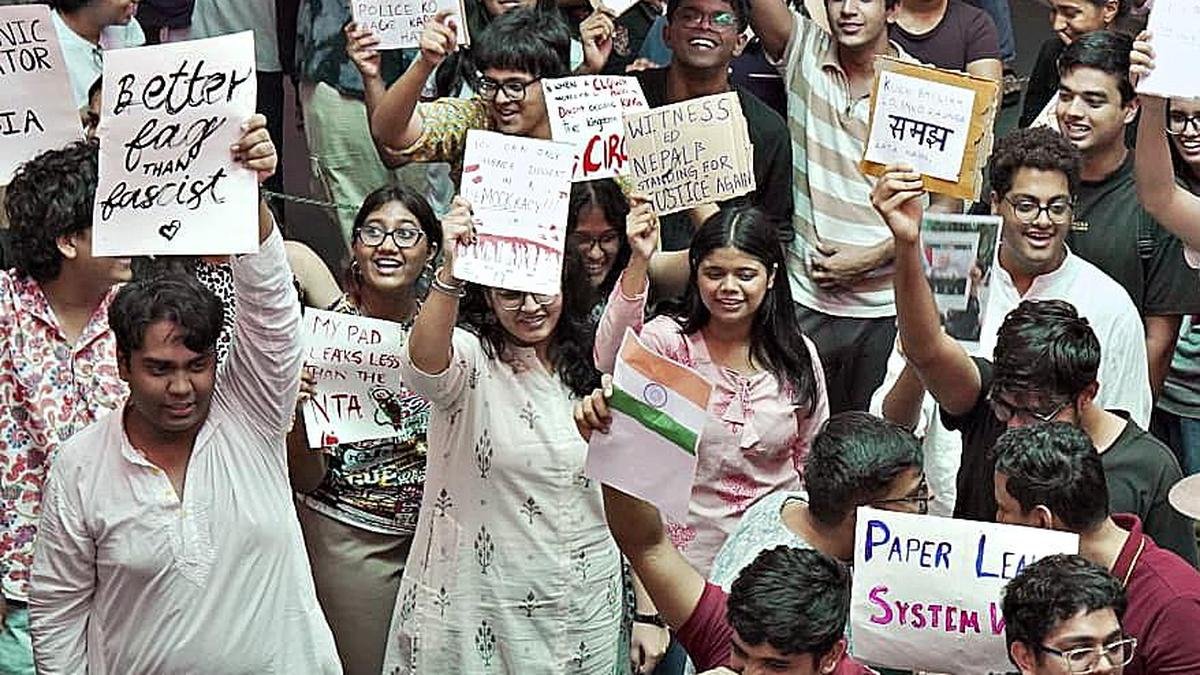
The students were protesting against having the CJI as chief guest for their convocation following his oral comments in court comparing youths to ‘cockroaches’ and ‘parasites’.
The petition said the BCI letters had created a chilling effect on the freedom of speech and the freedom of association among students.
Mr.
Mishra said letters issued to NALSAR and State Bar Councils were withdrawn “within one hour”.
He said there was no reason for further cause of action, and the controversy should be given a quietus.
However, the court agreed with Mr.
Parameshwar that the court should protect students in the future against any such violation of their rights by bodies acting without jurisdiction.
Such a situation should never arise, the senior counsel said.
It clarified that only the parent university or the competent authority under the law has disciplinary power over students.
The Bench said the August 13 letters of the BCI were “obsolete”.