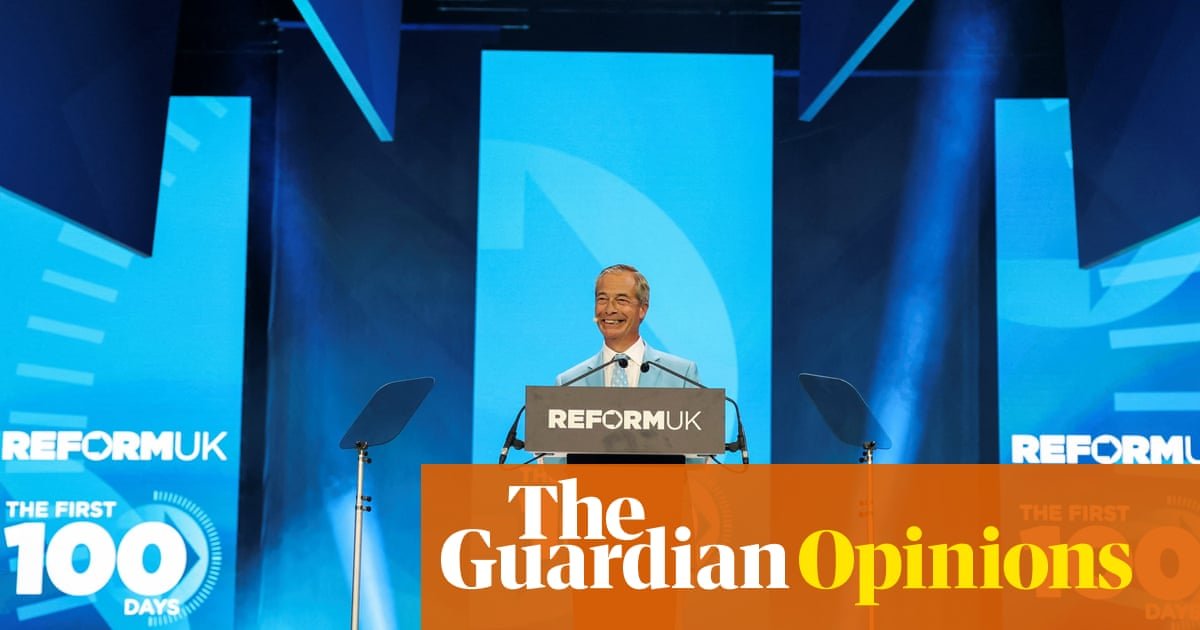
‘Nigel Farage will for ever be associated with the demand for emancipation from Brussels but is rarely heard celebrating its completion’: Reform UK party conference, Birmingham, 5 September 2026.
That presents Andy Burnham with an opportunity to set a bolder new agenda Modesty is not a trait commonly associated with Nigel Farage.
Something else must explain the Reform UK leader’s reluctance to talk about what is undoubtedly his biggest achievement.
Few individuals can boast of having influenced British politics as drastically as Mr Farage, with his record of campaigning for Brexit before that word was even coined.
He will for ever be associated with the demand for emancipation from Brussels, but is rarely heard celebrating its completion.
It barely earned a mention in speeches at his party’s annual conference last week.
The simple reason is that none of the promises made about the benefits of life outside the EU have been fulfilled.
Leaving made the country poorer, and voters know it.
Opinion polls routinely show that a majority are dissatisfied with the way Brexit has turned out.
In a survey published this week by the thinktank British Future, 57% of respondents judged it to be “more a failure than a success”.
Only 21% took the opposite view.
There were also clear majorities in favour of closer ties when it comes to trade, defence and even health policy; 57% support a youth-mobility scheme for 18- to 30-year-olds, restoring some of the opportunities to live and work abroad that were curtailed by departure from the EU.
Those attitudes should not be confused with appetite for a complete reversal, still less a referendum to make it happen.
Memories of a divisive campaign and exit process are a powerful deterrent against relitigating the question all over again.
Andy Burnham.
The ideological parents of Brexit are understandably embarrassed by their progeny.
That presents Andy Burnham with an opportunity.
The prime minister has said he wants to be “bolder” in pursuing a closer EU relationship.
He has permission from the electorate to do just that.
He inherited a European “reset” from his predecessor, but it was advancing slowly.
The scope of potential agreement was also limited by Labour’s 2024 election manifesto, ruling out single market and customs union membership.
Mr Burnham inherits that mandate too, and has indicated his intention to adhere to it.
A UK-EU summit to advance cooperation in a range of areas – trade in agricultural goods, energy, defence and security, youth mobility – was due in July.
Sir Keir’s departure led to a postponement.
It has not yet been rescheduled.
Technical negotiations have continued under the new government, but there is not much sense of political urgency coming from either side.
That must change.
A new prime minister’s in-tray is always busy.
The EU is a slow-moving apparatus.
There are few incentives to grant favours to the UK when the terms of the existing Brexit deal are skewed in Brussels’ favour.
Without infusions of political will from No 10, inertia will prevail.
Meanwhile, the case for closer UK-EU cooperation gets ever more compelling with each act of vandalism perpetrated by Donald Trump against the transatlantic alliance and international trading system.
This strategic imperative is something the public can understand and that ideological Brexiters refuse to see.
If Mr Burnham has the imagination and courage to outline an ambitious new model of UK-EU relations, he will have the majority of British voters on his side.
Do you have an opinion on the issues raised in this article?
If you would like to submit a response of up to 300 words by email to be considered for publication in our letters section, please click here.
Explore more on these topicsBrexit Opinion European Union Nigel Farage Reform UK Andy Burnham Labour Europe editorials Share Reuse this content