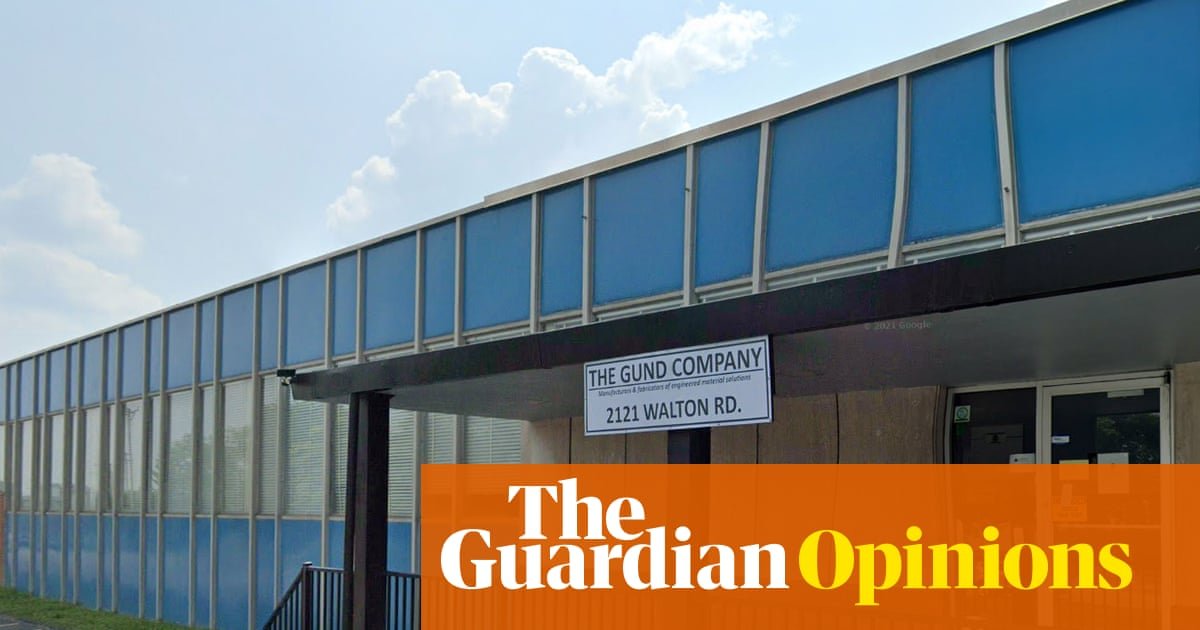
The Gund Company in St Louis, Missouri.
Will AI break the streak?
Gene Marks It seems inevitable that AI will force companies like Gund’s in St Louis to cut staff.
But tech replaces jobs, not people The Gund Company, a St Louis manufacturer that has gone more than 75 years without laying off an employee, according to a recent Wall Street Journal story.
It’s a heartwarming tale about how management’s commitment to their people and their dedication to doing what’s right by their employees can create a sustainable, profitable organization.
The company’s success in retaining its workforce while growing has attracted hundreds of visitors – managers and leaders of other similar companies – to learn their secrets.
And the secret isn’t so secret.
According to the company’s third-generation CEO, Steve Gund, the “sustainable way” is “building a business around a larger sense of mission, both for its workers and future generations of family owners”.
Gund can take credit for not laying people off for more than 75 years.
Even this year, unemployment claims haven’t been this low since 1969.
The question is: how long can this realistically last?
Will Gund’s company and the rest of corporate America be able to resist laying off people, once AI begins to automate much of the work they’re doing?
We’ve all read the doom-and-gloom predictions of widespread job losses that are impending.
Elon Musk says that AI is “the most disruptive force in history” and predicted that “human labor could eventually become optional”.
Anthropic’s CEO, Dario Amodei, has said: “AI could wipe out half of all entry-level white-collar jobs and spike unemployment to 10% to 20% in the next one to five years.” It seems inevitable that even companies like Gund’s will be forced to cut staff and replace them with tech in order to compete with other companies that are doing the same and can offer similar products at a lower price.
Gund’s model, like many American companies, is old.
Many of its 1,300 employees are doing things – accounting, human resources, marketing and eventually work on the production floor – that will be done more affordably, accurately and reliably by agents, machines and robots.
What then?
Even Gund can’t keep workers employed out of charity.
Will he be forced to lay people off?
Maybe.
But not necessarily.
Our tech pundits may believe that their inventions are going to just replace people.
But technology replaces jobs, not people.
You don’t see many blacksmiths around nowadays, do you?
Horse and buggy drivers?
Lamplighters?
Typists?
Phone operators?
All of this is natural progress.
All those people replaced by machines found something else to do.
There are hundreds of jobs that exist today that didn’t exist just 20 years ago.
And in 2046 there will be hundreds of more job titles that we can’t even dream of today that will ultimately keep people busy and provide value to companies like Gund.
In the years to come I don’t believe that Gund will be laying people off, and it’s not just because he runs a good company and has an enviable employee management model.
It will be because some of his employees choose to leave him and to stake their own fortunes by using technology to provide services back to Gund – and other customers – that suits their lifestyles.
And the employees remaining will be taught to worry less about reconciling a cash statement or matching up a purchase order to an invoice and instead better communicate the company’s products and provide a human interaction to customers that seems to have been lost over the past couple of decades.
Gund’s admirable promise is about protecting people, but not necessarily protecting their current job descriptions.
Gund’s company is an anomaly.
Layoffs are a part of corporate life.
AI may give businesses the ability to operate with fewer people, but managers will still decide whether that productivity becomes layoffs, growth, shorter hours, new products or new businesses.
Future layoffs will still happen for the same reasons: poor management and lackluster performance.
But AI isn’t going to be the main cause.
Gene Marks is a columnist, author and small business owner.
His company, the Marks Group PC, provides technology and financial management services to SMBs in the US and abroad Explore more on these topicsUS small business Opinion AI (artificial intelligence) comment Share Reuse this content