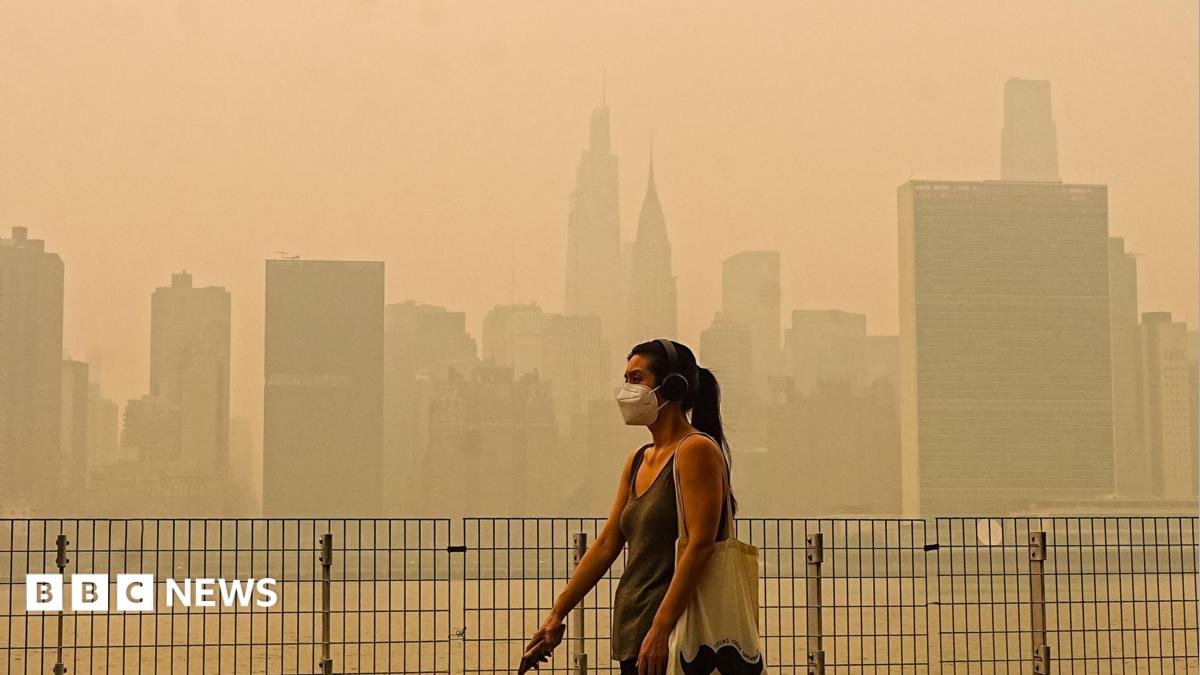
Image caption, Smoke from the massive wildfires has cast an orange haze over New York City ByNadine Yousif, Senior Canada reporter, Marco Silva, BBC Verify and Zahra Fatima Published 17 July 2026 Updated 1 hour ago US President Donald Trump has threatened to impose new tariffs on Canada after hundreds of wildfires have left much of the northern US choked by a blanket of smoke.
The threat follows complaints by US lawmakers over the wildfires and Ontario's premier Doug Ford asking the US to send support to fight the fires, rather than complain.
"The United States is being unnecessarily invaded by filthy, polluted, and unhealthy air," Trump said, threatening to impose new levies over Canada's "willful negligence".
As of Friday, there were about 888 fires actively burning in Canada, according to the Canadian Wildland Fire Information System, external - with the majority burning out of control.
More than 190 of those blazes are burning in Ontario, some out of control.
Trump said in his post to Truth Social that he would call Canadian Prime Minister Mark Carney to demand an explanation over his country's "willful negligence," accusing the country of "not properly maintaining" their forests and brush.
Fellow Republicans have used the issue to renew Trump's call to make Canada the 51st US state, a musing that has offended Canadians and prompted many to stop travelling to their southern neighbour in protest.
Others online suggested a delay in opening the Gordie Howe International Bridge, a Canada-funded project that will connect Ontario to Michigan.
Carney earlier noted that it was the responsibility of both countries to fight climate change.
After Trump's remarks, Carney's emergency management cabinet minister said the two countries remain in constant contact and share a long history of working together on such disasters, citing a reciprocal fire-fighting agreement from 1982 and another assistance agreement from emerged from the 2025 G7 summit.
Canada has worked to prevent wildfires and invested about $12bn in forests sustainability and fire prevention, MP Eleanor Olszewski said in the statement.
"This is a challenge that knows no borders, and Canada is working with speed, collaboration and coordination to keep people safe," she added.
Relations between the US and Canada and been tense at times over the last year, mostly due to trade.
Last year, Trump imposed tariffs on Canada - a country that had enjoyed decades of free trade with the US - and both countries have still yet to reach a trade deal.
What started the wildfires?
According to the Canadian Wildland Fire Information System, nearly 3 million hectares of land in Canada has already been destroyed by the wildfires.
The impacts have been far-reaching, with a thick blanket of smoke spreading across US states, from Minnesota and Michigan to Pennsylvania, Ohio and New York.
"Hazardous" air quality alerts have been issued across much of the region, leading to the cancellation of many outdoor events.
As of Friday, air quality in Detroit was worst in the world, Swiss air quality tracker IQAir said, external, followed by the Midwestern city of Chicago, Washington DC, and New York in seventh place.
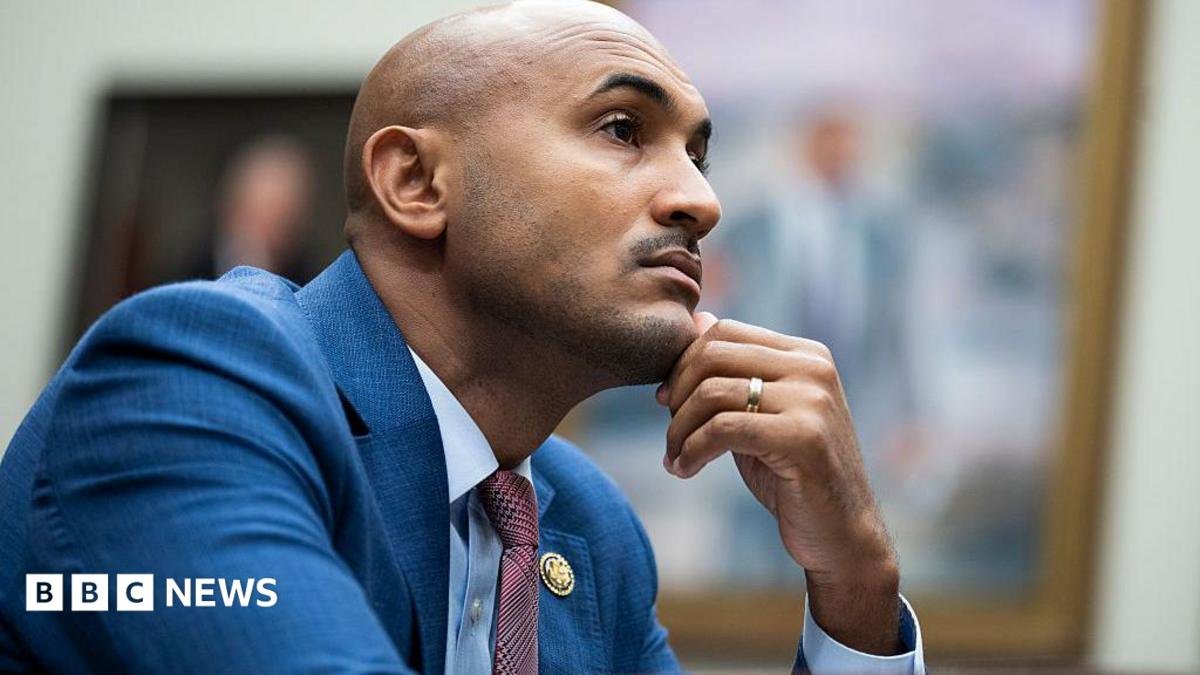
The far-reaching impacts of wildfire smoke – and how to protect yourself Canada fires prompt US air quality alerts as smoke blankets major cities In the open letter addressed to Canadian officials, US lawmakers John James, John Moolenaar, Jack Bergman and Lisa McClain said their "patience has run out".
"We are done accepting apologies in place of action," they said, warning the US could explore direct involvement in cross-border wildfire protection and firefighting if Canada failed to act.
"We were told last year that this would be treated with urgency.
It was not," they claimed, adding that instead "American lungs are paying the price for Canadian inaction, year after year".
They said that issues such as "chronic under-investment in forest thinning, fuel reduction, and prescribed burns, along with inadequate enforcement against arson", had not been addressed "adequately enough".
But scientists BBC Verify have spoken to say the picture is more complicated.
"Weather doesn't care about international borders," says Dr Patrick James from the University of Toronto.
Once smoke reaches the atmosphere, it travels wherever the winds take it - and smoke from major US wildfires has also affected Canada in recent years.
Experts also say many of the current fires are burning in Canada's vast, remote forests, where fires can be difficult to detect or contain before they become too large.
While better forest management can reduce wildfire risk in some areas, particularly near communities, it cannot prevent fires across an ecosystem of this scale.
Wildfires are very common in Canada, but the number of outbreaks has rapidly increased in recent weeks.
Experts in both the US and Canada agree that this is likely because of sustained hot weather at the end of June across northern Ontario, coupled with a below average rainfall.