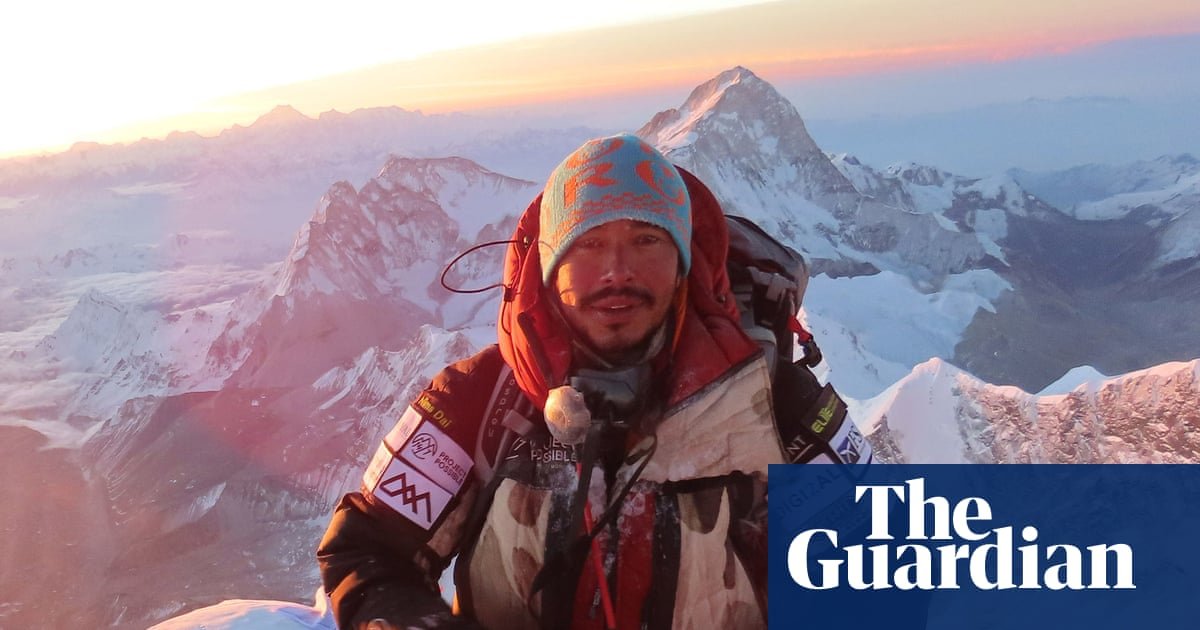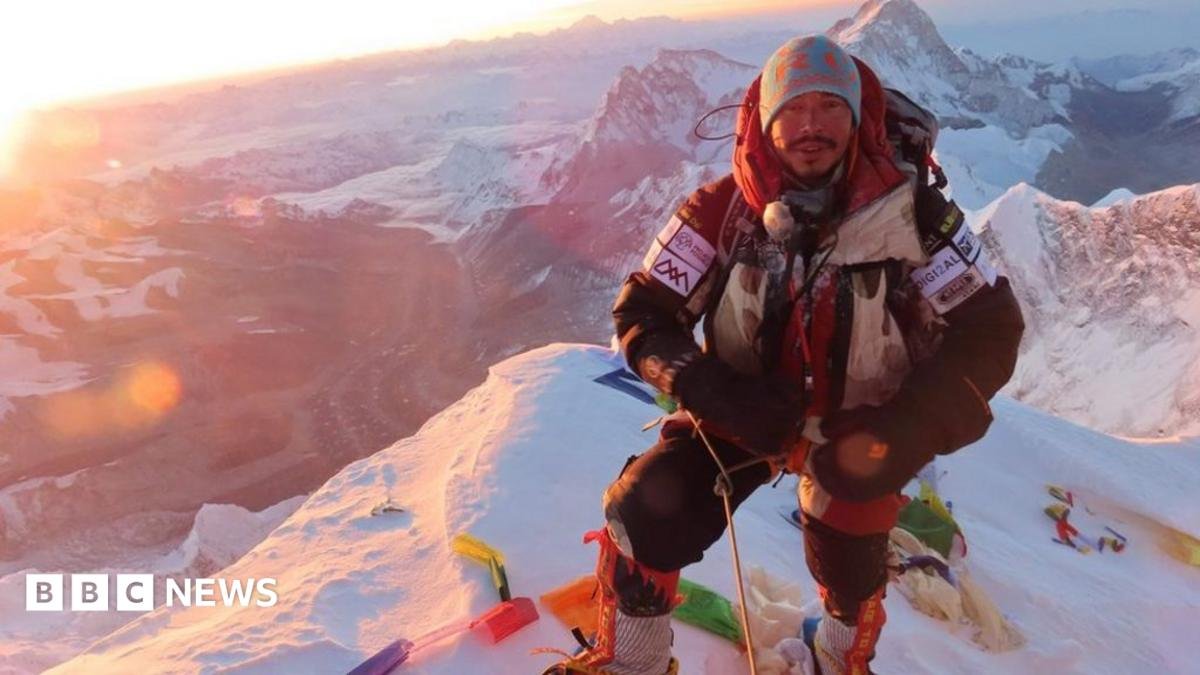
Image caption, Nirmal Purja at the summit of Mount Everest ByAnbarasan Ethirajan, Global Affairs correspondent and Yang Tian Published 31 July 2026, 00:00 BST Updated 7 minutes ago The bodies of two climbers have been recovered after an avalanche on one of the world's highest mountains sparked a search operation for a 10-person expedition.
The Alpine Club of Pakistan initially said four bodies had been located on Pakistan's Broad Peak, before clarifying they had in fact located two bodies and a body part.
They were named as Nadhira Ahmed Abdullah Al Harthy from Oman and Pur Bahadur Gurung from Nepal.
Seven others were spotted by aerial drones, it said, though their condition will not become clear until rescue efforts resume on Saturday.
The location of the final climber remains unknown.
The multinational climbing group was being led by renowned Nepal-born climber Nirmal Purja, the Alpine Club of Pakistan said.
A search and rescue operation for the team led by Purja began after reports an avalanche on Thursday on the 8,047-metre (26,400ft) peak in the Karakoram range.
Purja, the expedition leader, is known for climbing all 14 of the world's 8,000-metre-plus mountains in just over six months in 2019.
The Alpine Club of Pakistan told the BBC that it had seen movement from the GPS trackers of three members of the expedition, including Purja, but that a helicopter was unable to see anything at those locations.
Rescuers later found one of the trackers smashed, leading them to believe that the movement they had seen may have been a glitch.
The search operation has been suspended until sunrise on Saturday due to poor weather conditions.
The condition of the climbers spotted by drones will only become clear when a search group could reach the area, which could take several hours, the Alpine Club of Pakistan said.
Its communications lead Naila Kiani said that the chances of survival in such harsh conditions after more than 24 hours were "very slim", but added that "miracles do happen".
Earlier on Friday, the Alpine Club confirmed that two rescue helicopters had been sent by the Pakistan army, carrying rescue personnel and additional specialised equipment to support the rescue operation.
"The club prays for the safety and successful rescue of all the climbers and stands in solidarity with their families and the international mountaineering community during this difficult time," it said.
Purja joined the British Army in 2003 and joined the Special Boat Service - the special forces unit of the Royal Navy - in 2009.
He went to Everest Base Camp in 2012, and instead of returning to Kathmandu, he summitted the 6,119m Lobuche East mountain in Nepal - his first peak.
Climbing alongside Purja was American Mallory Geis.
In mid-June, she had posted on social media that she had new boots ready for what she called "her first big kid climbing expedition in Pakistan".
She is tagged in a post from a travel company, Moving Mountains.
The post says that Mallory would be with Pakistani national Sohail Sakhi.
It was Sakhi's tracker that was found smashed, and he is the one team member who has not yet been spotted.
Besides Purja, Sakhi and Geis, there are a few other significant names among the missing climbers, including Pur Bahadur Gurung - also known as Yukta - and Kili Pemba Sherpa.
Yukta is certified by the International Federation of Mountain Guides Associations and is very close to completing the 14 peaks challenge, in which climbers attempt to climb the world's 14 mountains that rise at least 8,000m above sea level.
Kili Pemba has so far summited Everest 15 times.
In 2021, he was a member of a historic K2 winter expedition, along with several Nepali climbers including Purja.
Pemba is also the guide who led double amputee Xia Boyu to summit Everest in 2018.
Xia, a Chinese climber, lost both legs decades earlier while attempting to reach Everest's summit.
Broad Peak is regarded as one of the more challenging mountains for expeditions and is ranked as the world's 12th highest peak.
The first successful ascent of Broad Peak was in 1957, when a four-member Austrian expedition reached the summit.
Since then, many more have climbed peak - and dozens have lost their lives on the mountain.
One of Broad Peak's deadliest years was 2013, when at least six fatalities were recorded.
Correction 31/7/26: A previous version of this story stated that four members of the expedition had been found dead, citing the Alpine Club of Pakistan.
This was a miscommunication on its part and has since been amended.