The U.S. on Thursday (August 13, 2026) accused over 40 countries, including India, of operating a “shadow trans-shipment network” to help China evade high tariffs and unveiled plans to use artificial intelligence to detect and penalise such practices.
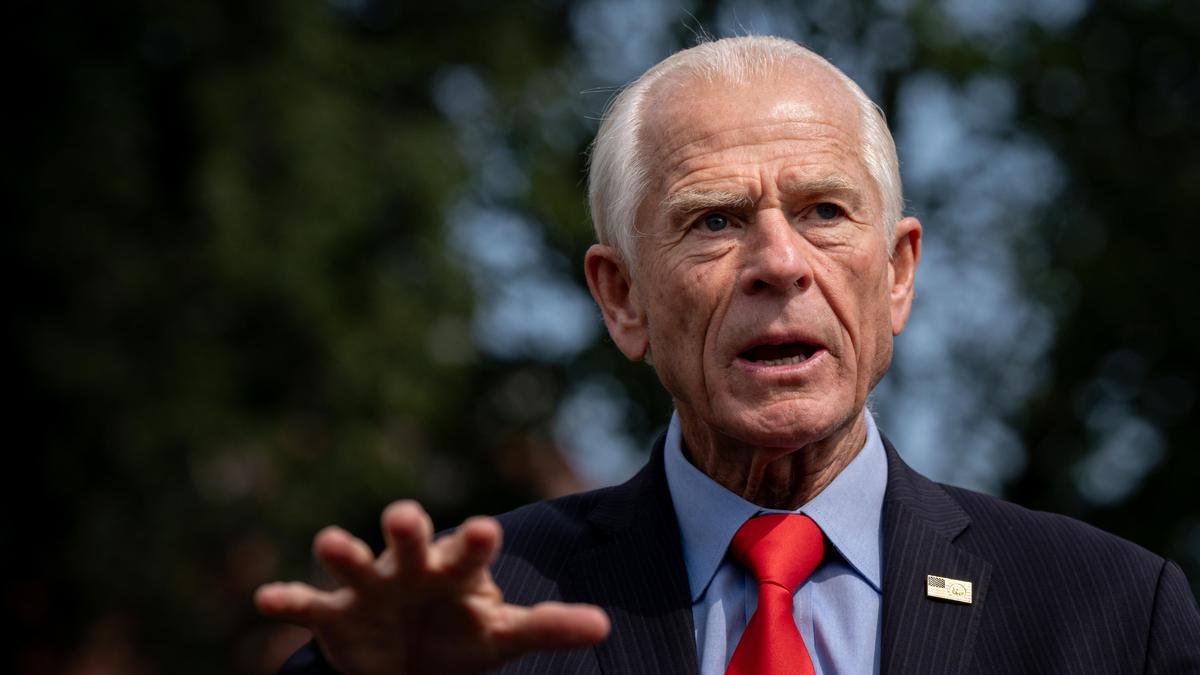
In a report, ‘The Great Transshipment Scam’, Peter Navarro, the top trade advisor to President Donald Trump, said the transshipments became more prevalent after 2018, when the Trump administration imposed Section 301 tariffs on China to counter “unfair trade practices.” U.S.
Senate passes Russia sanctions bill that seeks 100% tariffs on India, four others “For years, the great transshipment scam has let Communist China launder its exports through more than 40 countries,” Peter Navarro, Counsellor to the President for Trade and Manufacturing, told reporters.
The countries that comprise China’s Shadow Transshipment Network include many of America’s largest trading partners, ranging from Mexico and Canada on U.S. land borders to the European Union, India, Japan, and South Korea.
“China began using these third countries for minor processing, relabeling, repackaging, reinvoicing, or routing changes that created the appearance of a new national origin while leaving the underlying Chinese content largely intact,” Mr.
Navarro said in the report.
He said by routing around the tariffs, China and its state-supported manufacturers and trading firms could push goods into jurisdictions with cheap labour, weak customs oversight, permissive free zones, or preferential U.S. trade access.
The report said India’s Pune–Gujarat–Chennai production belt absorbs pumps and compressors, affecting industrial supply chains in Cincinnati, Dayton, and Columbus.
“A Chinese pump that leaves Pune as Indian is a pump not machined in Cincinnati, Dayton or Columbus,” Mr.
Navarro said.
The report pegs the annual value of illegally transshipped goods anywhere in the range from approximately $40 billion to $303 billion, depending on the methodology and definition used.
Mr.
Navarro announced that the U.S. will use an AI-enabled “Detective Border” to identify transshipped goods reaching American shores.
The ‘Detective Border’ would support U.S.
Customs and Border Protection (CBP) by integrating shipment data, routing histories, product classifications, ownership relationships, production-capacity indicators, anomaly detection, computer vision, and other analytical tools.
“The objective is to improve CBP’s ability to distinguish legitimate nearshoring and foreign investment from illegal pass-through trade, identify high-risk shipments, and convert analytical findings into interdiction, duty collection, penalties, and exclusion,” the report said.