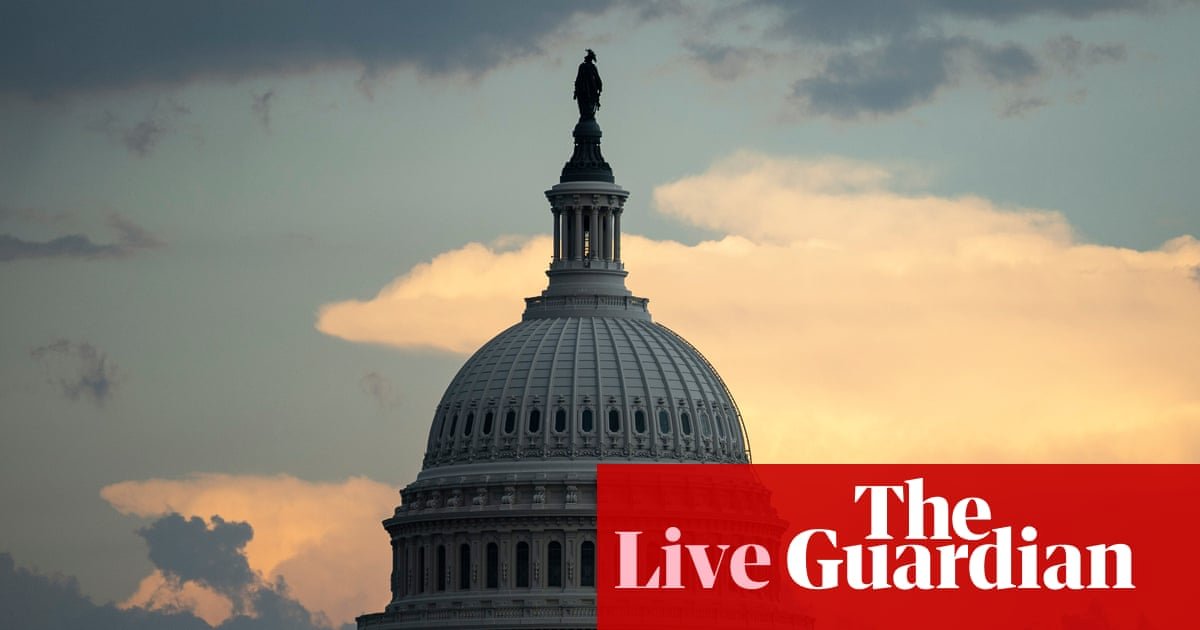
The standoff over the strait of Hormuz goes on after a week of tit-for-tat strikes between the US and Iran.
Plus, hit song in Australia prompts speculation about AI use Don’t already get First Thing in your inbox?
Sign up here Good morning.
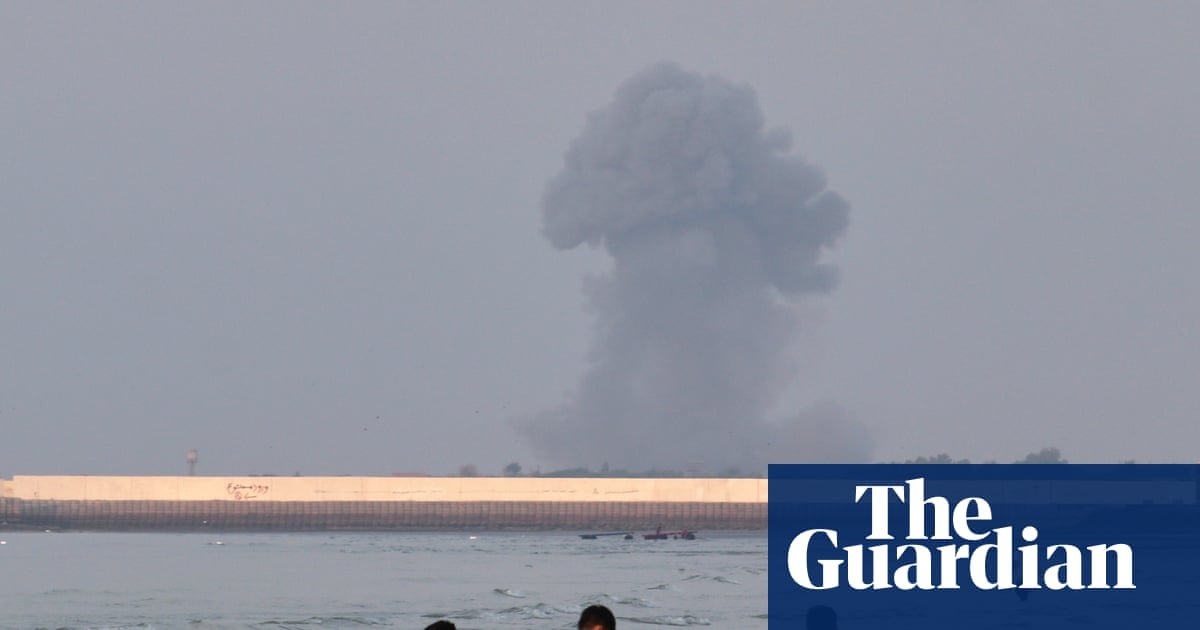
The US military has launched a fresh wave of attacks against Iran amid the escalating standoff over the strait of Hormuz.
Tehran said the latest strikes had “rendered futile” all the diplomatic efforts of the past few months, while Donald Trump said: “We’re beating them up”, as oil prices surged again.
Iran responded to the strikes by attacking countries in the region that host US military forces.
Jordan’s army said it had shot down four Iranian missiles.
Kuwait’s military said it was responding to “hostile aerial targets” on Monday as Iran carried out strikes on US interests in the Gulf.
What has Iran said about the latest hostilities?
Iran condemned the latest wave of attacks, its foreign ministry saying they had “rendered futile all efforts of the past few months to reduce tension and establish peace in the west Asian region”.
The ministry added: “The US regime has also caused the return of insecurity in the strait of Hormuz and disruption of international commercial shipping.” Is the strait open?
Iran said on Sunday that passage through the waterway was not possible because of what it called recent illegal US military movements in the region.
The US said its forces were positioned to safeguard freedom of navigation, and reiterated guidance that, despite a severe security threat, an “expanded” southern route near the Oman coastline was available for two-way traffic.
Lindsey Graham, key ally of Donald Trump, dies aged 71 Lindsey Graham was once a vocal critic of Donald Trump before becoming one of his most loyal allies.
He had just turned 71.
Graham had served in the Senate since 2003, representing South Carolina, and was running for re-election in November.
There had been no known concerns over the health of Graham, whose birthday was last Thursday and who visited Ukraine last week.
His death is a personal blow to Trump, for whom he was a political cheerleader and frequent golf partner.
Tributes came from far and wide, with JD Vance, George W Bush, Volodymyr Zelenskyy and Benjamin Netanyahu among those commenting on Graham’s death.
How will Graham be replaced in the Senate?
South Carolina’s governor, Henry McMaster, will appoint a new senator to serve out the remainder of Graham’s term, which ends on 3 January.
Whoever is appointed will likely have a leg up in a special primary election on 11 August to get on the November ballot.
The candidate would still run against the Democratic nominee Annie Andrews, a pediatrician who gained significant support in the red state, but who still faces an uphill challenge.
Sam Neill, star of Jurassic Park films, Peaky Blinders and The Piano, dies aged 78 Sam Neill, pictured in 1989’s Dead Calm, came to widespread international attention with his performances in The Piano and Jurassic Park.
Photograph: Warner Bros./Allstar Sam Neill, the versatile New Zealand actor whose career spanned Oscar winners and blockbusters such as The Piano and Jurassic Park, has died aged 78.
The actor’s death was announced on Monday in a statement shared on his Instagram account.
No cause of death was given, but Neill had only recently revealed he was cancer-free after being diagnosed with stage three angioimmunoblastic T-cell lymphoma (AITL), a type of blood cancer, in 2022.
Neill came to widespread international attention in 1993 with two performances: as the New Zealand settler Alisdair Stewart in Jane Campion’s Oscar-winner The Piano; and as Dr Alan Grant in Steven Spielberg’s Jurassic Park, a role originally offered to Harrison Ford.
He had more than 150 credits over five decades, and was one of the leading candidates to succeed Roger Moore as James Bond and did a screen-test in 1986, but lost out to Timothy Dalton.
What did Neill tell the Guardian in 2023 about dying?
“I’m not afraid to die, but it would annoy me.
Because I’d really like another decade or two, you know?
We’ve built all these lovely terraces, we’ve got these olive trees and cypresses, and I want to be around to see it all mature.
And I’ve got my lovely little grandchildren.
I want to see them get big.
But as for the dying?
I couldn’t care less.” In other news … In this photo provided by the activist Cameron Kasky, armed men block the road, stopping vehicles carrying Ro Khanna and his delegation.
US senator Mitch McConnell has revealed a fall led to his hospitalization, after weeks of silence.
The Guggenheim Museum in New York City has tested positive for legionnaires’ disease, and is one of 31 buildings on the Upper East Side that have been ordered to clean and disinfect their cooling towers.
Flash flooding in Missouri has left one person dead as 200 campers were rescued.
Martha Lillard, the last known US polio survivor using an iron lung, has died aged 78.
Stat of the day: Conor McGregor’s UFC return ends after 69 seconds Conor Mcgregor was fighting for the first time in five years when a knee injury ended the bout in round one.
Fighting for the first time in more than five years, the 37-year-old McGregor flew across the ring with a left roundhouse kick when the bout started and landed awkwardly on his right knee.
Building Power: The Trump administration is charging these Minneapolis protesters with conspiracy.
Organizers won’t back down Protesters hold signs in Minneapolis as the DoJ attempts to criminalize resistance.
Don’t miss this: ‘The trash does not stop’ – life among the garbage mountains of the world’s biggest city Waste pickers search for recyclable materials alongside heavy machinery at the Bantar Gebang landfill.
… or this: Is the most popular song played on Australian radio stations the product of generative AI?
Josh Fawaz’s cover of Like a Prayer has raised questions about AI being in music.
Photograph: @joshfawaz/YouTube Josh Fawaz’s song, a cover of Like a Prayer, has raised questions about how generative AI is being used in music and whether it should be declared Climate check: ‘Huge wave’ of carbon storage projects causes alarm in small-town USA as oil firms eye billions in subsidies Melissa Harrison and some other residents of Clymers fear the planned carbon capture storage could be the end of their town.
Composite: Kaiti Sullivan/The Guardian Carbon sequestration involves capturing industrial CO2 emissions, which would normally be vented to the atmosphere, before they can contribute to global heating, and burying them in rock formations thousands of feet underground for what proponents say is permanent storage.
A plan to bury carbon under remote Indiana farmland is supposed to be a slam dunk for the climate, according to its supporters – all generously funded by US tax dollars.
But as far as Melissa Harrison and some other residents of Clymers, Indiana, are concerned, it could be the end of their town.
Last Thing: Inside Thailand’s animal rescue network saving strays Photographer Jackson Morrow spent three years with the Soi Dog Foundation.
Photographer Jackson Morrow spent three years with the Soi Dog Foundation documenting the systems that shape their survival.
Sign up Sign up for the US morning briefing First Thing is delivered to thousands of inboxes every weekday.
If you have any questions or comments about any of our newsletters please email newsletters@theguardian.com Explore more on these topicsUS news First Thing newsletter news Share Reuse this content