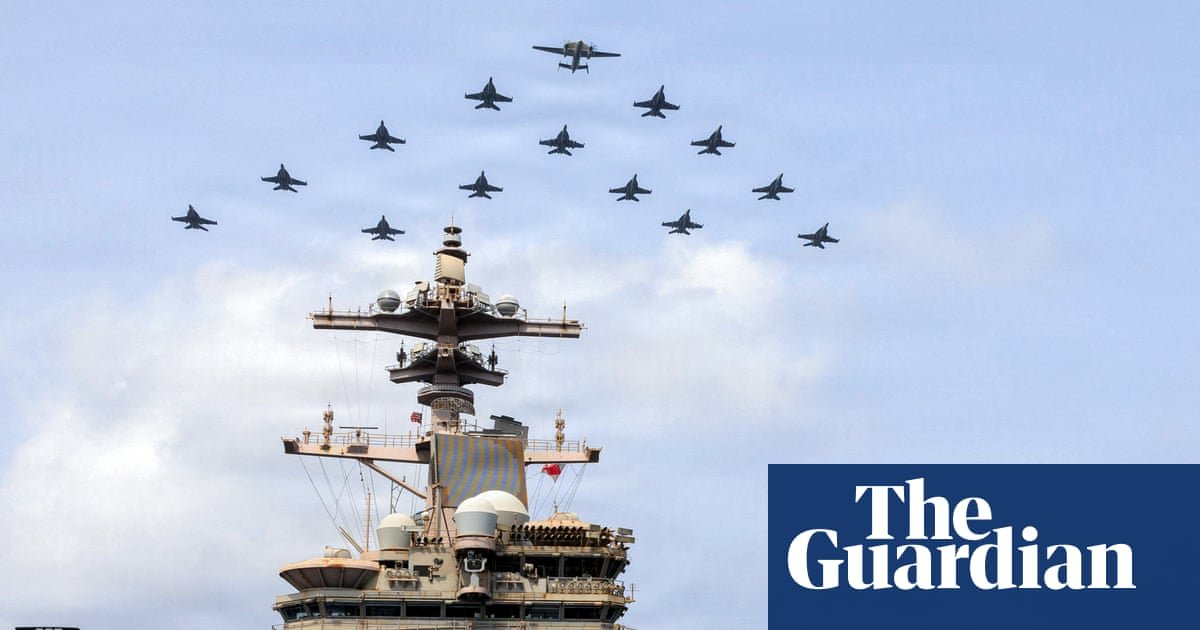
The USS George HW Bush in the Arabian Sea.
The US navy is blockading Iranian ports and taking part in strikes on the country.
The US has intensified its attacks on Iran, hitting targets near Tehran and striking a ship it accused of trying to break its blockade, while Iran retaliated by firing missiles and drones at US allies in the region.
Six consecutive days of back-and-forth attacks threaten to pull the region back into a total war and cast serious doubt about an interim deal reached last month meant to achieve a permanent peace.
The attacks have been accompanied by escalating rhetoric from both sides, as the US enforced its naval blockade and Iran said it had shut the strait of Hormuz, which before the conflict handled about a fifth of global oil and gas exports.
Iran asked its allies in Yemen, the Houthis, to be prepared to close the oil route through the Red Sea if the US targeted Iranian energy infrastructure, Reuters reported – a threat that, if followed through, could paralyse the global energy market.
The US launched its latest wave of strikes on Iran early on Thursday, hitting areas around Tehran for the first time in the current round of fighting, as well as striking other provinces, Iranian state media reported.
The US also said it fired on a tanker sailing towards Kharg island, Iran’s biggest oil export terminal.
US Central Command said it fired a Hellfire missile at the ship after it “ignored multiple warnings”.
An image from US Central Command shows an attack on an unknown location in Iran.
Tehran accused the US of carrying out a “barbaric attack” after a cancer hospital in south-west Iran was evacuated because of strikes nearby.
“This barbaric attack, reminiscent of Israel’s atrocities against healthcare facilities, caused severe suffering and anxiety upon the hospitalised children,” Iran’s foreign ministry spokesperson said on X.
Esmaeil Baghaei added that “211 patients undergoing chemotherapy” were evacuated.
Another image released by the US military shows a missile being launched at Iran.
Iraq’s prime minister, Ali al-Zaidi, also said there was an overnight drone attack on the city of Erbil in Iraqi Kurdistan.
The attack, which was intercepted, came as al-Zaidi pledged during a trip to the US to disarm non-state armed groups.
Iraqi authorities also briefly suspended crude oil loading at all of its terminals on Thursday after a drone crashed into an oil tanker in Basra without causing damage, Reuters reported.
Crude oil loading resumed later in the day.
Iran warned that it could expand its attacks in the region in response to comments from Donald Trump, the US president, that he could attack power plants, bridges and a nuclear facility.
“All the infrastructure in the region will be crushed under the steel blows of the powerful armed forces of the Islamic Republic of Iran,” said Col Ebrahim Zolfaghari, an Iranian military spokesperson.
“Under no circumstances and in no way will we allow America, as a foreign and extra-regional country, to interfere in the strait.
This is Iran’s inviolable red line.” Zolfaghari said the only way to reopen the strait was for the US to follow the 14-point Memorandum of Understanding (MoU) signed last month, as well to abide by “Iranian regulations” for transiting ships.
A map of the strait of HormuzMuch of the latest fighting has focused on the strait, as Iran and the US fight for the future of the critical waterway.
The MoU signed last month said the strait should remain open for the 60-day period of the interim deal.
However, the two sides interpret the MoU differently, with both sides insisting that ships transit the strait via their own separately designated lanes.
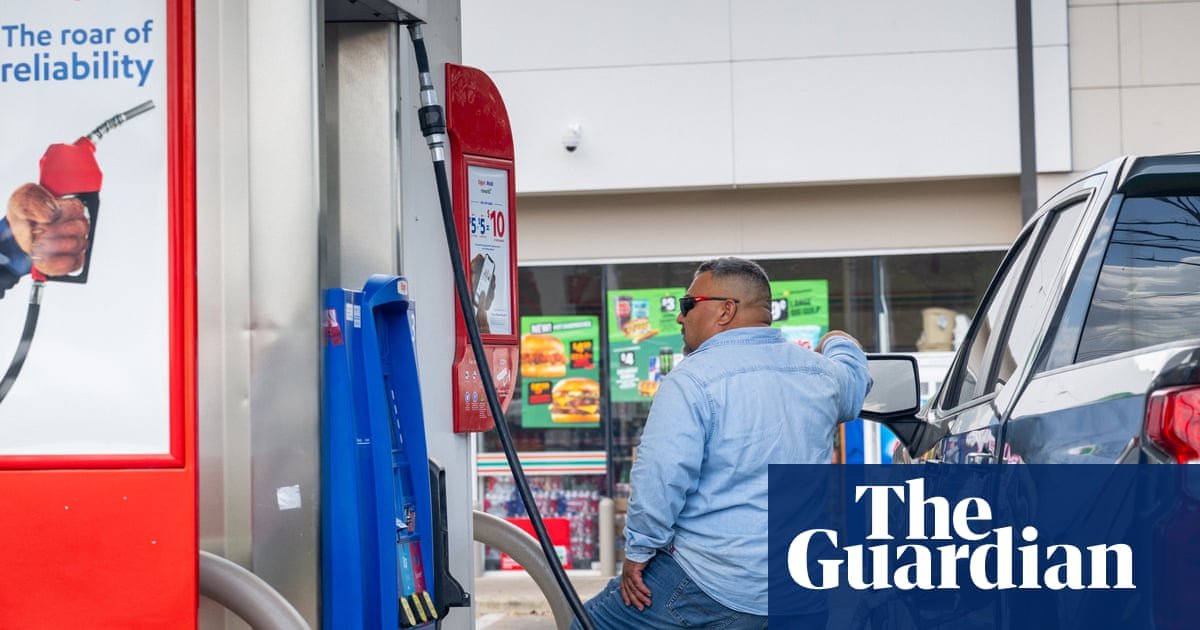
The strait was all but closed by Iran after the start of the war, sending global energy prices and inflation soaring.
Trump is keen to have the strait reopened because higher energy prices could harm Republican candidates in autumn’s midterm elections.
Fewer vessels went through the strait on Wednesday after the US blockade was reimposed and fighting continued, shipping data showed.
Nine ships, mostly on the Iranian-provided route, not the US one, navigated the strait as opposed to 13 on Tuesday.
India, one of the largest contributors of sailors to merchant vessels worldwide, told shipowners and recruitment companies not to send Indian sailors on ships heading for the strait.
“There should be no deployment of Indian seafarers on vessels undertaking voyages involving passage through the strait of Hormuz until further orders,” India’s directorate general of maritime administration said in a statement on Wednesday.
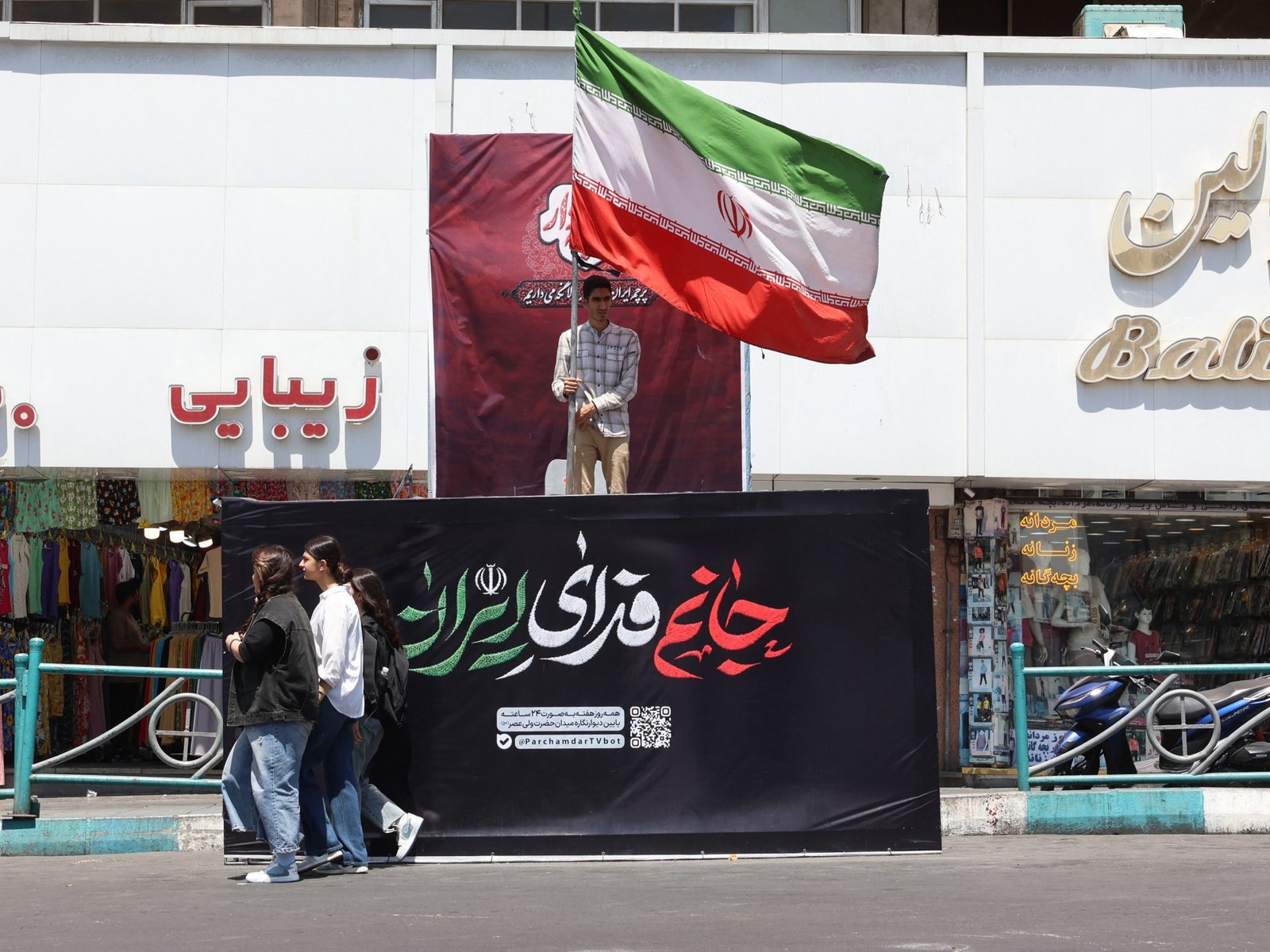
Images of Donald Trump and his family on top of US flag-draped coffins at Palestine Square in Tehran.
Analysts said that continued disruptions to shipping in the strait could see oil prices increase further, reaching as high as $100 a barrel.
The US has threatened that it could open the strait by force, but experts have said that such an operation would need thousands of ground troops.
Trump has continued to insist that Iran was ready to make a peace deal, though Iranian officials have said they will not bow to military pressure.
“They don’t like what we’re doing, and they do want to settle.
We’ll find out whether or not we settle with them, or we just finish it off,” Trump said on Wednesday during a speech at the US army’s war college.
Trump’s statements conflicted with those of Iranian officials, with Iran’s top negotiator and speaker of parliament, Mohammad Bagher Ghalibaf, saying in a statement that “we are in an essential and existential war with America”.
Mediators have tried to calm the escalating tensions with little success.
Pakistan’s foreign minister said on Thursday that the country was trying to bring Washington and Tehran back to the table, but that it was becoming increasingly difficult.
“Whenever the parties exhaust the logic of escalation, the formula for peace is there,” the foreign ministry spokesperson, Tahir Andrabi, said at a news conference.
Explore more on these topicsIran Middle East and north Africa Strait of Hormuz Donald Trump Yemen Iraq news Share Reuse this content